Every Car in America Has the Same Backdoor That Killed Martha Avila
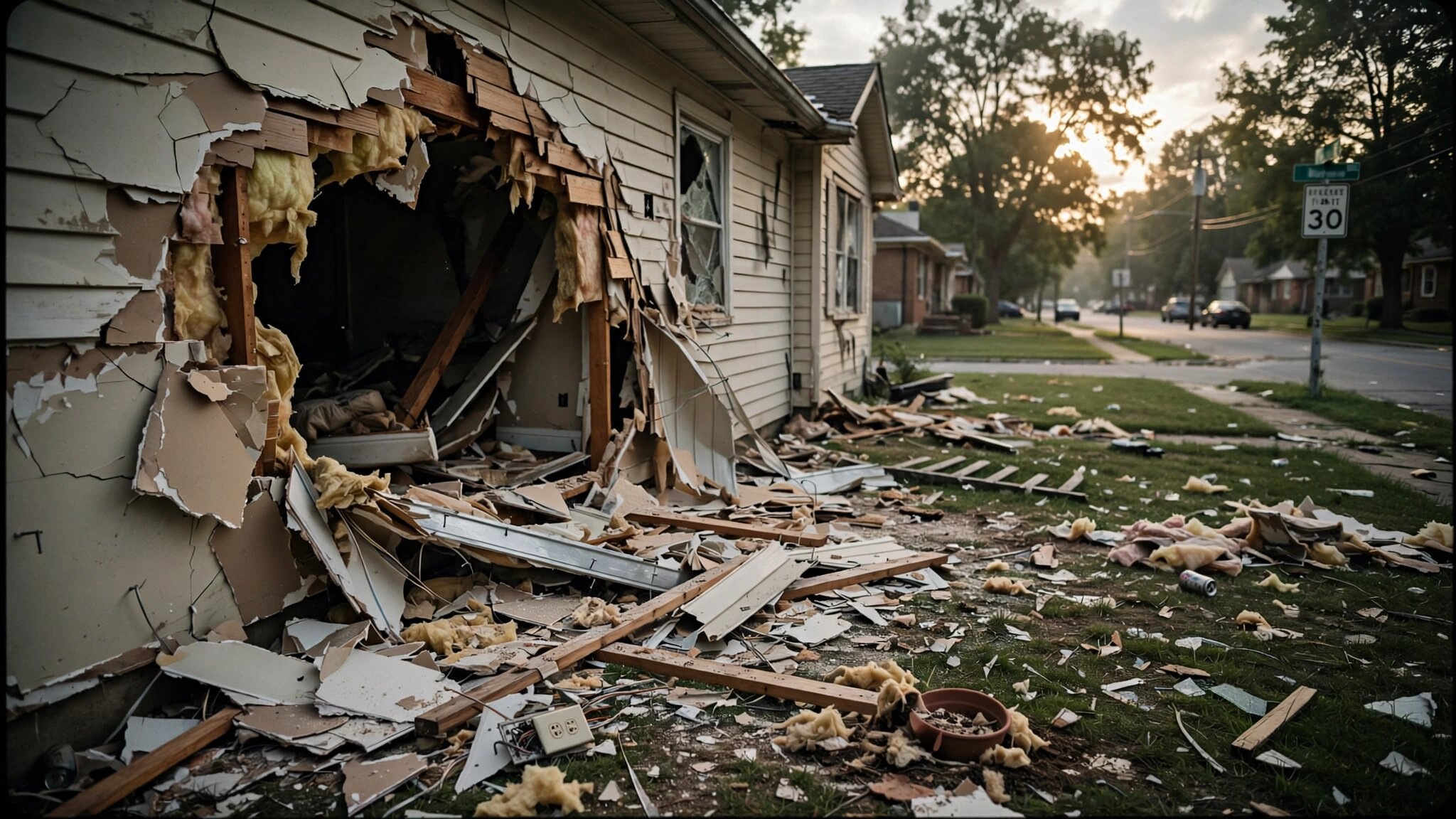
Martha Avila was standing in her living room in Katy, Texas, on June 19 when a Tesla Model 3 came through the front wall at 73 miles per hour. She was 76 years old. She died at the hospital. She was not in a car. She was not on a road. She was home.
Tesla's response came fast, delivered not through a press release but through posts on X by Ashok Elluswamy, Vice President of AI Software. According to Tesla, the driver "manually overrode self-driving by pressing the accelerator all the way to 100% of the accel pedal." Elon Musk added that Full Self-Driving "drives slowly through neighborhood streets and this was a high speed crash!"[1]
Both NHTSA and the NTSB have opened investigations, and Martha Avila's family has filed a wrongful death lawsuit seeking more than $1 million in damages against Tesla and driver Michael Butler, alleging that FSD failed to detect the end of the roadway and stop the vehicle.[2]
But here is what nobody in the industry wants to talk about: the override isn't a bug, it's a feature, and it's in every car you can buy.
What AEB Can't Do When You Floor It
Automatic Emergency Braking, the technology that IIHS says cuts rear-end crashes by 50%, became standard on virtually all new light vehicles sold in America by September 2022.[3] NHTSA's proposed federal rule would require AEB to work at speeds up to 62 mph, including at night with pedestrians in the road.[4] Roughly 100 million vehicles on American roads have some version of this technology right now, and every single one of them can be overridden by pressing the accelerator pedal.
This is by design, and there's a reasonable engineering argument for it: if the system falsely detects an obstacle and brakes in heavy traffic, the driver needs to be able to override that false positive before a semi-truck rear-ends them. You cannot make a system that takes away the driver's ability to accelerate without creating scenarios where that restriction itself causes crashes. Engineers who designed AEB override know this, and they are not stupid.
They are, however, building a system that provides zero protection against the exact scenario that killed Martha Avila.
FARS Sees Something the Override Defense Ignores
NHTSA's Fatality Analysis Reporting System recorded 765 Tesla Model 3 drivers involved in fatal crashes from 2014 to 2023. Of those, 20.1% tested positive for alcohol or drugs, slightly above the national average for sedans. Its older sibling is worse: across 204 Model S drivers in fatal crashes, 24.0% tested positive for impairment, a rate that would make a muscle car blush.[5]
That paradox is structural, and it runs deeper than one brand. AEB and driver-assistance systems exist to prevent crashes, yet impaired drivers are disproportionately likely to make dangerous pedal inputs, the exact inputs that override those systems. A safety net designed with a hole in it, shaped like the people who need the net most.
In the Katy crash, the driver was reportedly sober, but the override architecture doesn't discriminate. A system that can be defeated by pressing the accelerator is a system that can be defeated by anyone, for any reason, at any speed, in any neighborhood, regardless of what the software thinks is happening. Call it what it is: not a safety system, but a suggestion from the machine to the person holding the pedal.
A Speed That No Regulation Covers
Avila's house was hit at 73 mph in a neighborhood where the speed limit was roughly 30 mph, a 43 mph delta that is more than double the legal limit, in a place where children ride bikes and 76-year-old women stand in their living rooms. NHTSA's proposed AEB rule covers speeds up to 62 mph. Even under the strongest federal standard currently proposed, AEB would not have been required to function at the speed this crash occurred.
In July 2024, the European Union addressed this gap by mandating Intelligent Speed Assistance, which warns drivers when they exceed the posted speed limit and can apply gentle resistance to the accelerator.[6] ISA can be overridden, but it introduces friction into the process of speeding. No equivalent requirement exists in the United States, no proposed rule addresses it, and no serious political momentum exists to create one. Your car's speedometer goes to 160 mph because the market demands it, and no regulation asks why.
Tesla's Data Problem
Tesla released its version of the Katy crash data on social media, but the company's track record with self-reported crash data is not reassuring. In a Florida Autopilot crash lawsuit, Tesla told plaintiffs that crash data "didn't exist" until an independent researcher recovered a "collision snapshot" the car had automatically uploaded to Tesla's servers, data that showed the system had detected the pedestrian it struck.[7]
Independent NHTSA and NTSB investigators will pull the event data recorder and onboard logs themselves, and that's the version that counts, not the one posted on X before either investigation has concluded. Tesla's override defense may prove entirely accurate, but it may also prove incomplete, and only independent analysis of the vehicle data will tell us which.
What This Means for You
If you drive any car made after 2022, you almost certainly have AEB. It is real technology that really prevents crashes, and IIHS data confirms it halves rear-end collisions, but it has a hard limit: press the gas and it goes away.
That's not a flaw unique to Tesla, and treating it as one lets the rest of the industry off the hook. Ford, GM, Toyota, Hyundai, every manufacturer ships the same basic override architecture. If a Tesla driver can defeat Full Self-Driving by flooring the accelerator in a residential zone, a Camry driver can defeat Toyota Safety Sense the same way. Nobody talks about it because nobody has posted the vehicle logs on X yet.
Martha Avila didn't buy a Tesla, didn't choose to participate in the autonomous vehicle experiment, and had no say in how Tesla's driver-assistance architecture was designed. She was standing in her house. An industry that has spent billions engineering systems to protect drivers has spent considerably less engineering systems that protect the people drivers hit. In a courtroom, the override defense may hold. In a living room at 73 miles per hour, it meant nothing at all.
Sources & References
- Reuters, “US opens probe of fatal Tesla crash into Texas home,” June 23, 2026; NTSB, investigation announcement via X, June 25, 2026. reuters.com
- Reuters, “US NTSB to investigate fatal Texas Tesla crash,” June 25, 2026. Wrongful death lawsuit filed in Harris County District Court. reuters.com
- NHTSA-IIHS, voluntary AEB commitment, standard on light vehicles by Sept. 1, 2022. IIHS research: AEB halves rear-end crashes. nhtsa.gov
- NHTSA, Automatic Emergency Braking Systems Notice of Proposed Rulemaking, requiring AEB effectiveness up to 62 mph. nhtsa.gov
- NHTSA, Fatality Analysis Reporting System (FARS), 2014–2023. Tesla Model 3: 765 drivers, 20.1% any impairment; Model S: 204 drivers, 24.0%. nhtsa.gov
- European Commission, Intelligent Speed Assistance (ISA) mandate under General Safety Regulation (EU) 2019/2144, effective July 2024. transport.ec.europa.eu
- Electrek, “Tesla admits FSD was on in fatal Texas crash, blames driver for ‘overriding’ it,” June 2026. References Florida Autopilot case data withholding. electrek.co