The Crash Report
Every fatal crash in America, charted.
Data from NHTSA FARS 2014–2023 bulk CSV. Covers ALL occupant fatalities in vehicles involved in fatal crashes, all model years on the road. Estimated rates use sales-based fleet estimates × NHTS class-average annual miles—see Methodology for caveats.
| ☐ | # ▲▼ | Vehicle ▲▼ | Class ▲▼ | 5yr Deaths ▲▼ | Annual Avg ▲▼ | Est. Fleet ▲▼ | Est. Rate ▲▼ |
|---|
Impairment defined as BAC > 0 (alcohol) or specific drug detected in toxicology (drugs). Testing rates vary significantly by state and jurisdiction — actual impairment rates may be higher than reported. Models with 100+ drivers in fatal crashes shown.
| ☐ | # ▲▼ | Vehicle ▲▼ | Class ▲▼ | Drivers ▲▼ | Any % ▲▼ | Any # ▲▼ | Alc % ▲▼ | Alc # ▲▼ | Drug % ▲▼ | Drug # ▲▼ |
|---|
Shows total occupant deaths by vehicle model year across FARS 2014–2023 data. Older model years have more cumulative years of exposure on the road; this chart reflects fleet-age composition, not inherent vehicle safety differences. Select up to 5 vehicles to compare.
2024 data is an early NHTSA estimate subject to revision. Bars show total fatalities (left axis); line shows rate per 100M VMT (right axis).
Rates calculated from NHTSA FARS fatality counts and FHWA VM-1 vehicle miles traveled. Per-model VMT is not publicly available; these rates apply at the broad vehicle-class level only.

One in Four Drivers Who Died in These Cars Was Impaired. They Are Some of the Safest Cars on the Road.
FARS toxicology crossed with FARS fatality rates: four cars with top-decile impairment and below-median lethality. Axle McScatter runs the drunk tank index.

Tesla Is Carrying Passengers in a Car With No Steering Wheel. Washington Is “Evaluating the Situation.”
Tesla began offering Cybercab rides in Austin in a vehicle with no steering wheel, pedals, or mirrors. NHTSA’s public position is eleven words long.

The Safest Car of the Week Is Being Recalled Because Somebody Turned Off the Wrench
IIHS crowned the 2026 Model Y a Top Safety Pick+ on September 2. Two days earlier, Tesla had recalled 19 Model Ys whose suspension bolts were never tightened, because the machine that checks the bolts was switched off.

The Cheaper the Audi, the Drunker the Driver. BMW Works the Other Way Around.
Ranking models by impairment inside six brands: Audi forms a perfect five-step sobriety staircase, Tesla and Honda agree, and BMW's flagship drivers are the drunkest in the lineup.

A Loose Lock Nut Cracked 10,001 Ford Pistons. The Machine That Should Have Caught It Was Blind.
Ford's recall 26S61 traces 10,001 EcoBoost piston failures to a loosened lock nut at a Mexican supplier and an ultrasonic tester that couldn't see the cracks.

Lucid Recalled Nearly Every Air It Ever Built Because the Fuse Was Software, and the Software Had a Bug
27,185 Airs recalled for an eFuse defect: 3 fires, 4 smoke events, and a fix that shipped before the recall did.

GM Replaced a Mechanical Brake Booster With Software. It Failed 745 Times. Now 1.16 Million Vehicles Are Under Federal Investigation.
GM swapped a century-old mechanical booster for software. NHTSA escalated to an engineering analysis after drivers reported losing power assist mid-stop.

DUI Blood Tests Take 370 Days to Process. The Drugs Leave Your System in 72 Hours.
Washington State's tox lab takes over a year. Colorado's takes 140 days. Nationwide, forensic labs are short 900 scientists. DUI cases are collapsing under the weight of their own evidence backlog.

Powertrain Recalls Tripled Last Year. The Average Fix Takes Twenty Times Longer Than a Software Update.
Powertrain recall-affected vehicles surged 251% in one year while software recalls get fixed overnight. The repair queue is now structurally broken.

BMW's Driveshaft Has Been Recalled Seven Times in Fifteen Years, and the Latest Fix Is Adhesive
Seven recalls. Seven different components. 250,000+ vehicles. The August 2026 remedy for BMW's falling-apart drivetrain: glue.

NHTSA Announced Six Recalls Covering 1.4 Million Vehicles. The Owners Won't Find Out for Six Weeks.
33 million vehicle-days of exposure in the notification gap. The manufacturer knows. The dealer knows. The media knows. The owner gets a letter in September.

Stellantis Has Recalled the Same Backup Camera Bug Seven Times. It Keeps Shipping.
Seven recall campaigns, same architectural flaw, 2M+ vehicles. Each fix patches one generation while the next ships broken.

Mazda Recalled the CX-90's Steering. Three Times. It's Still Broken.
Mazda tried three fixes for the CX-90's stiff steering. NHTSA complaints on recalled-and-repaired SUVs spiked from 3 to 34 per month, and the agency is now investigating whether the recall remedy did anything at all.

Half of Recalled Cars Never Get Fixed. The Other Half Fix Themselves at 2 AM.
OTA recalls fix silently. Parts recalls stall at 50.3%. Tariffs are widening the gap into a two-tier safety system.

Mass Shootings Kill People Who Never Heard the Shots
Fatal traffic crashes spike 14.3% the day after major mass shootings. The extra road deaths total roughly 75% of the shooting victims, and nobody counts them in the toll.

America Broke Below 1.0 Deaths Per 100 Million Miles. Norway Is at 0.2.
Q1 2026 fatality rate hit 0.99 per 100M VMT. Converted to kilometers, that's still 3× Norway's rate. The "triumph" is a 5,244-body gap.

Every Model Year of the Mustang Mach-E Has Been Recalled
Ford's electric flagship has generated at least eight recall campaigns across five model years. Buy a 2023 and you inherit four of them.

Two Brands, One Factory, Same Battery Defect
SK On supplied misaligned battery electrodes to both Volkswagen and Hyundai. Two separate recalls, two different car companies, one manufacturing process failure.

Nissan Recalled the Sentra for the Same Driveshaft Defect Twice. The Repair Got 50% Longer.
Same plant. Same supplier. Same defect. Consecutive model years. The fix went from 7 hours to 10.5 — because replacing just the driveshaft wasn’t enough.

Ford's Trucks Had a Race Condition. 4.3 Million Trailers Lost the Race.
A CAN bus race condition silences Ford's trailer module at startup. Stop lamps go dark. Turn signals vanish. On high-series modules, trailer brakes die too. 4,380,609 trucks recalled.

The Cadillac CTS Out-Drinks the BMW 3 Series. It Still Kills at Half the Rate.
FARS toxicology data: 25.9% of Cadillac CTS drivers in fatal crashes tested impaired, drunker than BMW 3 Series drivers at 22.1%. Yet the CTS fatality rate is 1.32 vs the BMW's 2.73.

The School Bus Is the Safest Vehicle in America. The Most Dangerous Place Is Standing Next to It.
1,069 people died around school buses in a decade. Only 11 percent were on the bus. Meanwhile drivers illegally pass stopped buses 38.4 million times a school year.

Honda's V6 Has Been Federally Investigated Three Times for Destroying Itself. 1.4 Million Are Still Running.
Honda recalled 249,000 engines in 2023 for a crankshaft defect that causes connecting rod bearing seizure. NHTSA has since opened two more investigations, and the complaints keep coming from vehicles Honda said were fine.

741,195 Vehicles Have a Known Rollaway Defect. The Fix Arrives in 10 Months.
Ford recalled three-quarters of a million SUVs and trucks for a transmission defect that lets them roll away in Park. The remedy won't exist until April 2027. NHTSA data says 296,000 of them will never be fixed.

Mitsubishi Recalled 67,146 Outlanders Because the Backup Camera Can Just Go Blank
A software bug in the Alliance In-Vehicle Infotainment system can blank the federally mandated backup camera in 2025-2026 Mitsubishi Outlanders. The fix requires a dealership visit, because the module was never built for over-the-air updates.

Toyota's New C-HR Can Overcharge Itself Down a Mountain. The Bug Was Found in a Car That Doesn't Exist Yet.
Toyota recalled 8,521 new C-HR EVs because a charge-limiter bug lets regen braking overcharge the battery, tripping a protective shutdown of all drive power. The second Toyota battery-ECU power-loss recall in three months, and both were found while testing a different car.

Nine in Ten Drivers Say Speed Humps Work. Fewer Than Half Want One on Their Street.
AAA's August 2026 study: three in ten drivers believe nobody drives the speed limit. 82% want mandatory speed limiters for serious speeders, but only 51% want advisory ISA in their own car. Punish them, not me.

The Most Drug-Positive Drivers in America All Drive the Same Dead Buick
13.1% of Buick Verano drivers in fatal crashes tested drug-positive, 1.59x the fleet average. Its platform twin, the Chevy Cruze, tests far cleaner. The badge predicts the toxicology report.

The Drunkest Drivers in America Drive the Safest Cars. We Ran the Math on 307 Models.
The correlation between a model's fatality rate and its drivers' impairment rate is -0.14. Basically zero. Buy the crash test, not the clientele.

GM Builds Two Identical Trucks in the Same Missouri Plant. One Kills at Twice the Rate.
The Canyon and Colorado share a platform, a factory, and nearly identical driver impairment profiles. FARS says the Canyon's fatality rate is 2.1x the Colorado's. A week after IIHS flunked the 2026 Canyon, the morgue's verdict looks worse.

Thirty-Six Days After Winning America's First Robotaxi Exemption, a Zoox Drove Around a Road-Closed Sign
Thirty-six days after winning America's first steering-wheel-free robotaxi exemption, a Zoox drove around a road-closed barricade in Las Vegas. Days later, another yielded to an emergency vehicle and got rear-ended. The exemption model just met its first real-world test.

Toyota Recalled 4,118 Replacement Airbags Built by the Company That Swallowed Takata: Finding the Trucks Is Somebody Else's Problem.
The airbags were installed after crashes, during repairs. Now the replacements might not work, and Toyota is asking dealers to trace them through body shops.

IIHS Crowned a Kia and a Tesla This Week. BMW's Icon Failed, and the Morgue Agrees
The BMW 3 Series kills at 91 times the rate of the Tesla Model Y per mile. This week the crash lab confirmed what ten years of death records already said.

The Oldsmobile Alero Died in 2004. Its Drivers Lead the League in Driving High.
A FARS cross-tab of 303 models: the older the car, the more impaired its drivers. The drug-positive champion is a $3,000 sedan GM killed in 2004.

Kia Recalled 21,290 EV9s Because Adjusting the Passenger Seat Can Disarm the Child Airbag Sensor
A misrouted sensor tube under the front passenger seat of 2025-2026 Kia EV9s gets pinched at the seat's highest position. Enough adjustments break it, and the airbag stops suppressing for children.

Ford Recalled 148,663 Mustangs Over a Ground Wire That Can Kill the Headlights, the Engine, and the Cooling Fan in One Snap
A fatigued ground eyelet in 2024-2026 Mustangs can fracture from engine vibration and kill headlamps, motive power, and cooling at the same instant. Ford found it on a test rig, not from a crash.

Tesla's Robotaxi Remote Operators Have a 100% Crash Rate in NHTSA Filings
Every disclosed remote takeover of a Tesla robotaxi ended in a collision. Waymo built the same tool and has never used it on a public road.

NHTSA Ordered Its First Forced Recall In 20 Years After 10 People Died From $30 Airbags
DTN airbag inflators illegally imported from China killed 10 people in otherwise survivable crashes. NHTSA's first forced recall in 20 years has no VIN list because the agency doesn't know where the parts are.

The Two Deadliest Vehicles Have the Soberest Drivers. That's the Problem.
The Hyundai Veloster and Chevy Tracker kill at 8.5 and 7.8 deaths per 100M miles with impairment rates of just 17% and 13%. The problem is crashworthiness, not driver behavior.

Traffic Deaths Fell 6.7% to a 15-Quarter Low. But Only 30 States Are Still Improving.
National traffic deaths are down for 15 straight quarters. The number of states sharing in the improvement is down from 39 to 30.

Traffic Deaths Fell 6.7% to a 15-Quarter Low. The Only Group That Got Worse Rides a Bike.
NHTSA estimates 36,640 people died in 2025, down 6.7% and the second-lowest rate ever. Every subcategory fell except pedalcyclists, up 4%.

GM Recalled 597,000 V8s for Engine Failure and the Fix Failed, Now 997,743 Are Under Federal Investigation
NHTSA expanded its probe to nearly one million GM trucks and SUVs after 499 post-remedy failures and GM's own count of 6,953 internal reports. The higher-viscosity oil fix did not hold.

Chrysler Recalls 74,578 Durangos for the Third Time for the Same Spoiler That Falls Off
Dodge Durango's rear spoiler can detach at highway speed, creating road debris. This is the third recall for the same defect, with 161 post-remedy failures and no permanent fix ready.

GM's Fix Was Thicker Oil. 26 Trucks Got New Engines and Still Failed. Now a Million Are Under Investigation.
GM recalled 597,630 L87 V8 trucks for engine failure and fixed most with thicker oil. NHTSA says 499 failed after the fix, including 26 that got entirely new engines, and 191 more failed outside the recall window. Now 997,743 are under investigation.

NHTSA Has Written Five AV Rules in Six Months. The $3 Pedestrian Fix Has Taken Two Years and Counting.
Since January 2026, NHTSA has issued five rulemakings to accommodate autonomous vehicles and withdrawn its own AV transparency program. The pedestrian head protection standard mandated by Congress in 2021, estimated to save 67 lives a year at $3 per vehicle, has not been finalized.

Only 12% of Recalled Tires Get Fixed. NHTSA Cannot Find the Other 88%.
Vehicle recall completion rate: 73%. Tire recall completion rate: 12%. The difference is a database. Cars have VINs and DMV records. Tires have nothing.

NHTSA Took 15 Years to Move a Beep Three Feet
Congress mandated rear seat belt reminders in 2012. The rule takes effect next week for front seats and 2027 for rear. Roughly 800 unbelted rear-seat occupants die every year.

A $120,000 Camera Catches 82% of Wrong-Way Drivers Before They Kill Anyone. Most States Don't Have One.
Wrong-way crashes are 0.3% of all crashes and 40 times deadlier. Connecticut deployed 211 detection cameras. 82.5% of wrong-way drivers self-corrected. The nation has 65,000 ramps.

12.7% of Crashes Have a Medical Cause. Only 6 States Ask Doctors to Say Anything.
Seizures, cardiac events, and diabetic blackouts cause up to 12.7% of all crashes. NHTSA has no federal standard for medically unfit drivers. Forty-four states leave it to the honor system.

GM Recalled 600,000 V8 Engines for Seizing at Highway Speed. The Fix for Most Owners Was an Oil Change.
NHTSA just expanded its probe to nearly a million GM trucks after 7,000 owners reported their L87 engines failed again post-recall. Ninety-five percent got oil, not a new engine.

Every Category of Traffic Death Declined Last Year. Except People Over 65.
Two groups bucked the trend. One gets media attention. The other doesn't.

Two Airbags Were on the Spec Sheet for Eight Months. They Were Never in the Car.
A crash test caught KGM advertising airbags that were never installed. 306 buyers got six instead of eight. The manufacturer says they cannot be added.

Every New Car in Europe Has a Speed Limiter. America Has Not Started Writing the Rule.
The EU mandated intelligent speed assistance in July 2024. NYC tested it on 500 fleet vehicles and speeding dropped 64%. NHTSA has not published a single page of regulation.
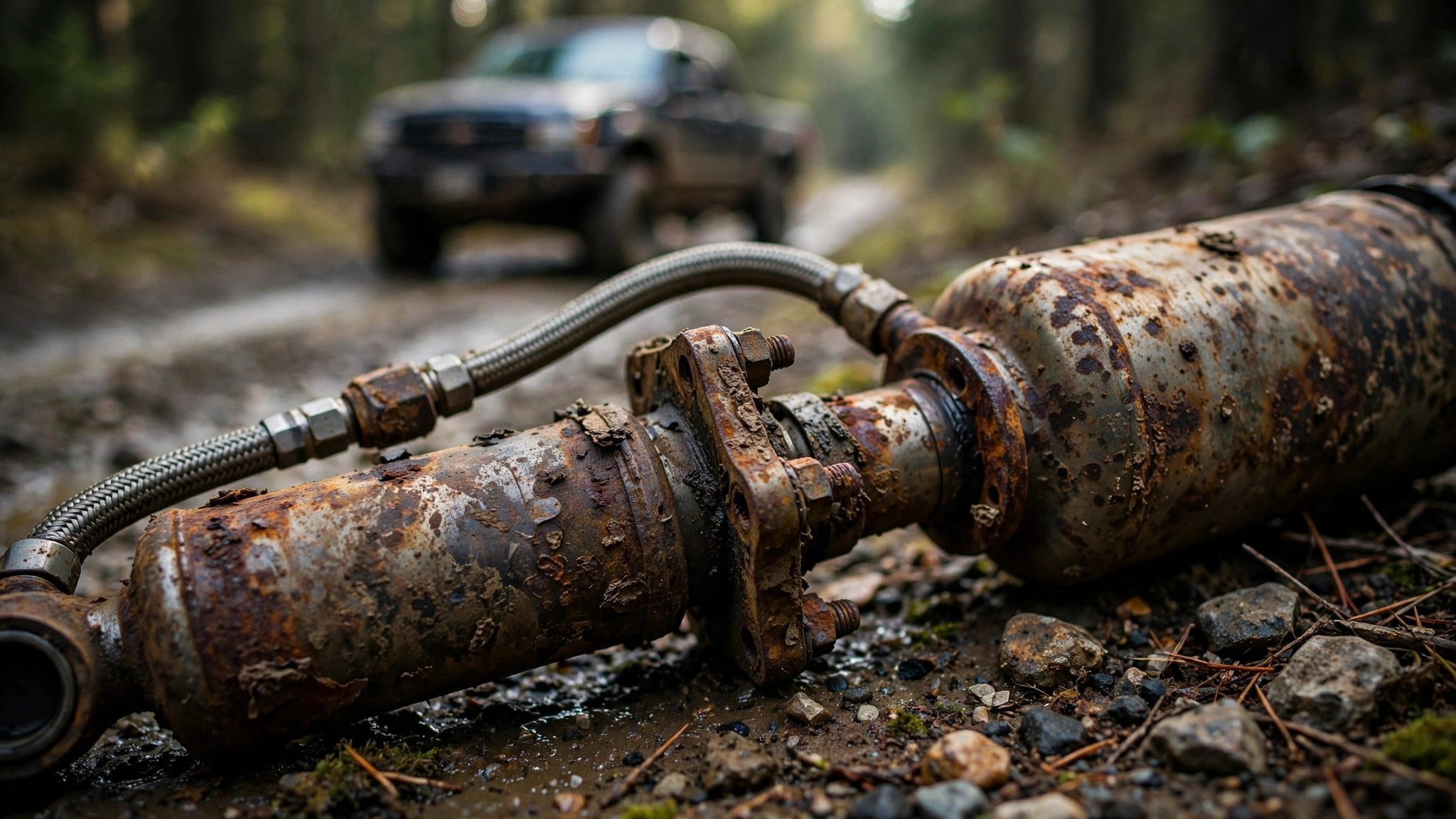
Bilstein's Off-Road Shocks Corrode From Going Off-Road. Two Automakers. Same Failure.
Bilstein supplies premium remote-reservoir shock absorbers to Ford and Toyota. The same corrosion defect has triggered recalls at both, covering nearly 200,000 off-road trucks whose suspension rusts from the conditions it was built for.

A Concrete Circle Prevents 82% of Fatal Intersection Crashes. America Builds 409 a Year.
Roundabouts reduce fatal and injury crashes by 82 percent. The US has 11,000 of them and 328,000 signalized intersections. At current pace, converting them all would take 800 years.

Tesla Recalled the Same Suspension Part Twice. Now NHTSA Is Investigating 1.2 Million Cars.
Same part, three regulatory actions, 430x scope expansion. Tesla blamed a confused factory worker in 2021. NHTSA says the problem extends beyond both previous recalls.

Stellantis Told 848,000 Drivers to Use Their Mirrors. The Government Spent 11 Years Proving Mirrors Kill Kids.
One Uconnect software bug blinds 15 vehicle lines across four brands. Stellantis told drivers to use mirrors. The backup camera mandate exists because mirrors killed 210 people a year.
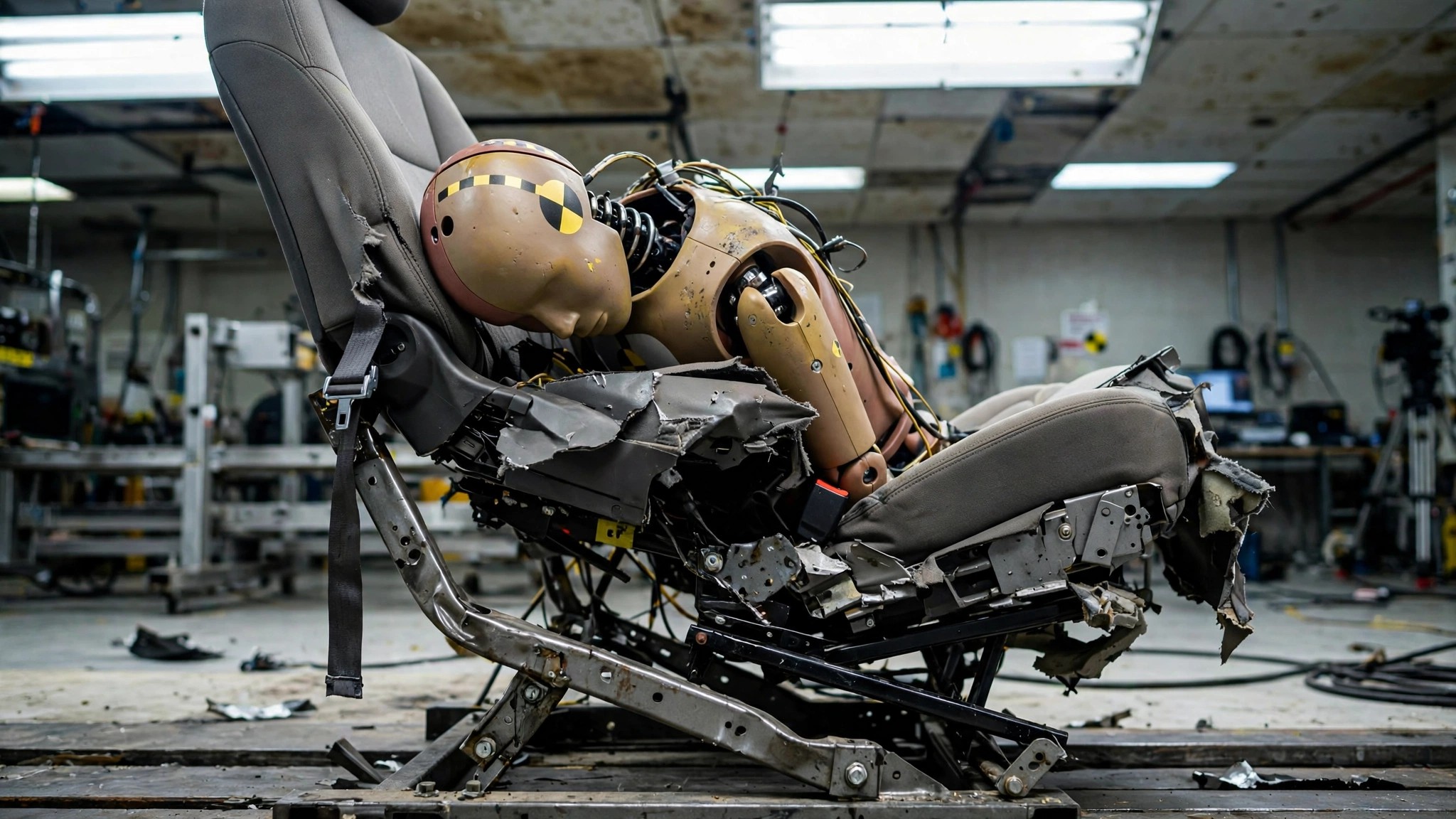
A Seat Broke Loose Mid-Crash for the First Time in 29 Years. Euro NCAP Had No Way to Dock a Star.
The MG 3's driver seat ripped free during a Euro NCAP crash test — an unprecedented failure in nearly three decades of testing. The car still earned four stars because the scoring system has no override for component failures.

Rivian's Supplier Was Told to Quarantine Bad Parts a Year Ago. It Didn't.
Myotek failed to quarantine suspect turn signal parts after Rivian's June 2025 recall. For twelve months, those same parts went into 3,829 more vehicles. It's the third independent quality chain failure Rivian has logged in 2026.
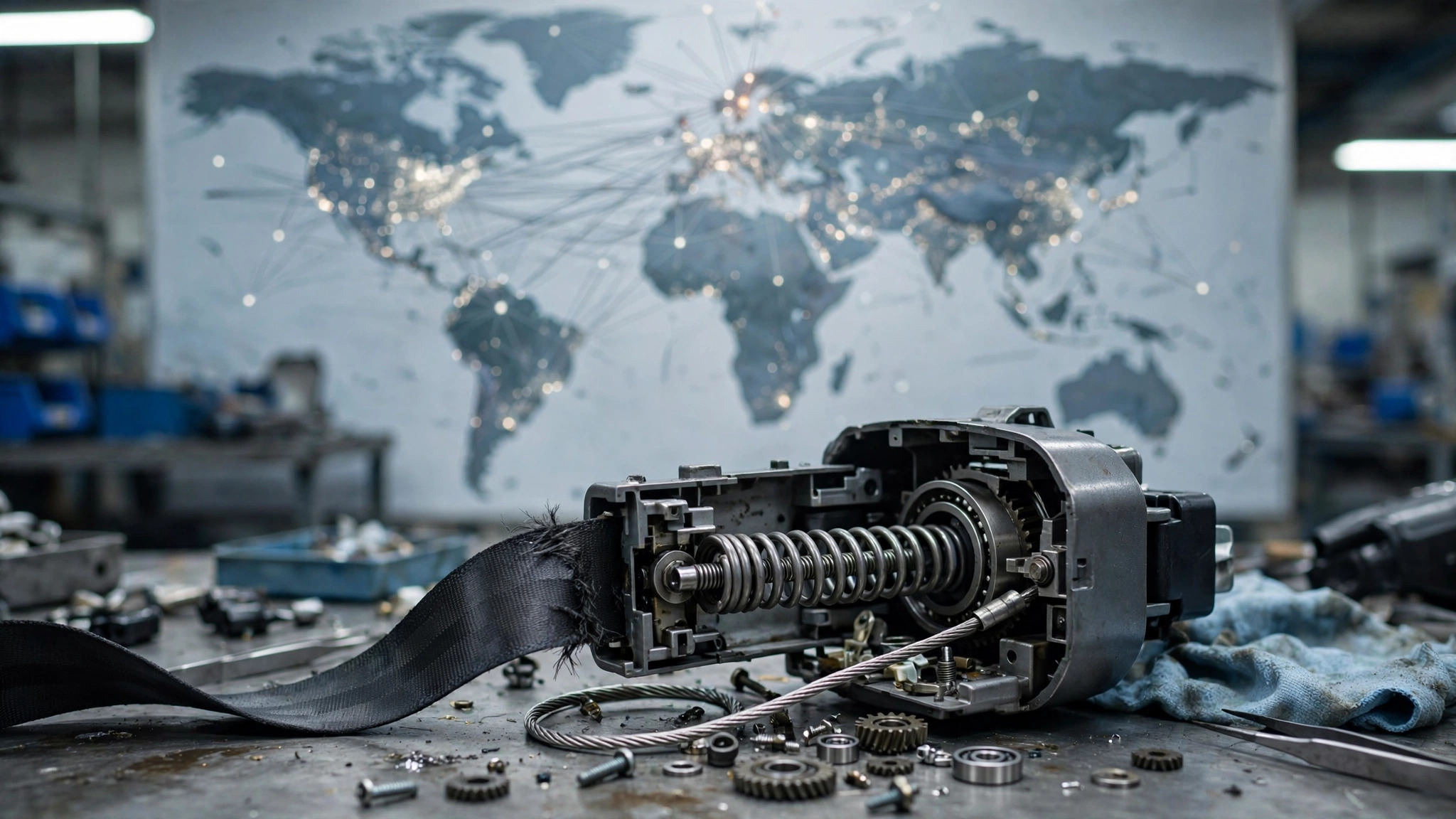
One Company Supplies 44% of All Automotive Safety. Nobody Tracks Its Recalls.
Autoliv has been the named supplier in seat belt recalls covering 2.5 million vehicles across three automakers since 2016. NHTSA's database won't show you that.

NHTSA Lost a Quarter of Its Staff While Fatalities Hit a Record Low, and Those Two Facts Are Not Friends
Traffic deaths dropped to 0.99 per 100 million VMT while NHTSA lost 25% of its workforce and launched 41% fewer investigations. The gains came from regulations written years ago. The cuts will show up later.

Honda Knew Its Odyssey Camera Fix Was Broken in 2021. It Just Got Around to Telling You.
Honda discovered in June 2021 that its rearview camera recall fix was failing. The expanded recall covering 325,588 minivans arrived five years later. Magna cameras out, Sony cameras in.

America Stopped Arresting Drunk Drivers and Deaths Dropped Anyway
DUI arrests collapsed during COVID and never recovered. Impaired driving fatalities surged to 13,617 in 2021, then fell. Q1 2026 fatality rate: 0.99 per 100M VMT. Engineering replaced enforcement.

America Hit a Record-Low Death Rate. Nine States Got Worse Anyway.
NHTSA celebrated 39 states improving. Hawaii jumped 26.5%. Wyoming 15.9%. Nine states added 309 deaths while the other 41 shed 2,923.

DC Celebrated a 52% Safety Miracle. By August, It Was Gone.
Washington DC had the nation's largest traffic fatality decline in 2025. Seven months into 2026, the city has already exceeded its entire 2025 death toll. The 20-year data explains why.
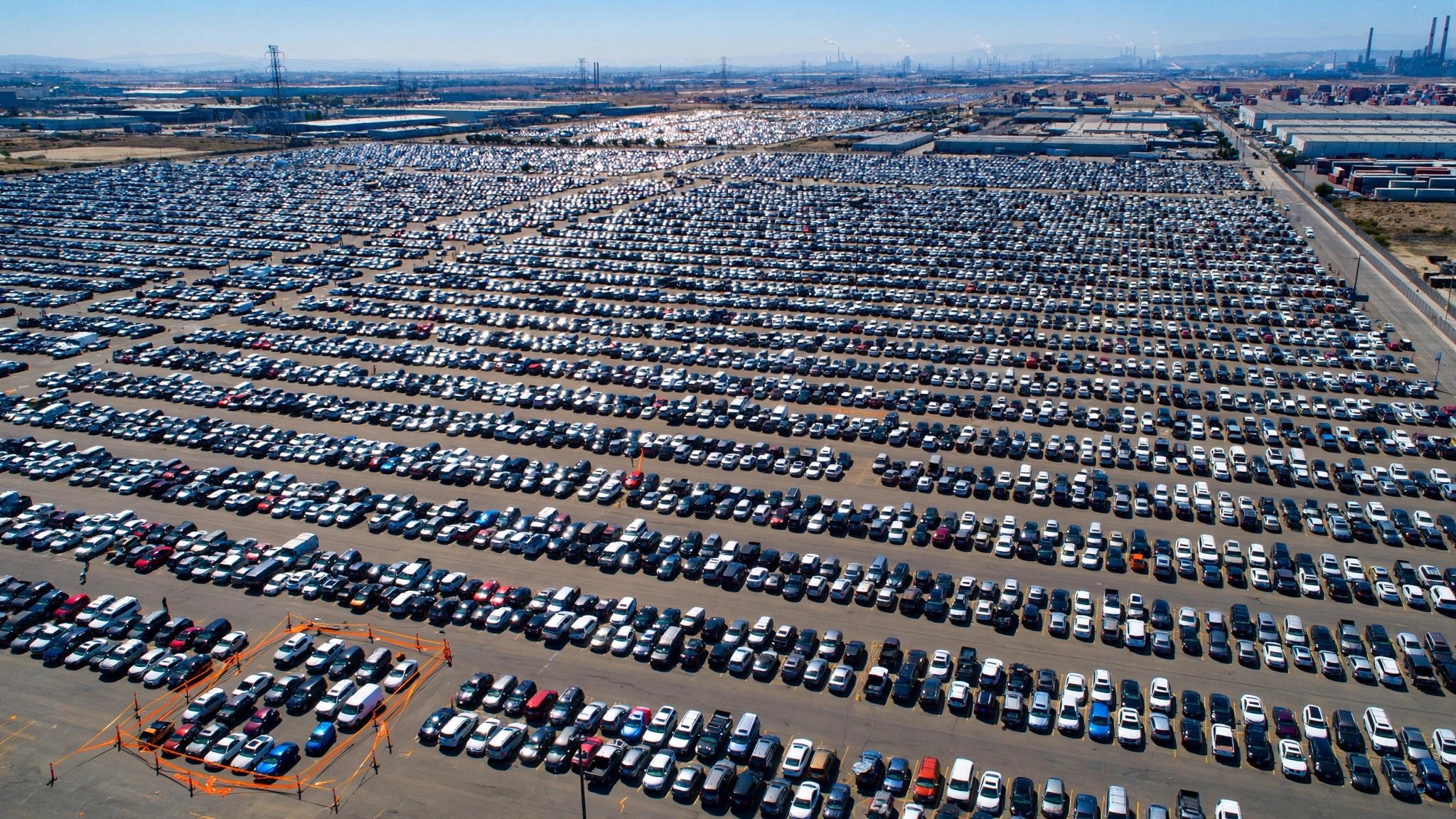
Three Manufacturers Recalled 273,000 Vehicles. NHTSA Is Now Investigating 2.7 Million.
Honda, Tesla, and Rivian each issued narrow voluntary recalls. NHTSA reopened every investigation at 5-370x the scope. The recalls caught 10%.
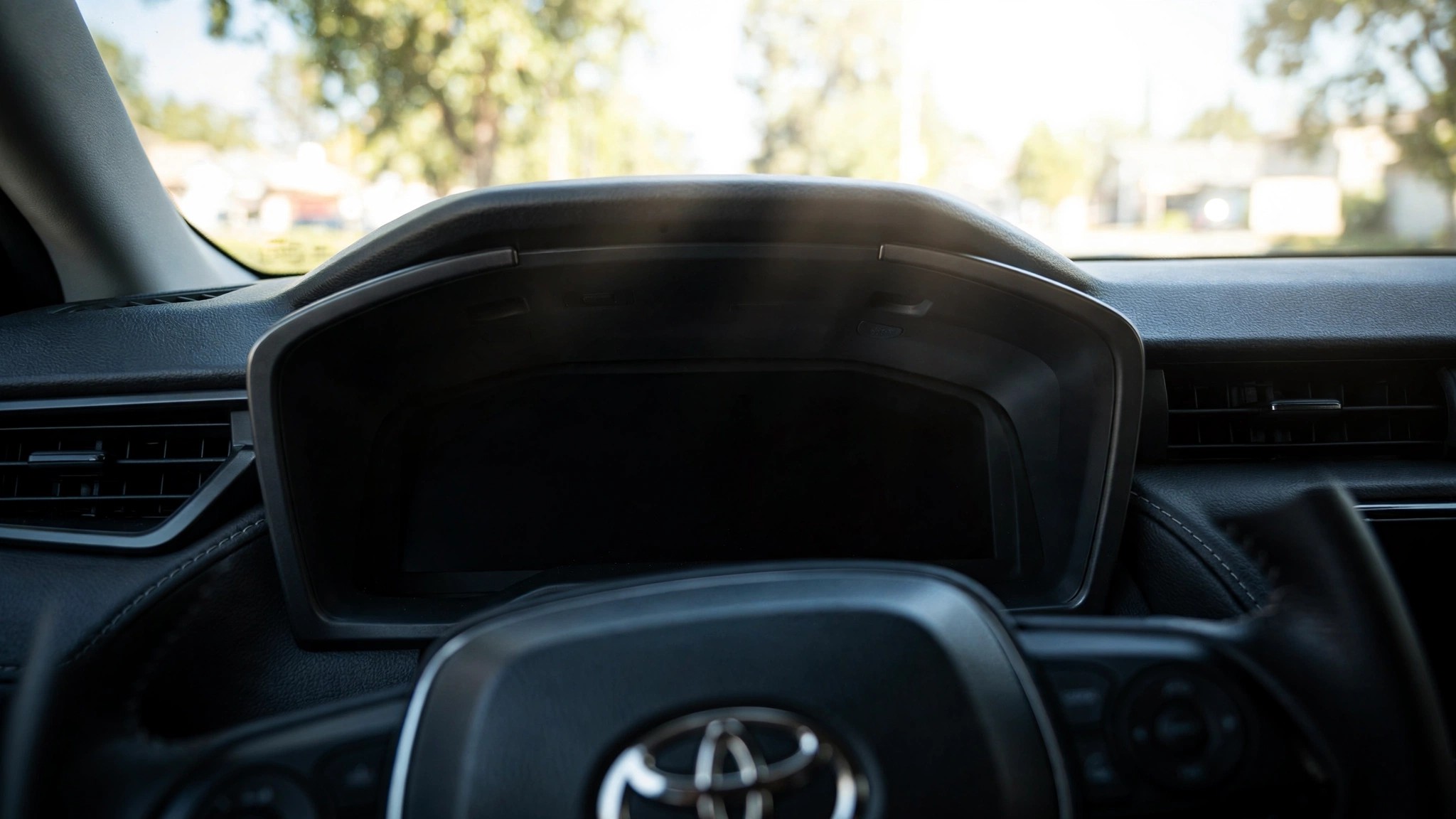
Toyota Blinded a Million Drivers. Twice.
Two separate recalls, 1.1 million vehicles, one failure class: the combination meter goes dark at startup. Toyota now leads all manufacturers in dashboard blackout recalls.

NHTSA’s Odometer Fraud Estimate Hasn’t Been Updated Since the iPod Launched
452,000 vehicles sold annually with rolled-back odometers. Four investigators. One study from 2002. And FARS doesn’t even record mileage.

AWD Cuts SUV Deaths by 44%. For Pickups, It Triples the Rollover Kill Rate.
IIHS 2024 data: 4WD SUVs die at 22 per million vs. 39 for 2WD. For pickups, 4WD triples the rollover death rate. Same drivetrain, opposite survival outcomes.

The Rear Seat Beep Will Save 50 of the 9,205
NHTSA's new seatbelt warning rule takes effect in 16 days. It will save 50 lives per year. There are 9,205 unrestrained occupant fatalities annually. The math is both depressing and airtight.

Stellantis Is the Only Major Automaker With Zero IIHS Safety Awards. For Two Years Straight.
63 vehicles won IIHS awards in 2026. Zero were Stellantis. Five Stellantis models appear in the 20 deadliest vehicles. The company that can't survive the crash can't pass the test, either.

Your Car's Safety Sensors Make Crashes More Expensive. That's the Point.
IIHS data reveals a Simpson's Paradox: ADAS-equipped vehicles cost more per crash to fix, but their overall insurance losses are 30% lower because they crash far less often.

An Indonesian Tire Company Faked Its Safety Grades. The Fine Was Less Than a Camry.
P.T. Elangperdana paid $18,750 a month for lying about tire grades. While those checks were still clearing, NHTSA found the same company's tires falling apart.

98% of Recalled Cars Are Fine. That's Why Nobody Fixes Them.
NHTSA's recall system has a false-positive rate that would get any medical test pulled off the market. When 1-2% of recalled vehicles actually have the defect, the system trains owners to ignore it.

NHTSA Has Three Ways to Deny Your Safety Petition. It Used All Three.
Two defect petition denials in two weeks, three distinct bureaucratic escape hatches, and a 4-month deadline the agency has missed 80% of the time since 2010.
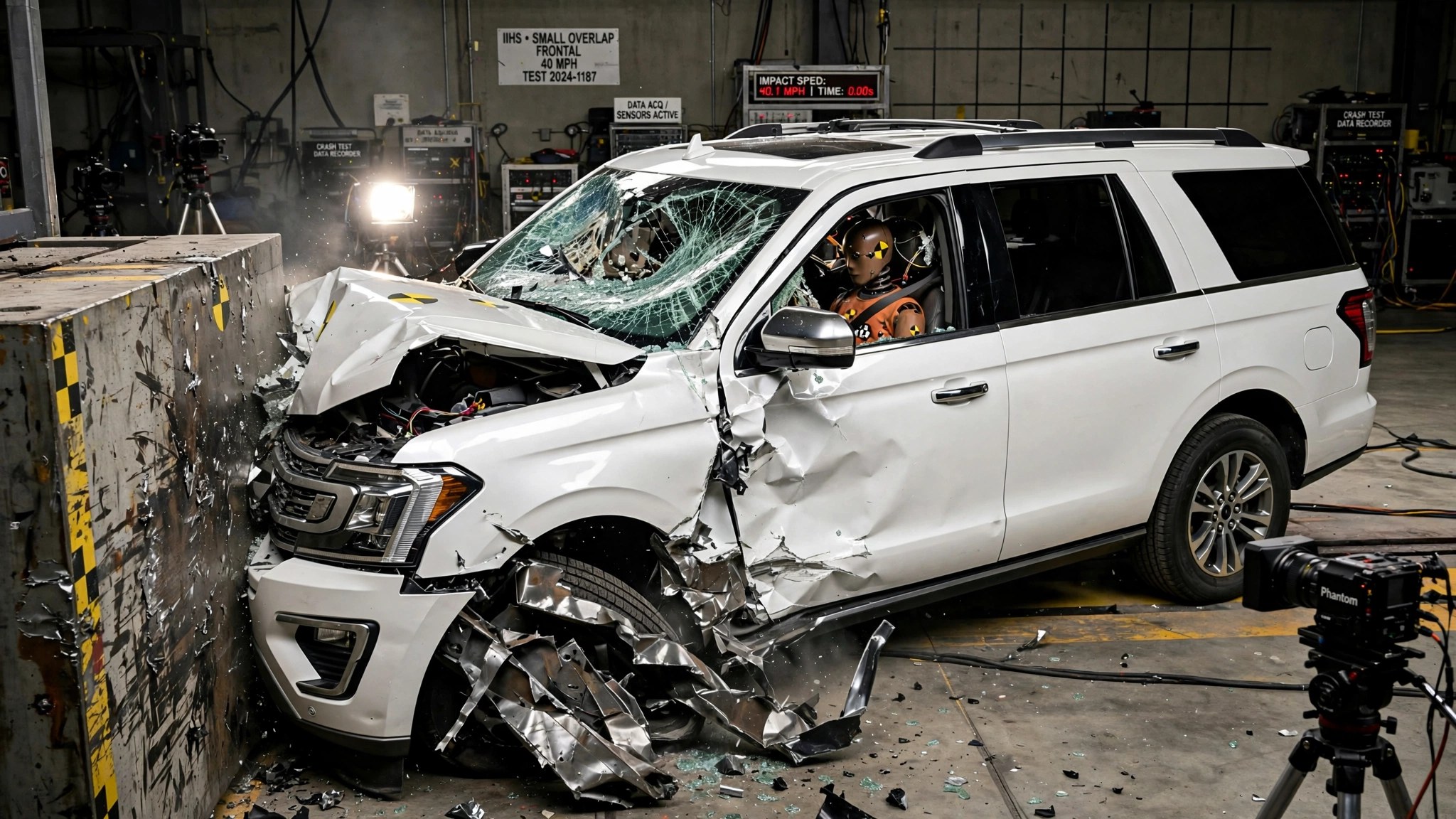
NHTSA Gave the Expedition Five Stars. IIHS Watched Its A-Pillar Rip Off.
The Ford Expedition is the only large SUV with a NHTSA 5-star overall rating. In the IIHS small overlap test, its A-pillar detached from the rocker panel, its steering column separated from the dash, and its curtain airbag didn't deploy.

Level 2 Is a Heated Seat With a Press Release
IIHS-HLDI data shows partial automation prevents zero crashes beyond what basic AEB already handles. FARS lethality ratios confirm: Level 2 is comfort, not safety.

GM Recalled Ten Trucks and Each Fix Costs More Than a Civic
GM's latest Ultium battery recall covers just 10 vehicles, but replacing sealed battery packs at an estimated $38,000 each makes it one of the most expensive recalls per vehicle in modern history.

Toyota Killed the Gas Camry. The Hybrid's Dashboard Forgot How to Turn On.
508,354 Camry Hybrids recalled. The combination meter blanks at startup, killing turn signals, hazard lamps, and warning buzzers. The gas-only Camry didn't have this problem.

Volvo Fixed the Camera. The Fix Killed the Brakes.
413,151 Volvos recalled for a dead camera. The OTA fix created total brake failure in 11,469 vehicles. Coast downhill for 100 seconds and the brakes stop working entirely.

Stellantis Built Two Cars on One Platform. Both Are Broken Five Different Ways.
48,777 seatbelts. 21,069 brake pedals. Two brands, one platform, five recalls. The Hornet and Tonale have been recalled for more defects than they have customers.

NHTSA Lost 25% of Its Staff. It Was Already Investigating 0.05% of Complaints.
575 staff. 36,640 deaths. 80,000+ complaints per year. The math was bad before the cuts. Now it's arithmetic malpractice.

Honda Built the Safest Subcompact in America. Then It Killed It.
FARS data ranks every subcompact by fatality rate. The Honda Fit had the lowest at 0.72 per 100 million VMT, beating cars twice its price. Honda discontinued it in 2020. Every surviving alternative is deadlier.

Stellantis Found Two Different Ways to Fail at Seat Belts. It Took Six Days.
Two recalls. Two root causes. Two suppliers. One company. 1.32 million vehicles. The seat belt hasn't changed since 1959. Stellantis broke it twice in a week.

Chrysler Sold the Dodge Journey for 11 Years Without Automatic Braking. 317 People Died.
Built on a 2006 Mitsubishi platform. IIHS-rated Poor in small overlap. No AEB, ever. Its replacement, the Hornet, just got recalled for seatbelts that don't retract.

GM Studied 12 Million of Its Own Cars. It Won't Tell You What It Found.
Eighth joint study with UMTRI. 12 million vehicles. 700,000 crashes. Zero published percentages. FARS data shows every brand's newer vehicles are safer. GM's improvement isn't an outlier.

The Chevy S-10 Hasn't Been Sold in 22 Years. It Still Kills 143 People Annually.
Discontinued in 2004. 1,427 dead since 2014. A death rate 17x its replacement. The S-10 is the ghost truck nobody tracks.

Nobody Writes About the Kia Optima. 611 People Died in It Anyway.
The Optima's deadliest model year nearly matched the Camaro. Its per-vehicle rate is unremarkable. That's the point.

Distracted Driving Now Kills 39% of Pedestrians. Five Years Ago It Was 15%.
GHSA data shows distraction's share of pedestrian fatalities jumped from 15% in 2019 to 39% in 2024. DUI enforcement is working. The phone problem is growing faster.

Stellantis Has Recalled 2.6 Vehicles for Every One It Sold Last Year. Most of the Defects Are Bolts.
3.27 million recalled in 2026 on 1.26 million sold in 2025. The defects are seat belt anchors not bolted down and wiring not routed. This is an assembly-line crisis.

The Tahoe and the Suburban Share Everything Except Their Body Count
Same GM platform, same engines, same factory. The Tahoe's death rate is 1.83x the Suburban's. Four T1XX badges, one architecture, a 4x spread.

GM’s $4,000 Engine Upgrade Is Seizing at Highway Speed. NHTSA Just Opened Its Highest-Level Investigation.
225 complaints of L87 6.2L V8 seizure in vehicles GM excluded from an earlier recall. NHTSA wants to know what GM changed in the crankshaft supply chain.

The Federal Government Made Your Car Lighter to Save Gas. FARS Says It Killed 53,000 People.
CAFE standards push cars lighter. FARS data says lighter cars die at 2.5x the rate. NHTSA administers both programs from the same building.

Toyota Fixed the Tacoma’s Back Seat. IIHS Says It’s Still Not Good Enough.
Toyota redesigned the rear seat for 2026 after a Poor rating. The new result: Marginal. The rear passenger restraints still scored Poor.

Ford Discontinued Your Car. NHTSA Says Its Engine Might Seize at Highway Speed. Nobody Is Coming.
NHTSA escalated its investigation into 135,000 Ford vehicles with 1.0L engines to “unreasonable risk.” Average failure: 70,000 miles. All three models discontinued.

NHTSA Is Rewriting Brake Rules for Cars Nobody Drives
FMVSS 135 was published in 1995. NHTSA's 2026 update targets autonomous vehicles with zero fatalities, not the human fleet that kills 38,000 annually.

Ford's Most Decorated Engine Just Got Called an 'Unreasonable Safety Risk'
The 1.0L EcoBoost won Engine of the Year three years running. Now NHTSA says it's killing engines at 70,000 miles in three discontinued vehicles.

Toyota Built a Sports Car for First-Time Buyers. It Kills at a Higher Rate Than the Corvette.
The Scion tC's FARS death rate is 2.30 per 100M VMT. The Corvette's is 1.52. The tC's impairment rate is lower.

997 Recalls Covered 29 Million Cars Last Year. Almost None Were the Ones Killing People.
A FARS cross-tab shows the recall system and the death toll occupy different universes.

Mountain Lions Cut Deer-Vehicle Deaths by 76%. No Federal Safety Program Comes Close.
A puma delivers 76% crash reduction across entire landscapes for the cost of not shooting it.

A Sedan Breaks Your Legs. An SUV Breaks Your Ribs, Your Skull, and Your Chances.
A University of Michigan autopsy study of 102 pedestrian deaths shows vehicle height determines which organs absorb the impact.

2.6 Million Vehicles Recalled in Five Weeks. Their FARS Body Count: 15,197.
Every major recall from July-August 2026, cross-referenced against a decade of FARS fatality data.

The Dodge Charger HEMI Is the Only Vehicle in America That Tops Both IIHS Death Rate Lists
127 deaths per million for its own driver. 161 for the other driver. Combined 288. No other vehicle kills both sides of the crash at these rates.

72% of Intersection Deaths Happen in Cities. We Keep Fixing the Wrong Roads.
NHTSA's 2024 FARS data shows 8,518 people died at urban intersections last year while federal safety spending favors rural guardrails.

Three Automakers Forgot How to Bolt Down a Back Seat. 1.67 Million Vehicles Later, Here We Are.
Ram, Ford, and Kia recalled 1.67 million vehicles for rear-seat restraint failures in 60 days. IIHS data shows the back seat already carries a 46% fatality premium.

NHTSA Has $20 Million to Catch Bad Drivers. It Has $0 to Fix 14 Million Recalled Cars.
On August 3, NHTSA announced a $20M enforcement grant. Meanwhile, 14 million recalled vehicles remain unrepaired because no mechanism exists to make owners bring them in.

One Investigation Per 2,008 Complaints: Inside NHTSA’s Defect Pipeline
NHTSA receives over 20,000 consumer safety complaints per quarter but opens only 5 to 14 investigations. What happens to the other 99.5%?

Kia’s Death Count Rose 331% in a Decade. Chevrolet’s Dropped by Half. America Barely Noticed.
FARS model year data reveals a stark brand divergence: legacy American brands cut their fatal crash contributions by 50% or more, while Kia’s surged 331%.

Your Pickup Is Safest at 70. It's Most Dangerous at 25.
At 25 mph, a pickup creates 7x the serious injury risk of a car for pedestrians. New Tennessee research shows the lethality gap is widest at school-zone speeds.

The Federal Car Seat Test Doesn't Include a Car
FMVSS 213 tests infant seats on a bare bench with no vehicle seatback. A 2026 SAE paper found the front seat can crush them in rear impacts.

Your Car Is Held Together With Glue. In 2026, the Glue Started Losing.
At least 300,000 vehicles recalled in 2026 because exterior parts detached at highway speed. The common thread: adhesives and clips replacing bolts and welds.

Ford’s Explorer Seat Reclines by Itself When You Walk Up to It. Ford Has No Fix.
79,579 Explorers and Aviators have a driver’s seat that reclines on its own during remote start or key fob proximity. No fix date. Child entrapment risk.

Ford Is Half of Every U.S. Recall in 2026. It Sells One in Eight Cars.
Ford recalled 13.5 million vehicles through July — more than every other automaker combined. On 12.6% market share, its recall intensity ratio is 4.0×.

Stellantis Has Recalled the Jeep Cherokee PTU Four Times. It Still Breaks.
The power transfer unit has been recalled four times in six years. The Cherokee is discontinued. Its 1.73 deaths per 100M VMT is not.

Ten States Saved 421 Lives This Year. California Gave 242 of Them Back.
NSC preliminary data shows 10 states cut traffic deaths 13%+, saving 421 lives. California alone added 242, accounting for 70% of all state-level increases.

Tesla Recalled 3,222 Cars for a Suspension That Falls Off. Now NHTSA Wants to Talk About the Other 1.2 Million.
Two recalls fixed 3,222 Teslas. 156 more lateral links detached anyway. NHTSA just opened a probe covering 1.2 million vehicles.

Ford's Six-Time Engine of the Year Is Eating Itself From the Inside
NHTSA declared 135,551 Fords with the 1.0L EcoBoost an “unreasonable risk.” The belt-in-oil design clogs the oil pump at 70K miles. Ford's fix starts at 100K.

The Safest Small SUV in America Just Failed the Only AEB Test That Matters
FARS says the CX-5 is the safest small SUV on the road. IIHS says its emergency braking fails at highway speeds. Both are right.

One in Four Used Cars Comes With a Defect the Manufacturer Already Knows About
14 million recalled vehicles sit unrepaired on American roads. No federal law stops a dealer from selling you one.

Stellantis Found the Fires and Closed the File. A Million Wranglers Kept Burning.
Stellantis investigated Wrangler fires in 2023, deemed the rate too low to act, and closed the case. 72 fires and 1,076,999 recalled vehicles later, here we are.

The Federal Government Just Deleted the Word 'Bicyclist' From Its Safety Playbook. 1,148 Died Last Year.
FHWA quietly removed bike lanes, speed cameras, and three other proven safety measures from its official list. The agency's own archived data says those measures reduce crashes by up to 54%.

1.3 Million EVs Are Under Suspension Investigation. The Common Thread Weighs 1,000 Pounds.
Tesla and Rivian are both under NHTSA investigation for suspension components detaching without warning. Different manufacturers, different parts, same physics: battery packs that add 800 to 2,800 pounds to vehicles whose joints were never designed for the load.

Ford Told 135,000 Owners to Replace Their Timing Belt at 150K Miles. 98% Failed Before They Got There.
NHTSA just upgraded its probe into Ford's 1.0L EcoBoost. Average failure at 70,000 miles, 80,000 miles before the manual says to worry. All three affected models are discontinued.

The Ram 3500 Has the Highest Death Rate in America. None of Those Deaths Are Its Driver.
IIHS data: 204 other-driver deaths per million registered vehicle years. Very large pickups kill at 4.6 times the rate they die. The safety arms race has a body count.

Impairment Is a Constant. The Vehicle Is the Variable.
The Pearson correlation between death rate and impairment across 200 FARS vehicles is −0.195. The deadliest quartile has the same impairment rate as the safest.

America’s Death Rate Hit a Decade Low. Fifty-Nine Percent of Its Cars Went the Other Way.
The national fatality rate is falling. FARS model-year data says 16 of 27 vehicles with measurable trends got deadlier, not safer.

Toyota Built the Most Reliable Cars on Earth. Its EVs Have a 100% Recall Rate.
Toyota's bZ electric lineup has been recalled for wheels falling off, Bluetooth causing gear shifts, and battery ECUs killing the drivetrain at highway speed.

Half of All Recalled Vehicles Never Get Fixed. The Average Car Is Too Old for Anyone to Care.
14 million recalled vehicles are still on U.S. roads unrepaired. The completion rate is 50.3%, and it gets worse the older the car.

New York Cut Traffic Deaths 78% While California Added 243. One Built Speed Cameras.
NSC preliminary data shows two states on opposite fatality trajectories. The difference is infrastructure, not luck.

Some Cars Kill the Same Number of People Every Model Year. The Flat Ones Should Scare You Most.
A coefficient of variation analysis splits vehicles into consistent killers whose body count barely changes across generations and generation gamblers where the vintage you buy determines whether you live.

Three Automakers Just Recalled Vehicles Because the Wrong System Talked to the Wrong System
Toyota’s Bluetooth module shifted gears. Hyundai’s head-up display blanked the dashboard. Ford’s infotainment hijacked the backup camera. One architectural problem nobody tracks.

The Corvette Is the 50th Most Dangerous Car in America. Or the 81st. Depends Who’s Counting.
Switch from deaths-per-mile to deaths-per-registered-vehicle and the entire FARS safety ranking reshuffles. Sports cars drop. Pickups climb.

Wagons Are the Only Vehicle Class That Doesn’t Trade Your Life for Someone Else’s
IIHS data shows midsize wagons score a perfect 1.00 aggression ratio. Every other body style either kills its own driver or exports lethality. America stopped buying wagons anyway.

Your Favorite Artist Drops an Album. Fifteen Percent More People Die.
An NBER study found traffic fatalities spike 15% on major album release days. NHTSA says only 437 died from cellphone distraction in 2024. Someone’s math is wrong.

NHTSA Just Spent $20 Million Chasing 20% of the Problem
490,736 drivers in fatal crashes. 80% were completely sober. NHTSA’s new $20M enforcement grant targets the other 20%. The math doesn’t work.

Motorcyclists Were 1 in 14 Traffic Deaths in 1975. Now They’re 1 in 6.
IIHS data shows motorcyclists’ share of U.S. traffic deaths doubled from 7% to 16% over 50 years. Cars got airbags, ESC, and AEB. Motorcycles got zero federal safety mandates.

NHTSA Says Speeding Deaths Are Back to Pre-Pandemic Levels. They're Not.
NHTSA claims 2025 speeding fatalities represent a return to 2019 levels. The actual 2019 number was 9,478. The 2025 estimate is 10,035. That's 557 extra dead people.

DOT Just Deleted 5 Proven Safety Fixes While 12,000 People a Year Die in the Crashes They Prevent
FHWA stripped bike lanes, speed cameras, and three other countermeasures from its own evidence-based safety list. Cyclist deaths just hit a 40-year high.

IIHS Put a Dummy in the Back Seat for the First Time. Only 2 of 16 Cars Survived.
IIHS added a rear-seat crash test dummy to its moderate overlap test. When they ran 16 new vehicles through it, only the Hyundai Palisade and Toyota Prius earned Top Safety Pick+.

Ford's Award-Winning 1.0L Engine Is Eating Itself Alive
NHTSA declares Ford's 1.0L EcoBoost an 'unreasonable risk' after timing belts degrade and seize engines at 70,000 miles. The three models it powered are already among America's deadliest.

Three Million Vehicles Need a Mechanic This Week. No Software Update Will Save Them.
Stellantis, Tesla, Mercedes, Ford: 3 million vehicles with bolts that aren't tight, arms that crack, and switches that corrode. No OTA fix exists for any of them.

The Elantra Has 2,407 Bodies in FARS and a Below-Average Impairment Rate. Now Its Hybrid Wants to Catch Fire.
81.4% of Elantra fatal-crash drivers tested clean. The car's problem isn't who's driving it. And now the hybrid version has a MOSFET that overheats because software forgot to cool it.

Stellantis Built 1.2 Million Trucks Where the Seat Belt Might Not Be Bolted Down
1,271,294 Ram 1500 pickups recalled because the rear seat belt buckle anchor may never have been attached to the truck's body. The recall spans seven model years of production.

NHTSA Is About to Mandate Truck AEB While Its Own Investigation Links the Technology to a Death
347 false activation reports, 24 crashes, one fatality. The agency investigating whether AEB kills truck drivers is simultaneously restarting the rulemaking to require it in every truck over 10,000 pounds.

Tesla Has Recalled the Same Suspension Part Five Times. Now 1.2 Million Cars Are in the Crosshairs.
NHTSA just opened a probe into 1.2 million Model 3 and Model Y vehicles over front suspension failures. The same defect has triggered recalls since 2017. The scope grew 429x.

The Dodge Grand Caravan Was America's Favorite Family Van. It Has a Body Count of 1,782.
FARS data reveals the Grand Caravan is the deadliest minivan on American roads, with a fatality rate 2.7x the Sienna and 7x the Pacifica that replaced it.

Pickups Got 9% Safer Last Year. SUVs Got Deadlier. NHTSA Reports Them as the Same Category.
NHTSA lumps pickups and SUVs into one “light truck” line. In 2024, that single number hid a 14-point injury swing going in opposite directions.

For the First Time in 30 Years, Most Passengers Dying in Crashes Were Wearing Their Seatbelts
2024 FARS data reveals a statistical milestone: belted passengers now outnumber unbelted ones among fatal crash victims. The math behind why that’s actually progress.

Congress Spent 15 Years Mandating Backup Cameras. Ford’s Software Update Covered Them With a Menu.
76,000 Ford trucks have a software bug that paints the infotainment home screen over the rearview camera feed when you shift into reverse. The fix arrives in September.

The $3 Fix That Could Save 67 Lives a Year Has Been Sitting on a Desk for Two Years
FMVSS 228 would be the cheapest vehicle safety regulation in history. It has a 17-to-1 benefit-cost ratio. NHTSA proposed it in 2024. It's still a proposal.

America's Off-Road Icons Are Both Catching Fire. 1.6 Million Recalled.
The Jeep Wrangler and Ford Bronco are both under fire recalls at the same time. Combined: 1.65 million vehicles, 87 fires, and two different ways to burn.

Speed Deaths Returned to Pre-Pandemic Levels. That's 10,000 Funerals Per Year.
NHTSA says speeding fatalities dropped 11% in 2025, back to 2019 levels. FARS data shows the real killers aren't sports cars.

The Rate Hit 0.99. The Impairment Floor Is 0.20. Do the Math.
Q1 2026 broke below 1.0 deaths per 100M VMT for the first time in a decade. FARS toxicology data shows the entire improvement equals the impairment contribution nobody fixed.

We Built a Two-Variable Risk Index for Every Car in FARS. The Spread Is 57x.
Cross-referencing death rates with impairment data reveals four quadrants of vehicular danger. Some cars kill because they're fragile. Some kill because their drivers are impaired. Five do both.

The Acura TLX Has a 0.11 Death Rate and a Federal Investigation
One of the safest sedans in FARS is under NHTSA investigation for a drivetrain spline failure that strips AWD without warning in 137,329 vehicles.

NHTSA Says Its New Belt Rule Will Save 50 Lives a Year. Its Own Research Says 1,600.
The rear seat belt reminder rule takes effect in 30 days. NHTSA’s estimate of lives saved is 32× lower than the research that justified the rule.

GM Spent $600 Million Proving Safety Tech Works. FARS Says Its Fleet Has 19,082 Excess Deaths.
GM's UMTRI study shows AEB cuts crashes 57%. A FARS cross-tab shows GM vehicles produced 19,082 excess deaths above class average. More than any manufacturer.

Same Platform, 3.9× Death Gap: The GM T1 Paradox
Tahoe, Suburban, and Escalade share a platform. Their fatality rates span a 3.9x range. The engineering is identical. The body counts aren't.

Every Age Group in America Is Dying Less on the Road. Except One.
Traffic deaths fell 13% for young adults, 12% for children. For Americans 65 and older: zero improvement. 8,039 dead, same as last year.

Cup Holders Are the Biggest Improvement in American Car Quality. 37,810 People Died.
JD Power measures whether your Yeti fits. FARS measures whether you die. One of these made the news.

The Lincoln Aviator Is Predicted to Get 23x More Recalls Than Any Car on the Road
iSeeCars projects 23.4x the average lifetime recall rate. Another one just landed. FARS says 189 people are already dead.

Ford Recalled 548,463 Expeditions Because the Center Console Turns Into a Blade
Chrome trim bubbles, peels, and creates edges sharp enough to require medical attention. Two suppliers missed Ford’s specs for seven model years. The Expedition already kills at 2.31 per 100M VMT.

Every Death Rate on This Site Is Built on 52 Guesses
337 vehicle models. 52 unique fleet size estimates. The denominator behind every death rate we publish is a bucketed estimate, not a measurement.

America Replaced Sedans with SUVs. The Body Count Moved with Them.
SUVs now claim 40% of fatal crash deaths in 2020+ vehicles, up from 22% pre-2000. Sedans held 54% at their peak. The fleet transition didn’t save lives. It rearranged them.

One Retractor Broke. Ten Manufacturers Recalled. Nobody Noticed.
A single wheelchair restraint supplier’s defect cascaded across 10+ bus and van manufacturers. 4,000+ vehicles. The most vulnerable passengers. Zero coverage.

Speed Cameras Cut Crashes 30%. Nine States Made Them Illegal.
A PNAS study of 700,000 NYC crashes proves speed cameras causally reduce collisions by 30%. Congress wants to defund states that use them.

Four Seatbelt Recalls, 916,000 Vehicles, One Brand
In twelve months, Hyundai Motor Group recalled 916,000 vehicles for four separate seatbelt defects. Every recalled model was an IIHS safety award winner.

A Corroded $2 Switch Just Put 310,000 Mercedes at Risk of Rolling Away
A micro-switch in the door lock corrodes, the auto-park brake silently disables, and the vehicle rolls. FARS data shows 21.9% of Mercedes drivers in fatal crashes were impaired.

Every Road in America Got Safer in 2025. Except One.
Rural interstates are the only road class where fatalities went up. A 1% increase while urban arterials dropped 12%. The safety revolution has a ZIP code problem.

NHTSA Called 2025 the Safest Year in History. Then It Investigated 3 Million Vehicles in 8 Weeks.
The record low of 36,640 deaths killed 100 people per day. The vehicles being recalled right now are the same fleet that produced that number.

The Mazda CX-5 Has a Death Rate of 0.12. The National Average Is 1.10. Do the Math.
If every vehicle on the road performed like the CX-5, annual U.S. traffic deaths would drop from 38,000 to roughly 4,100. That’s not future tech. It’s a $29,990 crossover.

NHTSA Recalled 12.6 Million Vehicles Last Quarter. The Quarter Before, It Was 9.5 Million.
39.6 million vehicles recalled in 12 months — 1 in 7 on the road. The average recall just got 83% larger. Deaths kept falling anyway.

One in Four Model S Drivers Killed in Fatal Crashes Was Impaired. Corvette Owners Should Feel Seen.
FARS toxicology reveals Tesla’s flagship sedan has a 24% impairment rate in fatal crashes. Within Tesla’s lineup, the more expensive the car, the drunker the driver.

Ford Has 60 Recalls in 2026. The Morgue Already Knew Why.
Ford’s recall data and FARS fatality data converge on the same eight-year design era. The 2013–2020 vintage has 30× more deaths than anything built after 2021.

Tesla Recalled 3,222 Cars for a Detaching Suspension Link. NHTSA Is Now Investigating 1.2 Million.
The same front lower lateral link. Three federal actions. A 373× scope expansion. And NHTSA says the newest failures aren’t even the same problem.

Congress Ordered Cars to Stop Drunk Drivers in 2021. NHTSA Is Still Gathering Comments.
Section 24220 mandated impaired driving prevention tech by November 2024. NHTSA missed the deadline. FARS data shows ~46,000 impaired-driver fatal crashes during the stall.
Waymo Is 68% Safer Than You. But “You” Includes 100,000 Drunk Drivers.
IIHS says Waymo crashes 68% less than humans. FARS data shows that comparison is doing a lot of heavy lifting.
GM Filed 19 Recalls This Year. Ford Filed 60. Guess Who Has More Bodies.
Ford leads the recall charts and gets the headlines. GM is quiet. FARS data from the same 2013-2020 design era shows GM's body count is 25% higher.
The Silverado’s Blind Zone Doubled in 20 Years. So Did America’s Pedestrian Body Count.
A New York Times investigation measured blind zone growth for four pickups. FARS data shows the trucks with the largest blind zones also have the highest death counts.

America Had Its Safest Six Months in a Decade. Then Summer Happened.
H1 2025 hit 1.06 deaths per 100M VMT — the lowest since 2014. Then H2 added an estimated 2,360 excess deaths. The seasonal death tax resets the clock every year.

The IIHS Just Named the 10 Deadliest Cars in America. Half of Them Are Already Dead.
Five of the 10 deadliest vehicles in the IIHS 2023 model year study have been discontinued. 2.8 million of them are still on the road.

Six Vehicles Just Hit a Death Rate of Zero. One Was in 5,078 Fatal Crashes.
A new HLDI study crowns six models as 'zero death rate' vehicles. A decade of FARS data reveals the deaths didn't disappear — they just moved to the other car.

America Fixed the Seatbelt Problem in 1973. Then Congress Got Letters.
The 1973 interlock mandate worked. Congress killed it. 52 years and 125,000 preventable deaths later, only GM has brought it back.

96% of New Cars Fail the Car Seat Test. The Industry Blames You.
Cars.com tested 56 vehicles for car seat fit. Only two passed. Maybe the problem isn't parents.

NHTSA Says Speeding Catches Up with You. It Already Caught 10,035 People Last Year.
NHTSA launched an anti-speeding campaign on July 6. Three days later it released data showing speed killed 10,035 people in 2025. FARS says most of them weren't in sports cars.

China Fixed the Car Door Problem in 2025. America Won't Start Until 2030.
China mandates mechanical door releases by 2027. The U.S. just agreed to think about it. BMW is already building two versions of the same door.

6,754 Fatal Crashes. Zero Required Crash Tests.
The Ford F-250 Super Duty is involved in more fatal crashes than almost any vehicle in America. Federal law doesn’t require a single crash test for it.

NHTSA’s Crash Database Undercounts Truck Underride Deaths by 46%. The Broken Number Sinks the Fix.
FARS miscodes fatal underride crashes. NHTSA feeds the deflated count into cost-benefit math that rejects side guards. IIHS says the real number is 10× higher.

E-Bike Deaths Went From Zero to 97 in Seven Years. The Feds Built No Database.
CPSC tracked 97 e-bike deaths in 2024. Child ER visits surged 671%. NHTSA still codes e-bikes as bicycles.

America’s Three Bestselling Vehicles Can’t Pass a Crash Test
The F-150, Silverado, and Ram account for 23,906 FARS deaths. None earned a 2026 IIHS award.

Your Car Is Dangerous. We’ll Get Back to You.
Ford and Evenflo recalled 447,572 products this week with no fix available. Federal law doesn't require one.

The One Percent Defense: 884,000 Recalled, Automakers Say Relax
Ford and BMW recalled 884,000 vehicles for fire risk in one week. Both claim less than 1% are defective. NHTSA's own data says that math leaves thousands unfixed.

America Recalled 29.3 Million Cars Last Year. It Only Sold 15.9 Million.
For every new vehicle sold in 2024, nearly two were recalled. The recall-to-sales ratio tells a story nobody wants to hear.

Evenflo's Clean Slate Failed in 15 Months
The REO by Revolve360 failed NHTSA crash testing within 15 months of production. Five recalls across one product family.

Nissan Called the Maxima a “Four-Door Sports Car.” It Kills at 2.5× the Camry’s Rate.
The Maxima kills at 5.11 per 100M VMT—2.5× the Camry, 4.2× the Fusion. Discontinued in 2023, its ghost fleet is just getting started.

Nissan Killed the Xterra in 2015. It’s Still Killing 46 People a Year.
The discontinued mid-size SUV’s ghost fleet of 262,500 trucks kills at 1.39 per 100M VMT—higher than the Explorer, the 4Runner, or Nissan’s own Pathfinder.

Urban America Cut Road Deaths 10%. Rural America Cut Them 2%. One Road Type Got Worse.
NHTSA's 2025 sub-category data reveals a 5-to-1 urban-rural safety improvement gap. Rural interstates were the only road type where fatalities increased.

The Pathfinder Was Just Named “Best Vehicle for Teens.” It Kills at 3× the Pilot’s Rate.
IIHS recommends the 2026 Nissan Pathfinder for teen drivers. FARS data shows 712 deaths and a fatality rate 3.2× the Honda Pilot.

The 4Runner Kills at 5× the Rate of the RAV4. Toyota Sells Both.
Toyota’s cult off-roader has 1,418 FARS deaths. Its third generation—the one enthusiasts pay collector prices for—accounts for over half of them.

The Ram 2500 Is in 748 Fatal Crashes. Its Occupants Die in 153 of Them.
A novel “lethality export rate” metric reveals that 79.5% of deaths in Ram 2500 crashes happen to someone else. Pickups as a class are net exporters of death.

The Silverado Kills 100 Innocent People a Year. Its Drivers Aren't Even the Drunkest.
A new FARS cross-tabulation reveals the Drunk Aggressor Index: impairment × other-party lethality. The Silverado tops it. The Corvette's drivers are drunker but kill only themselves.

The 2013 Model Year Is the Deadliest Vintage Still on American Roads
FARS data shows 2013 vehicles have accumulated 6,903 deaths — more than any other recent vintage. Built in a safety dead zone before AEB, these cars are everywhere and nobody is retrofitting them.

The Chevy S-10 Hasn’t Been Built in 22 Years. It’s Still the Deadliest Pickup on the Road.
Chevrolet discontinued the S-10 in 2004. FARS data shows it still kills at 4.83 per 100M VMT — 17 times deadlier than the Colorado that replaced it.

NHTSA Says Speeding Deaths Fell 11%. The 68x Gap Between Vehicles Didn’t Budge.
Strip impairment from FARS fatality rates and a 68x sober-death-rate gap remains between the deadliest and safest vehicles. Your car matters more than your sobriety.

Ford Says Its Recall Problem Is Old Designs. Its Newest Truck Is on Fire.
Ford recalled 953,602 current-generation vehicles in one week while running a “quality first” ad campaign. Its spokesman blamed older designs. The Bronco launched in 2021.

Every Age Group Got Safer on America’s Roads Last Year. Except the Biggest One.
NHTSA’s July 2026 subcategory report shows 65+ fatalities held flat at 8,039 while every other age group declined 3–13%. The math: 519 excess deaths.

One in Five Fatal Crashes Now Involves Alcohol AND Drugs. The Fraction Is Accelerating.
Columbia University tracked 60,741 dead drivers. Polysubstance impairment rose from 14.9% to 18.8% in four years. Cannabis leads, stimulants surge, nighttime odds ratio is 2.94x.

The Ford Bronco Has Been Recalled 21 Times in Five Years. The Latest One Is a Piece of Plastic.
Ford just recalled 565,691 Broncos because a wire in the engine bay rubs against metal until it sparks. The fix is a plastic sleeve. One new defect every 83 days.

In May, America’s Safety Streak Cracked. Twenty-Five States Are Going the Wrong Way.
NSC preliminary data shows 25 states with rising traffic deaths in May 2026 vs. 20 declining. The national 0.99 rate hides a majority of states moving backward.

388,000 Ford Explorers Have Seats That Unlatch While Driving. The SUV Already Kills 380 People a Year.
Ford recalled 388K Explorers and Aviators for second-row seats that tip and slide while driving. FARS shows the Explorer is already the deadliest Ford SUV at 1.54 deaths per 100M VMT.

The Ten-Thousand-Pound Loophole
HD trucks above 8,500 lbs were exempt from NCAP crash testing for 48 years. FARS shows they kill other road users at a 2-to-1 ratio.
Your Truck's A-Pillars Save You in a Rollover. They Erase the Pedestrian in the Crosswalk.
IIHS blind zone data meets FARS aggressivity ratios: the geometry that protects truck occupants makes pedestrians invisible during left turns.

The Malibu Just Became America’s 8th Most Popular Used Car. It Kills at 5.6x the Rate of the 4th.
Rental fleet dumps are pushing bargain hunters into statistically dangerous vehicles.

Evenflo Has Recalled the Same Seat Design Four Times. Forty-Four Toddlers Died Without Any Seat at All.
Four recalls for a headrest that shifts in the highest adjustment position. Zero injuries reported. Meanwhile, 2024 FARS shows 38% of toddlers killed in crashes weren’t restrained at all.

Ford’s Quality Chief Just Told You Which Model Years Are Broken. FARS Counted 6,539 Bodies.
Ford’s own quality leadership named the 2013–2020 design window as the source of their recall crisis. FARS data attaches 6,539 occupant deaths to that exact window.

The Senate Unanimously Voted to Ban a Car Threat That Has Killed Zero Americans
Zero Americans have died from a vehicle cyberattack. 36,640 died in traditional crashes last year. Guess which problem got unanimous Senate action in four months.

NHTSA Says Tesla's Doors Aren't Defective. Also, America Needs New Door Rules.
NHTSA denied a Tesla door defect petition and approved new door egress rulemaking on the same day. The rulemaking will take a decade. Tesla will sell 13 million more cars before it takes effect.

884,000 Vehicles Recalled for Zero-Injury Fires. 39,345 Dead From Everything Else.
Ford and BMW recalled nearly 900K vehicles this week for fire defects that hurt nobody. FARS data reveals the recall system is exquisitely sensitive to fire and completely blind to the crashes that actually kill people.

Australia Just Mandated the Tech That Prevents 51% of U.S. Traffic Deaths. America Hasn’t Started.
Roadway departure crashes kill 19,000 Americans a year. Australia is mandating lane-keeping assist for all new cars by 2029. The U.S. has no equivalent rule and no timeline to create one.

Philadelphia Kills Drivers at 3x New York’s Rate. Its Fix Costs Less Than a Single Wrongful Death Verdict.
NHTSA 2024 data puts Philadelphia at 9.04 traffic deaths per 100K — highest among major cities. The city’s Vision Zero spend works out to $333K per life saved, a 37:1 return against the federal value of a statistical life.

GM Built the Deadliest Sedan in America. Then the Safest. Then They Killed It.
Cavalier: 2.43. Cobalt: 5.10. Cruze: 0.63. Three generations of Chevy compact sedans, an 8.1x safety improvement, and a corporate decision to walk away from the lesson.

BMW Is the Deadliest Luxury Brand in Every Segment. The Data Isn’t Subtle.
Across compact sedans, midsize sedans, and SUVs, BMW posts the highest fatality rates of any luxury brand. The 3 Series kills at 8.5x the Audi A4’s rate.

Subaru Built Two AWD SUVs. They Got the Same Safety Award. One Kills 73% More People.
The Outback and Forester both earned IIHS Top Safety Pick+. Nearly identical fleets. The Outback's FARS death rate is 73% higher.

GM Spent $545 Million to Replace a Daewoo Deathtrap. The Death Rate Doubled.
The Chevrolet Sonic earned five stars and IIHS Top Safety Pick. FARS shows it kills at twice the rate of the Aveo it replaced.

Toyota Built a Camry Without Two Doors. It Kills at Twice the Rate.
Same platform, same engine, double the fatality rate. The Solara's 4.1% impairment rate is the lowest in FARS — 96% of its dead drivers were sober.

The Cheapest Car to Earn IIHS's Highest Safety Award Has Been Recalled Three Times This Year
The 2026 Kona earned TSP+ at $25,500. Seven months later: cracking steering knuckles, a dead dashboard, and a seatbelt that won’t hold.

Evenflo Just Recalled 60,000 Car Seats. 53,000 Were Already Installed Wrong.
A 2025 study found only 11.9% of child car seats are installed correctly. The recall fixes a headrest defect. It doesn’t fix the 88% failure rate.

The Truck Industry Asked for Three More Years of Weaker Seatbelt Testing. NHTSA Said Sure.
NHTSA is delaying updated seatbelt anchorage testing for heavy trucks from 2027 to 2030. Pickup trucks kill 4,159 Americans per year.

Toyota’s Supra Uses a BMW Engine. Now 318,000 Cars Are on Fire Watch.
BMW recalled 318,495 vehicles for starter motor fire risk. Toyota’s halo car is on the list because its engine is German.

The Porsche 911 Has the Same Drunk Driving Rate as a Camaro. It Kills 5x Fewer People.
22.8% impairment, identical to muscle cars. But the 911's death rate is 0.69 per 100M VMT versus 6.02 for the Mustang. It's not sobriety. It's crash avoidance engineering.

Mercury Put a Different Badge on the Ford Explorer. The Death Rate Went Up 11%.
FARS data shows the Mountaineer kills at 1.71 per 100M VMT versus the Explorer’s 1.54. Same platform, same factory, same skeleton. The badge premium came with a body count.

Evenflo Has Recalled the Same Car Seat Three Times in One Year. The First Fix Was Tape.
383,000+ Revolve360 seats recalled in 12 months across three failure modes. The company that sold parents “side impact tested” boosters that couldn’t pass its own tests is back.

Ford Has the Same Wiring Fire Problem in Three Different Trucks. Nobody's Calling It a Pattern.
705,892 vehicles recalled for wiring-related fire risk in 2026. The Bronco and Ranger share the same root cause: wires rubbing against metal. This is the cruise control switch all over again.

The Federal Door Standard Is Older Than the Moon Landing. NHTSA Just Agreed to Think About Updating It.
FMVSS 206 was written in 1968. It never imagined electronic handles. Today NHTSA agreed to consider whether doors should open after a crash. The first compliant vehicles won't arrive until the 2030s.

Ford Says 90% of Its Recalls Are Old Cars. This Week, It Recalled a Million New Ones.
Ford's PR claims quality is improving and most recalls hit pre-2020 models. Then it recalled 953,602 vehicles from 2020–2026 in five days. The math tells a different story.

America Recalled 1.5 Million Cars This Week. The Ones Actually Killing People Weren't on the List.
Five recalls, 1.49 million vehicles, 531 annual deaths addressed. Meanwhile, 24 models killing 6,527 people a year at 2×+ the fleet average remain untouched.

The Crown Vic Hasn’t Been Built Since 2011. It Still Kills 88 People a Year.
Ford stopped making the Crown Victoria in 2011. FARS data shows it still accounts for 88 fatalities annually, fed by a pipeline of cheap ex-police cars sold to buyers who can’t afford anything safer.

Ford Recalled 676,000 Explorers This Week. It Already Kills at 5x the Rate of a Honda Pilot.
Two recalls in one week, 3,797 FARS deaths, and the highest crash lethality of any midsize SUV. The Explorer’s quality system isn’t catching errors. It’s generating them.

The Buick Century Hasn’t Been Built Since 2005. It Still Kills 85 People a Year.
FARS data shows 849 deaths in a car that stopped production two decades ago. The Century outlasted Buick’s interest in it.

The Cheapest Sports Car in America Is Also the Deadliest Vehicle on the Road
The Veloster kills at 8.54 per 100M VMT with the lowest impairment rate among sports cars. The Corvette has 50% more drunk drivers and a rate of 1.52. Safety costs money.

927,000 Vehicles Recalled This Week. Four Out of Five Trace to One Place.
Five automakers, 927,712 vehicles, three days. Four of the five defects trace to supplier manufacturing failures. The automaker whose logo is on your steering wheel didn't make the part that broke.

The Ford Explorer Has Five Stars, 3,797 Deaths, and 676,000 Recalls This Week
Every family 3-row SUV aces the same crash tests. Their real-world death rates span a 38-to-1 gap. FARS data reveals the safety theater behind perfect scores.

America Just Had Its Safest Quarter in a Decade. ADAS Crashes Hit an All-Time High. Both Are True.
Q1 2026 posted 0.99 fatalities per 100M VMT. Tesla logged 207 ADAS crashes in May alone. Two NHTSA datasets, one agency, zero reconciliation.

Tesla Published the FSD Denominator. The Per-Subscriber Crash Rate Is Rising.
Tesla disclosed 1.48M FSD subscribers. Crashes grew 73%. Subscribers grew 56%. The per-subscriber ADAS crash rate is up 11%.

BMW Has Recalled 434,000 Cars for the Same Fire Defect This Year. It Keeps Finding More.
BMW's third starter motor fire recall of 2026 landed today. Same supplier, same failure, same fire risk while parked. FARS shows the affected models carry over 2,100 deaths.

IIHS Put a Safety Vest on a Crash Dummy. Two Out of Three Cars Didn't Slow Down.
Retroreflective clothing designed to protect road workers makes them invisible to Honda and Mazda AEB systems. Zero speed reduction in every lighting condition tested.

One in Ten Crash Deaths Is Now a Pedestrian. In 2015, It Was One in 25.
Pedestrian share of crash fatalities hit 10.1%, up from 4% in 2015. Distraction-linked pedestrian deaths jumped 160% in five years. The car evolved to protect occupants. The road didn't evolve to protect anyone else.

Tesla Logged 207 ADAS Crashes in One Month. It Redacted 99.9% of the Details.
A single-month record for driver-assist crashes reported to NHTSA, 85% industry share, and 99.9% of narratives blacked out. Meanwhile, FARS says Teslas are among the safest cars on the road. Both are true.

Driver Deaths Fell 5%. Passenger Deaths Fell 12%. The Car Can’t Save You From Yourself.
NHTSA’s sub-category breakdown of 2025 fatalities reveals a 2.4x gap between driver and passenger improvements. The data traces the boundary between what engineering can fix and what only behavior can.

Tesla’s Own Engineers Called It ‘Radar Saves Us.’ NHTSA Wants to Know Why They Shipped Without It.
NHTSA demanded Tesla’s internal document by name. It covers 3.2 million FSD vehicles, nine crashes in fog and glare, and fifteen marketing claims the agency says may have overpromised.

GM Built Three Cars on One Platform. Their Death Rates Span a 9x Gap.
The Cobalt, HHR, and Saturn Ion share GM’s Delta platform. One kills at 5.10 per 100M VMT. Another at 0.55. Same bones, different graves.

Ford Tried to Fix the Explorer’s Seats Quietly. It Didn’t Work.
Ford found a seat defect a year ago and fixed it through a Field Service Action. Eight reports later, the fix failed. Now 387,911 vehicles are under a formal recall.

Speeding Killed 11% Fewer People in 2025. Speed Limits Didn’t Change. The Cars Did.
NHTSA’s July 2026 report shows speeding-related fatalities dropped 11% in one year. No speed limits were lowered. America engineered around its speeding problem instead of solving it.

Ford Recalled 3x More Vehicles Than Any Other Automaker This Year. The FARS Numbers Say That’s Not Enough.
By March 2026, Ford recalled 7.3 million vehicles across 17 campaigns. FARS data shows 34,954 Ford occupant deaths from 2014 to 2023. For every new vehicle Ford sold in Q1, it was recalling 3.65 others.

WHO Graded Every Region on Road Deaths. Americas Got “No Change.”
Global road deaths dropped 21% between 2011 and 2025. Europe cut 36%. The WHO gave the Americas two words: no change in rates. FARS data shows the US added 8,511 annual deaths during the same period.

The Chevy S-10 Died in 2004. It Has Killed 1,427 People Since.
GM discontinued the S-10 pickup 22 years ago. FARS data shows it still kills 143 people a year at 4.83 per 100M VMT — 37 times the rate of a modern Ram 1500.

The Toyota Highlander Has the Best Death Rate in Its Class. It Just Failed the Only Test That Checks on Your Kids.
FARS data shows the Highlander kills at half the rate of the average 3-row SUV. But the IIHS's updated rear-seat crash test gave it a marginal rating for rear-occupant protection.

Drunk Driving Doesn't Explain Which SUVs Kill You. The Vehicle Does.
FARS impairment rates are nearly identical across SUVs. Fatality rates vary by 94x. The correlation is 0.28.

A DA Called a Car Going 142 MPH ‘a Bullet.’ The Physics Says He Was Being Generous.
A Silicon Valley man is charged with murder for driving 142 mph. The DA compared his car to a bullet. Kinetic energy says that undersells it by 1,832×.

Tesla Named Its Own Document ‘Radar Saves Us.’ Then It Shipped 3.2 Million Cars Without Radar.
NHTSA just demanded Tesla’s internal document. FARS data shows the model that had radar and lost it dies at 10x the rate of its newest.

If Every Car Were a RAV4, 30,311 Fewer People Would Die Each Year
A fleet homogenization thought experiment using FARS rates and 2025 national data reveals that vehicle choice alone accounts for more than 80% of traffic deaths.

The Ford F-150 Is Involved in 20,000 Fatal Crashes. It Gets Five Stars.
America’s best-selling vehicle is the second-deadliest in FARS. Its occupants walk away more than half the time. Everyone else doesn’t.

168,000 SUVs Had the Wrong Weight Limit. The Infiniti Version Had the 7th-Highest Impairment Rate in America.
Same platform. Same engine. Same wrong sticker. But the Infiniti QX56’s drivers are impaired at rates that rival the Corvette.

The World Got 21% Safer on Roads. America Got 12.8% Worse.
WHO says global road deaths fell 21% since 2011. Over the same period, US fatalities rose 12.8%. We’re celebrating getting back to 2019.

The Company That Killed 27 People With Exploding Airbags Got a New Name. It Didn't Get New Quality Control.
Takata went bankrupt. Its successor, Joyson Safety Systems, is building its own defect pattern.

2,614 Americans Didn't Die Last Year. Nobody Knows Why.
Traffic deaths fell 6.7% in 2025. FARS data reveals what the official numbers won't say.

709,000 Cars Were Just Recalled. The Fix Is a Sticker.
Subaru and Nissan recalled 709,386 vehicles for incorrect weight labels. Zero crashes. The vehicles are among the safest in FARS. The remedy is a corrected sticker.

26 Million Vehicles Recalled in Seven Months. The System Can't Keep Up.
2026 is on pace to double 2025's recall total. Ford alone accounts for half. But the brands recalling most aggressively have the lowest FARS fatality rates.

Half the Speeders Killing Themselves Aren't Wearing Seatbelts. NHTSA Runs Two Separate Campaigns Anyway.
FARS 2024 data: 50% of speeding drivers in fatal crashes were unbelted, vs 21% of non-speeding drivers. Two behaviors, one person, two separate enforcement campaigns.

The Safety Machine Processed 3.3 Million Cars This Week. The #1 Risk Has No Recall.
NHTSA recalled 3.3 million vehicles for mechanical defects this week. A global survey of transport experts says the real threat — ADAS misuse — can't be recalled at all.

82.7% of the Cars Killing You Were Built Before 2015. No Recall Can Fix That.
FARS model-year data reveals 154,631 of 187,058 driver deaths come from pre-2015 vehicles. The recall system is structurally aimed at the wrong fleet.

The Most Dangerous Drivers on the Road Aren’t Drunk. They’re Sober.
A novel FARS cross-tabulation of sobriety and kill ratios across 182 vehicle models. The Ram 2500 leads with a 0.639 Sober Killer Index.
NHTSA Says Your Roads Are the Safest Since 2014. In 2014, They Were Safer.
The agency celebrated a 1.06 fatality rate as historic. The 2014 rate was 1.01. Eleven states got deadlier.

Ford Just Recalled the Explorer for the Same Problem Twice. Its Death Rate Says That's the Pattern.
676,000 Explorers under active recall in July 2026. Both are re-fixes for fixes that failed. FARS says the Explorer kills at 5.3x the rate of a Honda Pilot.

86% of Distracted Driving Deaths Have Nothing to Do With a Phone
NHTSA’s 2024 data says cellphones were cited in only 14% of distraction-affected fatal crashes. The other 2,759 deaths? Daydreaming, eating, and distractions no law can touch.

Volvo Has a Moose Dummy. America Has 2 Million Deer Crashes and No Test at All.
Volvo crash-tests with a 794-pound moose dummy. Ford confirmed it doesn't test for animal impacts. GM declined to comment. NHTSA has no safety standard. Two million collisions a year, zero federal tests.

72 People a Year Die Dodging Mattresses on the Highway
AAA data shows nearly half of road debris deaths come from swerving, not impact. Your car can survive a mattress. It cannot survive the median barrier you hit dodging one.

Zoox Recalled Every Car It Has. All 105 of Them.
Amazon’s self-driving unit recalled its entire fleet after one robotaxi drove into a fire scene it couldn’t see. NHTSA had just told the whole industry to fix this. Zoox was the first to respond.

47,749 Hyundai Konas Have a Seatbelt That Might Not Work. It’s in the Seat Nobody Tests.
Hyundai recalled the rear center seatbelt buckle in the Kona. No crash test protocol on Earth puts a dummy in that seat. The most neglected position in the car just got a reminder of why.

Subaru Just Recalled 541,000 Vehicles. The Fix Is a Sticker.
541,237 SUVs recalled for a wrong weight label. The remedy: paste a corrected sticker over the old one. In the NHTSA database, this counts the same as a recall that killed 27 people.

1,103 Cyclists Died Last Year. Nobody Can Tell You How Many Were on E-Bikes.
NHTSA reclassified e-bikes out of its crash database at the exact moment e-bike deaths started surging. Now 1,103 pedalcyclist deaths hide two opposite trends.

Every Age Group Got Safer in 2025. If You're Over 65, None of It Applies to You.
519 excess senior deaths. Zero percent improvement. The safety gains everyone else is celebrating don't extend past 65.

Your Car Produces Carbon Monoxide. It Has No Detector. NHTSA Has Known Since 1993.
NHTSA knew a $5 CO sensor could save hundreds of lives per year. Thirty-three years later, five people are dead in Toledo and your car still can't tell you it's poisoning you.

Robotaxis Can't See Fire Trucks. NHTSA Had to Write Them a Letter About It.
The head of NHTSA told the entire AV industry their cars drive into fires, block ambulances, and ignore school buses. The consequence? A meeting request.

One Supplier Makes 30% of the World's Seatbelts. It Can't Stop Failing.
Joyson Safety Systems inherited Takata's factories and market dominance. Eight years and six failure modes later, 87 million US vehicles carry their restraint hardware.

Your Tires Were Tested Once. When They Were New.
The EU now requires tires to prove wet-grip performance when worn. The US tests them only when brand new. 600 Americans die in tire-related crashes every year.

Ford Fixed 615,000 Explorers’ Flying Roof Rails. NHTSA Just Found Out They Didn’t.
Ford recalled 615,000 Explorers in 2021 for roof rail covers that detach at speed. The epoxy fix failed. Now 288,000 more are recalled—for the same defect.

‘Park Outside.’ 1.5 Million Vehicles Got That Order in 30 Days.
Two recalls, 30 days, 1.54 million Jeep Wranglers and Kia Tellurides exiled from garages. One fix failed. The other doesn’t exist yet.
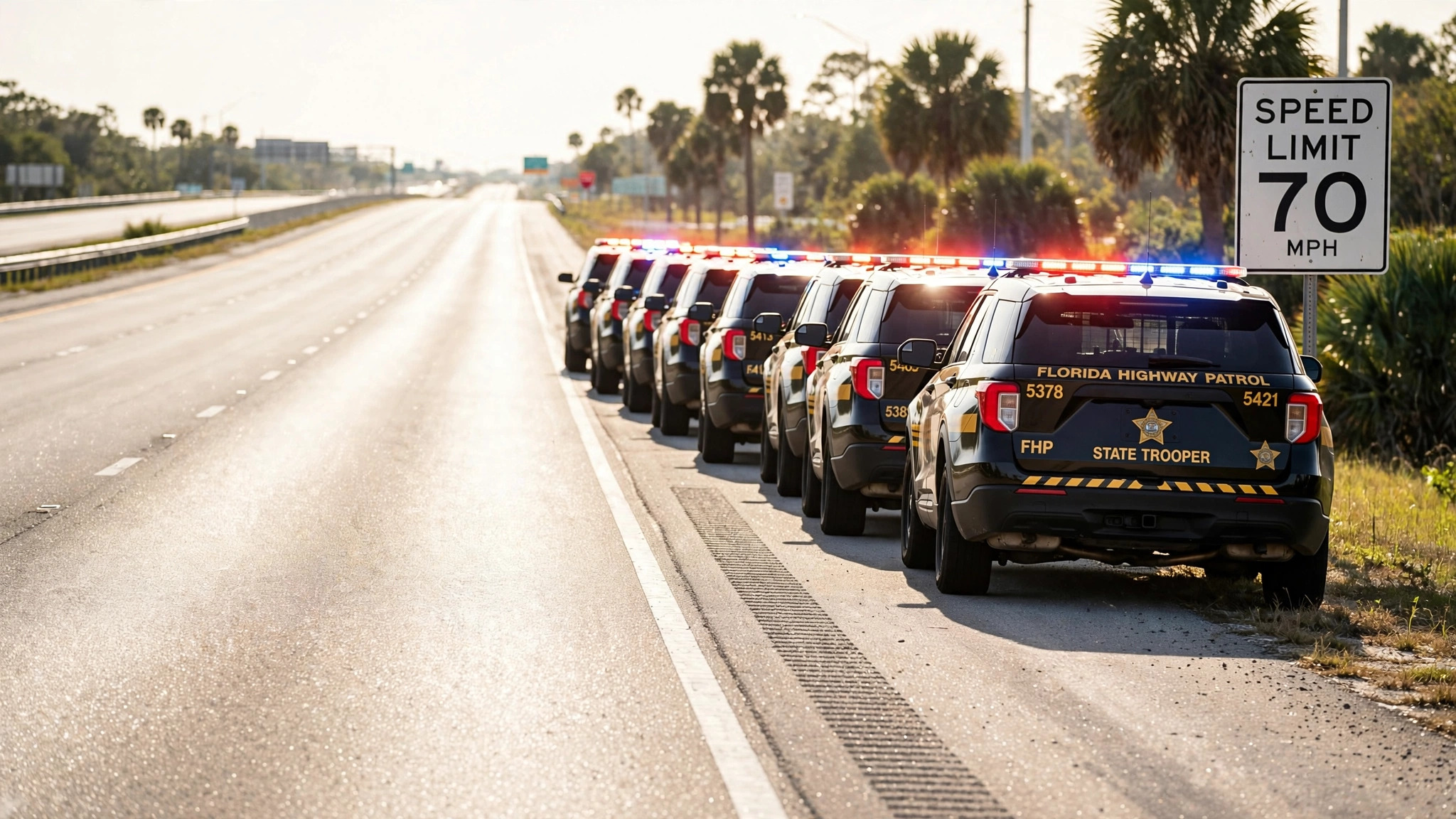
Operation Southern Slow Down Ends Today. Florida Has the Lowest Speeding Death Rate in America.
A five-state anti-speeding blitz wraps up in the one state where speed is least likely to kill you. FARS data shows vehicle choice creates a 94x death-rate gap that no traffic stop can close.
America Didn’t Get Safer. Its Cars Just Got Harder to Die In.
Road deaths fell 4% in 2024 while 2.42 million injuries barely budged. Fleet turnover explains the divergence: 78% of fatal-crash deaths involve vehicles from before the modern safety era.

NHTSA Spent $665 Million on Speed Campaigns. Virginia Just Made a Judge Do It Instead.
Virginia’s new ISA law puts GPS speed limiters on reckless drivers’ cars. NHTSA’s plan for 10,035 annual speeding deaths: a month-long ad campaign and $665M in grants.

Every Crash Test Dummy in the World Is Sitting in a Position You Won’t Be In
AEB brakes at up to 1g before a crash, lurching you forward by up to 400mm. Every safety rating was earned with the dummy sitting still. Three 2026 SAE papers say the gap matters.

The Most Common Car Injury in America Wasn’t Being Properly Tested Until January
IIHS upgraded its whiplash test to 30 mph. Of the first 18 SUVs tested, 78% failed to earn a Good rating. The vehicles that passed have FARS fatality rates half those that didn’t.

He Googled ‘FSD Not Aggressive Enough.’ Then He Overrode It at 73 in a 30.
A DoorDash driver frustrated with FSD’s conservative driving Googled for workarounds. The NTSB confirms he then floored the accelerator to 100% in a 30 mph zone, killing a 76-year-old woman. The override architecture let him.

October Kills More American Drivers Than Any Other Month. Nobody Runs a Safety Campaign.
October produced 3,505 fatal crashes in 2023—12% above average. It’s the deadliest month in 22 states. Summer gets the PSAs. October gets the body bags.

A Thousand Experts Just Named Your Car’s Best Safety Feature Its Biggest Threat
A global survey says ADAS misuse is the #1 road safety risk. FARS data shows brands with the most ADAS have death rates up to 22× lower. Both are true. The paradox is the story.
25,441 People Died in Cars That Just Failed a Test Nobody Was Running
IIHS finally put a crash-test dummy in the back seat. Most of America’s best-selling vehicles failed. FARS data shows what three decades of not checking cost.

The Crosstrek’s Battery Pack Just Outperformed Its Engineers
IIHS tested the same Subaru Crosstrek with two powertrains. The hybrid scored “good” where the gas version scored “marginal.” The battery changed the crash structure, not just the fuel bill.

The Nation Hit a 5-Year Low for Road Deaths. California Got 39% Worse.
NSC data shows the national fatality rate hit 1.06 per 100M VMT in April 2026. California added 243 extra deaths in four months. The weakest DUI laws in the nation are doing exactly what you’d expect.

America’s Road Deaths Dropped 6.7%. One Category Got Worse.
NHTSA’s 2025 subcategory report shows every metric improving — urban interstates, nighttime, rollovers, ejections. Rural interstates went up 1%. The reasons are structural.

The Brand Lethality Index: Ranking Every Automaker by Whether You Survive the Crash
FARS data reveals a 2.42x gap in crash survivability across brands. Pontiac kills 74% of the time. Ram: 30%. Honda is sixth-deadliest.

72% of America’s Road Deaths Happen in Cars Too Old for Stability Control
NHTSA’s 2025 report shows the biggest fatality drop in a decade. FARS model-year analysis reveals nearly three-quarters of deaths still occur in pre-2012 vehicles that never had to pass a stability control test.

GM Killed the Spark and Sonic. The Replacement Cuts Fatal Crashes 83%.
The Spark was America’s cheapest new car at $13,600 with a 74% crash lethality. The Trax crossover that replaced it has double the fleet and 63% fewer deaths.

Tesla Said Its Headlights Were “Inconsequential.” NHTSA Recalled Them Anyway.
NHTSA forced a recall on 19,900 of the safest vehicles in America for headlights that never caused a crash. The Chevy Impala kills at 100× the rate and violates no federal standard.

One Brand, Two Vehicles, a 13× Death-Rate Gap
Mazda was just named the safest brand in America. Its CX-5 kills at 0.12 per 100M VMT. Its Mazda3 kills at 1.63. Same badge. Same showroom. 13.6 times the fatality rate.

Consumer Reports Ranked Lincoln the Fourth-Safest Brand in America. The Federal Body Count Disagrees.
CR's first-ever Safety Verdict put Lincoln above Toyota, Honda, and Volvo. FARS says Lincoln's death rate is double Acura's and 72% worse than Mazda's. Same tier, different morgue counts.

Honda Built the Safest Family SUVs in America. Their Subframes Were Painted Wrong.
880,514 Pilots, Ridgelines, Passports, and MDXs recalled for subframe corrosion. FARS says they're the safest family SUVs on the road. Crash tests measure the ceiling. Road salt measures the floor.

Ford Killed Its Safest Mainstream SUV. The One 3× Deadlier Lives On.
The Edge died in 2024 with a 0.46 death rate. The Explorer Ford kept posts 1.54. Same drivers. Triple the body count per mile.

50 Investigations Later, Nobody's Asking Why FSD Stepped Aside at 70 mph
NTSB cleared Tesla's FSD in the Katy crash. But the override architecture that handed full control to a driver doing 70 in a 30 zone was never on trial.

Traffic Deaths Dropped 4%. Two Age Groups Got Worse.
Every age bracket between 15 and 64 saw fewer deaths in 2024. Children under 15 and adults over 65 added 173 fatalities. Vehicle age explains why.

The Kia Forte Failed Two IIHS Crash Tests. FARS Says It's the Safest Compact Sedan in America.
Poor in two updated IIHS tests. Lowest death rate of any compact sedan at 0.40 per 100M VMT. The Civic kills at 5.6× the rate. Both datasets are correct.

The Second-Safest SUV in America Can’t Get an IIHS Award
The Traverse posts 0.20 deaths per 100M VMT, second only to the RAV4. IIHS denied it any 2026 safety award. The Explorer kills at 7.7× the rate. Nobody seems to care.

GM Built the Deadliest Compact Pickup in America. Then It Built the Safest.
The S-10 kills at 4.83 per 100M VMT. Its replacement, the Colorado, sits at 0.28. Same company, same segment, and a 17.3× death gap.

Lexus Sells Seven Models. The Flagship Kills at 29× the Rate of the Starter SUV.
The $80,000 LS has a fatality rate of 1.44. The $38,000 NX sits at 0.05. Same brand, same dealership, same Toyota DNA. The gradient is monotonic.

The $48,600 Cadillac CT5 Failed Four IIHS Tests. Its Predecessor Had the Most Impaired Drivers in Luxury.
Poor in side impact, front overlap, headlights, and crash prevention. FARS data shows the CTS — which the CT5 replaced — had the highest impairment rate of any luxury sedan.

The Cheapest Audi Has the Drunkest Drivers in the Luxury Segment
27.1% of Audi A3 drivers in fatal crashes were impaired — 5.4 points above the entry-luxury average. Then IIHS downgraded it to Basic.

1,303 People Died in a Chrysler Town & Country. The Van That Replaced It Kills 85% Fewer.
Chrysler sold its premium minivan for 20 years on the same platform. The Pacifica replacement cut the death rate from 1.26 to 0.19. That’s 1,283 deaths the platform didn’t need to produce.

Hyundai Recalled 14 EVs for Zero Fires. Their ICE Fleet Has Killed 9,931 People.
Hyundai-Kia recalled exactly 14 electric vehicles for a battery defect that hurt nobody. Their gasoline cars have 9,931 FARS fatalities. That’s 709 deaths per recalled EV.

The Vehicles That Crash the Most Have the Soberest Drivers
Pearson r = −0.23 across 298 vehicle models. The most crash-prone vehicles in FARS have below-average impairment rates. Sobriety doesn’t save you from bad design.

Range Rover’s Steering Can Snap Off. Land Rover’s Fix Is a Brace.
522 steering knuckle fractures across nine model years. A recall covering four. NHTSA escalated to Engineering Analysis after calling JLR’s data “contradictory.”

Toyota’s Safest Family SUV Has a Rear Axle That Can Break
Toyota recalled 5,408 Grand Highlanders and Lexus TXs for rear axle carriers that can crack from the factory. FARS data reveals the Highlander sits mid-pack, not best-in-class, for three-row SUV safety.

LendingTree Ranked America’s Most Aggressive Vehicles. They Forgot to Divide.
The Silverado and F-150 are underrepresented in aggressive-driving crashes per fleet size. The Dodge Charger, buried at #11, runs at 2.28× the expected rate.

Every Competitor Got Safer. The Nissan Sentra Got Worse.
From MY2015 to MY2019, the Corolla dropped 46% and the Elantra dropped 13%. The Sentra rose 63%. Seven model years on the same platform.

1,253 Fewer Americans Died Speeding in 2025. The Speed Limits Didn’t Change.
Speeding isn’t a speed problem. NHTSA’s own data shows half of speeding fatal-crash drivers were unbuckled and 37% were drunk. The 11% decline is a behavioral cluster story.

Subaru Recalled 541,237 of Its Safest Cars. The Fix Is a Sticker.
Zero crashes, zero injuries. The recall system moves at light speed for label typos and at geological pace for airbags deploying into passengers.

Two-Thirds of Safety Experts Say Car Tech Ads Are Lying. The Math Says They’re Being Generous.
1,000 transport specialists say ADAS ads overstate capabilities. EU research shows all that tech combined saves 6%. AEB does 83% of the work and costs $0.

The Cadillac CT5 Got Five Stars and Four ‘Poors.’ Both Are Correct.

BMW Recalled 29,119 Hybrids for Fire Risk. The Part That Failed Doesn’t Exist in an EV.

For Every Death, America Recalls 1,319 Vehicles. It’s Not Working.

Switching From a Sedan to an SUV Makes You 9x Safer — Unless You Buy the Wrong Brand

58,186 Americans Died Because They Picked the Wrong Model. Not the Wrong Class. The Wrong Model.

Passenger Deaths Dropped 44% in 30 Years. Driver Deaths Dropped 13%. Nobody Noticed.

GM Killed Seven Sedans. Those Sedans Have Killed 7,370 People Since.

Utah Has Zero Road Rage Deaths. Arkansas Has 258. Neither Number Is Real.

Ford and Tesla Recalled 1.3 Million Vehicles This Month. One Brand Kills at 19× the Rate of the Other.

The Pontiac Vibe and Toyota Matrix Are the Same Car. One Has Killed 22 Times as Many People.

IIHS Just Rated 14 Vehicles. The Failures Kill at 5× the Rate of the Winners.

The Civic Gets Safer Every Generation; the Forte Gets Deadlier

The 2001 Ford F-150 Has Killed More People Than Any Other Vintage in America

Five TSP+ Winners Have Above-Average Death Rates. Every Vehicle That Failed Has a Below-Average One.

In 2021, SUVs Started Killing More People Than Sedans. The Safety Narrative Didn’t Update.
The 25,055 Deaths Behind NHTSA’s 2026 Crash Test List
We cross-referenced NHTSA’s 37-vehicle test list with FARS fatality data. The death rate spread across vehicles getting the same star-rating treatment: 71 to 1.

Every Vehicle Has a Single Worst Year. For 23 of Them, It’s 2004.
Model Year 2004 is the peak death vintage for 23 separate vehicles in FARS data, producing 3,158 fatalities. The next-worst vintage claims 15. Three forces converge on one model year.

Out-of-State Travel Deaths Dropped 12%. Every Other Category Wishes It Could Keep Up.
The steepest decline in any NHTSA fatal crash category tells you exactly where safety tech actually works and where it doesn't.

36,640 People Died on American Roads in 2025. The Cars Didn't Get Safer.
NHTSA's 2025 full-year data shows the lowest fatality rate since before COVID. The vehicle fleet barely changed. The 2,614-death improvement is behavioral.

The 10 Soberest Vehicles in Fatal Crashes Are All Family Cars. 4,079 People Died in Them.
Rank every vehicle in FARS by impairment rate and the Subaru Ascent finishes last at 8.2%. The next nine are all family haulers too. Combined body count: 4,079.

The National Death Rate Is Falling. Pickup Trucks Are Eating the Difference.
Pickup occupant deaths rose 31% while sedan deaths fell 11%. Total change: −105. America rearranged the body count.

The Fatality Rate Just Dropped Below 1.0. You Should Not Be Celebrating.
NHTSA's Q1 2026 rate hit 0.99 per 100 million VMT. A masterpiece of denominator engineering. 86 people still died every day.

The Bronco Is Designed to Fall Apart. Two Recalls Later, It’s Working as Intended.
Ford recalled 52,000 Broncos for body parts detaching at highway speed. The roof and the fenders. On a vehicle designed to be taken apart. Nobody tests for this.

Your Car Won a Safety Award. Nobody Tested Whether It Can Stop Before Hitting a Semi.
The IIHS gives Top Safety Pick awards to vehicles never tested against semi-trailers, the crash type that kills 400+ Americans annually in underride collisions.

The Kia Optima Got Every Safety Feature Congress Mandated. Its Body Count Tripled.
FARS data shows 15 vehicles had higher average annual deaths in post-ESC mandate model years than pre-mandate ones. Safety tech works per mile. It didn't work per model.

GM Killed 1,540 People Before It Learned to Listen. This Week, Listening Saved One.
The Cadillac Vistiq recall proves GM's post-Cobalt safety culture works. FARS data reveals what that culture cost to build: 1,540 dead, a decade of silence, and one toddler who finally made an engineer speak up.

Iowa Just Added 5 MPH to Its Rural Roads. The Price Is About a Dozen Funerals.
IIHS data says each 5 mph speed limit increase costs 4% more traffic fatalities. Iowa averages 337 road deaths a year. Four percent of 337 is about 13.

The Kill Ratio: Your Car's Safety Rating Is Someone Else's Death Sentence
The Ram 2500 is involved in 748 fatal crashes. Its occupants die in 153 of them. Do the math on who's absorbing the rest.

Minnesota's Motorcycle Deaths Are Up 54%. Colorado Just Set a Six-Year Record. Nobody's Aggregating the Picture.
Three states are independently reporting worst-in-decades motorcycle fatality surges. No federal dashboard tracks it in real time. We built the table.

Your Car Needs Half a Mile of Your Attention to Change the Radio. A 2005 Volvo Needed 328 Feet.
Vi Bilägare’s 2026 repeat study shows touchscreen distraction distances are getting worse, not better. No safety rating on earth penalizes the difference.

NHTSA Celebrates a 0.99 Death Rate. Crashes Still Cost $1.77 Trillion. The 2.42 Million Injured Don't Make the Headline.
The fatality rate dropped below 1.0 for the first time in a decade. But 2.42 million people were injured in 2024, and the total cost hit $1.77 trillion. NHTSA doesn’t publish a quarterly injury rate.

Congress Passed a Law to Stop Hot Car Deaths. NHTSA Missed the Deadline by Three Years. Ten Children Are Dead.
Section 24222 of the 2021 Infrastructure Act gave NHTSA two years to mandate occupant detection. The deadline was November 2023. The rule doesn’t exist. Ten children have died in hot cars in 2026.

Kia Recalled 463,000 Tellurides for Fire Risk. The Fix Caught Fire.
462,869 Tellurides. Two recalls. Same fire defect. Kia’s engineering fix failed, and the new remedy is a fuse spliced into the seat motor circuit.

The Average Car in a Fatal Crash Was Built in 2007. A 25% Tariff Keeps It on the Road.
82.6% of FARS fatalities involve vehicles from 2014 or older. The fleet is 12.8 years old on average. A 25% tariff makes new cars harder to buy—and old ones harder to leave.

The Recall System Has a Defect: 39% of Fixes Never Happen, and Some That Do Don’t Work
NHTSA data shows only 61% of recalled vehicles ever get repaired. This week, Ram rollaways and Kia fires proved that even the “fixed” ones can fail.

NHTSA Called Autonomous Vehicles a “Danger to the General Public.” Three Weeks Ago, It Stopped Counting Their Crashes.
On June 16, NHTSA gutted the only system tracking AV crashes. On July 9, its administrator called AVs dangerous for blocking ambulances. The math doesn’t work if you stopped doing the math.

Ford Recalled 19.6 Million Vehicles Last Year. Then Won a Quality Award.
Ford issued 153 recalls in 2025 and 56 more in 2026. Then JD Power crowned them #1. FARS adds a third number: 34,954 deaths in a decade.

IIHS Just Tested Commercial Vehicles for the First Time. The Express Has Been Killing Drivers Without Force Limiters for 29 Years.
IIHS evaluated nine commercial vehicles on basic safety features. The Chevy Express, in production since 1996, still lacks force limiters. FARS records 475 deaths.

A Dead Child Made GM Check Its Own Seats. Nobody Made Anyone Else.
Three manufacturers recalled power-folding seats after a 2-year-old was crushed in a Palisade. At least 15 other SUVs with the same feature remain publicly untested.

EVs Have Fewer Moving Parts. One of Ford’s Just Broke.
Ford recalled 42,784 Mustang Mach-Es for a fractured rear differential pinion shaft. BorgWarner supplied it. The fix won’t be ready until December.

The Safest Vehicle in America Might Burn Down in Your Garage
The Kia Telluride’s 0.04 death rate makes it the second-safest vehicle by FARS data. Kia just recalled 462,869 of them for fire risk. FARS can’t see fire deaths.

Cannabis Just Passed Alcohol in Fatal Crash Toxicology. Nobody Has a Breathalyzer for It.
NHTSA’s trauma center study found cannabinoids in 25% of fatally injured road users, edging out alcohol at 23%. FARS vehicle data shows where the shift is already visible.

The Fatality Rate Just Broke Below 1.0. Motorcyclists Are Going the Other Direction.
Q1 2026 hit 0.99 deaths per 100M VMT — the safest quarter in a decade. Every subcategory declined. Except motorcyclists, who’ve tripled their death count since 1997.

The CT5 Scored POOR on Four IIHS Tests. NHTSA Gave It Five Stars. Same Car.
GM’s $48,600 Cadillac CT5 just earned the worst IIHS results of any vehicle in its test batch. NHTSA calls it perfect. The predecessor already had a 4x higher death rate than its competitors.

1,166 Cyclists Died in 2023. That’s the Worst Number Since 1980. Everyone Else’s Numbers Got Better.
Cyclist fatalities up 56% in a decade while overall traffic deaths fell. Three states account for 42% of the body count. The fleet got safer for the people inside it.

America’s Road Death Rate Just Broke Below 1.0. It Did the Same Thing in 2014.
Q1 2026 fatality rate: 0.99 per 100M VMT. Q1 2014 was also 0.99. Twelve years, 500 billion more annual miles, and the country matched a seasonal low it set a decade ago.

Stellantis Shipped 11,980 Grand Wagoneers With ESC Disabled From the Factory
Factory-installed software knocked out both ESC and brake assist in every 2026 Grand Wagoneer. IIHS says ESC cuts fatal SUV crashes by 56%.

Drunk Trucking Surged 26% in 2024. Nobody Else Got Worse.
NHTSA’s 2024 data shows alcohol-impaired truck drivers in fatal crashes surged 26% — the only vehicle category going backwards.

You’re 71× More Likely to Die in One Hyundai Than Another. Every Automaker Has the Same Problem.
FARS cross-tabulation reveals every manufacturer has a 10-70× internal safety spread. Brand loyalty is a safety gamble.

Toyota Fixed the Corolla’s Back Seat Twice. IIHS Still Gave It Nothing.
The safest of America’s Big Four sedans by fatality rate can’t earn even a basic safety award. Two redesigns later, the back seat is still Marginal.

The HR-V and Ram 2500 Both Kill at 0.13 per 100M VMT. Only One Is Actually Safe.
FARS data decomposes death rates into crash frequency and crash lethality. The results demolish the concept of a “safe car.”

NHTSA’s Budget Went Up 459%. Traffic Deaths Dropped 16%. The Automakers Did the Rest.
A peer-reviewed study finds America’s auto safety regulator has failed its core mission for 25 years while its budget ballooned. Every life saved was saved by manufacturers.

One Dead Toddler. Three Recalls. And Dozens of SUVs Nobody’s Checked Yet.
After a two-year-old was crushed by a power-folding seat, three automakers recalled 83,000 vehicles. There’s no federal standard for anti-pinch protection, and 20+ other SUV models haven’t been tested.

The Palisade Got IIHS’s Highest Safety Award. 68 Days After It Killed a Toddler.
IIHS runs six crash tests. Zero test for powered mechanisms that trap children. The award came anyway. Now three automakers and 83,000 vehicles share the same defect.

Ford’s $325,000 Track Car Just Got Recalled Because Its Wipers Don’t Work
Ford recalled 289 Mustang GTDs for wiper failure. The regular Mustang already accounts for 44.7% of all sports car fatalities in the U.S. at a death rate 8.7× higher than a Porsche 911.

It Took 11 Years to Require Electric Cars to Make Noise. Three Automakers Still Can’t Manage It.
155,000+ EVs and hybrids recalled because the federally mandated pedestrian warning sound fails. Ford, GM, and Mercedes each broke the same simple requirement differently. Meanwhile, 9.1 million pre-2021 EVs have no sound system at all.

NHTSA Had Four Years to Update Its Safety Ratings. Automakers Said No.
The Alliance for Automotive Innovation lobbied NHTSA to delay updated 5-star ratings from 2026 to 2027. Pedestrian AEB, blind-spot intervention, lane-keeping assist — all punted. A private nonprofit raised its bar on time. The feds folded.

Thirteen Quarters of Fewer Dead. The Last Streak This Long Took a Recession.
U.S. traffic deaths have declined for 13 consecutive quarters while VMT increases. Every prior streak like this required a recession that forced people off the road. This time, Americans are driving more miles and dying less per mile. That has never happened before.

Every New Car in Europe Will Brake for Pedestrians Tomorrow. America Won’t Require It Until 2029.
The EU mandates pedestrian AEB starting July 7. The US deadline is September 2029. During the gap, the country with the worst pedestrian death rate in the developed world will sell 50 million cars without the requirement.

For One Month, America’s Roads Were Safer Than Before COVID. Don’t Get Used to It.
March 2026 posted a 1.07 fatality rate per 100M VMT, the first monthly reading below the pre-COVID baseline of 1.13. But summer is coming, and seasonal data does not make an annual trend.

The Most Effective Safety Program in America Is a Car Crusher
65.4% of fatal-crash deaths involved pre-2010 vehicles. As the deadliest generation scraps at 5–6% per year, fleet turnover alone could explain the entire 2025 death decline.
A Plastic Clip Worth Pennies Has Generated Three Million Ford Explorer Recall Notices
Three recalls. Two suppliers. One failure mode. Ford's Explorer retention-pin design has produced ~3 million recall notices since 2021, and the B-pillar fix isn't expected until late 2026.

The Safest Sedan in America Has a 67-Death Blind Spot
The Prius kills at 0.55 per 100M VMT. But the 2010 model year has 67 FARS deaths — 2.98x its neighbors. Two brake recalls. One vintage. Zero attention.

Kia Sold the Forte With Poor Headlights for Six Years. The Fix Was in the Parts Bin the Whole Time.
IIHS rated the Forte's base-trim headlights Poor from 2019 to 2024. The LED fix was on the GT the whole time. Kia's solution was to kill the car.
The 2027 Kia Telluride Was Recalled Twice for Seatbelts Before Its First Oil Change
Two seatbelt recalls, one supplier, 21,134 vehicles affected. The Telluride's 0.04 FARS death rate assumes the belts work.

GM Killed Pontiac in 2010. The G6 Has Killed 908 People Since.
Every Pontiac G6 fatality in the federal crash database happened after the brand ceased to exist. At 69.9% lethality, the G6 is the deadliest mid-size sedan in its competitive class.

Six Months After Buying Takata, Joyson Built Airbag Inflators That Rupture
Joyson Safety Systems acquired Takata for $1.6 billion and promised “the highest quality.” Six months later, its factory built inflators now rupturing in parked GM trucks.

Four Recalls, One Failed Crash Test, Six Months: The Hyundai Tucson’s 2026
The 2025–2026 Tucson has been recalled four times for four unrelated defects and earned a POOR IIHS whiplash rating. It’s Hyundai’s best-selling vehicle.

NHTSA Cleared 1 Million Teslas in One Week. The Same Week, FSD Killed Someone.
NHTSA closed two Tesla safety probes covering 1,071,241 vehicles in six days. Its own findings identified Tesla’s design choices as the cause. Then it walked away.

Every Nissan Sedan Is Above the Death Rate Median. Every Single One.
13 of 19 Nissan models rank above their class median for fatality rate. The Maxima is 7.5× the sedan median. 14,456 people are dead across the lineup.

A 50-Cent Fuel Pump Part Has Been Stalling Toyotas for Six Years. The Recall Still Isn’t Done.
Denso’s defective impeller has triggered 5.8 million Toyota and Lexus recalls since 2020. The affected models account for 89.4% of every Toyota fatality in FARS.

Honda Specified the Wrong Paint on 880,514 Vehicles. Road Salt Is Finishing the Job.
A coating spec error left the rear subframe vulnerable to corrosion in 23 salt-belt states. The recalled models are among the safest in the FARS database. Honda estimates 1% are compromised. That’s 8,805 vehicles.

741,195 Fords Can’t Stay in Park. NHTSA Just Proposed Removing Brake Pedals.
Ford recalled three-quarters of a million vehicles for a rollaway defect the same week NHTSA proposed eliminating brake pedals from robotaxis. The defective fleet has driven 245× more miles than Waymo’s entire history.

The Toyota Highlander Saved Nearly 3,000 Lives. Nobody Noticed.
Toyota's Highlander and Ford's Explorer compete in the same showroom. One has a fatality rate 3.7 times higher. Nearly 3,000 people are alive because of that gap.

The GMC Envoy Won SUV of the Year. Then It Killed 988 People.
GM charged a premium to rebadge the Trailblazer as the GMC Envoy. Same platform, same crash structure, same body count. Motor Trend gave it SUV of the Year anyway.

Stellantis Vehicles Have Killed 23,295 People. The Company Might Not Survive to Fix the Problem.
Twelve percent of America’s traffic deaths belong to Stellantis. So does a €22 billion writedown, a securities fraud lawsuit, and a million Jeeps that catch fire while parked.

Ford Won JD Power’s Top Quality Award, Recalled 12 Million Vehicles, and You’re Supposed to Find This Reassuring
JD Power measures your first 90 days. NHTSA recalls measure the decade after that. Ford is winning one contest and losing the other.

NHTSA Says 38% of July 4th Drivers Killed Are Drunk. For the Corvette, It’s 26% on a Tuesday.
Five muscle cars operate at near-holiday impairment levels 365 days a year. NHTSA targets the calendar. The data says target the car.

America Turns 250. The Roads Have Killed 4 Million.
Since 1899, U.S. roads have killed approximately 4.1 million Americans, more than three times every military death in every war from Bunker Hill through Kabul.

Chrysler Renamed the Town & Country. The Death Rate Dropped 85%.
The Town & Country kills 130 people a year at a rate of 1.26. Its replacement, the Pacifica, manages 0.19. Same brand, same segment, 6.6× safer.

The Average Car on the Road Is 12.8 Years Old. So Is the Average Car in a Fatal Crash.
S&P Global says the average U.S. vehicle is 12.8 years old. FARS says the peak death bracket is 12–14 years. The safety features saving new-car buyers take a decade to reach the cars that actually kill people.

Allstate Just Ranked 200 Cities by Crash Risk. It Missed the Variable That Matters 16x More.
Allstate’s 2026 “Best Drivers” report shows a 4x gap between cities. FARS data shows a 16x gap between popular vehicles at the same dealership. Your car matters more than your zip code.

The 100 Deadliest Days Are Getting Safer. Unless You’re 16.
Summer road deaths fell 8.1% over two years. Teen driver fatalities rose 17.2%. The only age group getting worse is the one driving the worst cars.

Hyundai Sells a Car 142 Times Deadlier Than Its Safest Model. The Badge Didn’t Warn You.
Within a single brand’s showroom, fatality rates per 100 million VMT vary by over 100×. Brand loyalty is a safety myth the data demolished years ago.

Ford Will Spend Millions Telling You It’s #1 in Quality. It Recalled 8.9 Cars for Every One It Sold.
JD Power measures quality for 90 days. The average Ford has been on the road for 4,745 days. Ford’s new ad campaign is aimed squarely at the gap between those numbers.

Tesla’s Phantom Braking Complaints Dropped 99%. Its Lawsuit Exposure Grew to $14.5 Billion.
NHTSA closed four Tesla probes in 2026 as complaints declined. Courts opened billions in new litigation. Same technology, opposite conclusions.

NHTSA Wants to Remove the Brake Pedal. The Software Replacing It Has Been Recalled Five Times.
NHTSA proposes eliminating brake pedals from autonomous vehicles. Waymo’s software has been recalled five times in 28 months, including for passing school buses and driving into floods.

Honda’s Safest Vehicles Have an Asterisk. It’s Your Zip Code.
The Pilot kills at 0.29 per 100M VMT. But in 23 salt-belt states, 880,514 of Honda’s safest SUVs and trucks have rear suspensions that may corrode until the wheels come loose.

Since 2020, Automakers Have Told 11 Million Vehicle Owners to Park Outside. That’s the Fix.
More than 90 recalls have instructed owners to park outside due to fire risk. Samsung recalled every Note 7. The auto industry tells you to use your driveway as a safety feature.

Allstate Says Brownsville Has America’s Best Drivers. Federal Data Says Texas Kills 2.5x More Per Mile Than Massachusetts.
The 2026 Allstate report ranks cities by collision frequency. FARS ranks states by death rate. Three Texas cities top the “safest” list while their state kills at 2.45x the Massachusetts rate per mile driven.

Three Million Vehicles Got Recalled in One Week. Every Automaker Said ‘Only 1% Are Affected.’
Ford, Stellantis, Honda, and Hyundai filed recalls covering 2.8 million vehicles in three weeks. Every filing cited nearly identical defect estimates. FARS data on these same models tells a different story about what “1%” actually means.

Ford Replaced Its Safety Inspectors With AI. Then Hired 350 of Them Back.
Ford installed 900 AI cameras, lost its veteran engineers, and watched recalls spike to 153 in one year. Now it’s rehired 350 gray beards. The company behind 18.3% of U.S. traffic fatalities had automated the people who catch defects.

Congress Mandated a Tire Safety System That Warns You After the Damage Is Done. 600 People Die Every Year Anyway.
The TREAD Act mandated TPMS after the Firestone scandal killed 271 people. FMVSS 138 set the warning at 25% underinflation. The tire industry now admits that threshold is “often too late to prevent damage.” Over 600 still die annually.

NHTSA Says Enforcement Saved 2,614 Lives. The Fleet Math Says Otherwise.
NHTSA announced 36,640 traffic deaths in 2025, crediting law enforcement partnerships. FARS per-model data shows fleet turnover from high-rate sedans to modern crossovers did the heavy lifting.

The Chevy Equinox Has a ‘Fine’ Death Rate. 1,056 People Died Anyway.
A 0.36 rate sits below the SUV median. The CX-5 scores 0.12. Same class, 3× the gap, and ~700 excess deaths. The electric replacement has been recalled twice for the same pedestrian sound defect.

Three Out of Four Full-Size Pickups Can’t Protect a 12-Year-Old in a Crash
The F-150, Silverado, and RAM 1500 all fail or score poorly on the IIHS rear seat crash test. Only the Tundra passes. Ford hasn’t tried to fix it in three years.

Ford Won the Quality Award the Same Day It Recalled 741,000 Vehicles
JD Power crowned Ford the highest-quality mainstream brand on June 24. The same day, Ford filed a recall for 741,195 vehicles that won’t stay in park. One metric measures infotainment bugs. The other measures whether your car rolls into traffic.

Ford Has Recalled One Million Vehicles for Rolling Away. It’s June.
Two separate rollaway recalls in six months. Different platforms. Different transmissions. Same result: your Ford won't stay parked. The latest fix arrives in 2027.

Honda Knew Its Minivan’s Airbags Would Attack Passengers. It Waited Nine Years to Care.
440,830 Odysseys have airbag sensors that mistake potholes for crashes. Honda found the defect in 2021, fixed it in new cars, and told existing owners everything was fine.
The Model Year Lottery: Some Vintages Kill Three Times More Than Their Neighbors
FARS data shows 19 model years that are 2-3x deadlier than the years on either side. Nobody tells you which ones before you buy.

GM Has Built the Same Van for Thirty Years and Still Can’t Tighten a Nut
Four recalls in 18 months for the oldest vehicle in production. But the death rate says it’s one of the safest vans on the road.

Ford Has Recalled Five Million Vehicles Because They Can’t Stay in Park
Ford’s sixth major park-related recall since 2018 pushes the cumulative total past five million vehicles. Three different mechanisms, three drivetrains, one outcome.

At the Current Rate of Improvement, Vision Zero Arrives in the 23rd Century
NHTSA pledged zero traffic deaths. We projected the timeline from actual FARS data. At the post-2022 rate of decline, the number drops below one person around the year 2271.

Your Car Records Everything. Only the Manufacturer Gets to Read It.
Federal crash recorders capture 15 data points over 5 seconds. Modern ADAS vehicles record thousands of channels continuously. The manufacturer controls who sees them.

Your Car Will Be Recalled. The Math Says You Won't Fix It.
28 million vehicles recalled against 290 million registered. The per-vehicle lifetime recall probability is 70%. Half never get repaired.

It Took 14 Years to Require a Side-Impact Test for Your Kid's Car Seat. Do the Math on Who Paid.
Congress mandated side-impact testing in 2012. The standard takes effect December 2026. In between, roughly 52 children a year died in side crashes while strapped into seats never tested for them.

NHTSA Closed Two Probes Covering 817,000 Vehicles in One Weekend. Nobody Checked If the Fixes Work.
In 48 hours, NHTSA quietly shuttered investigations into Honda's exploding-on-potholes airbags and Tesla's vanishing power steering. A DOT audit says the agency takes 617 days to open a probe but can close one with a press release.

A Quarter-Million Land Rovers Have Airbags That Won't Fire. The Fix Is a Dab of Gel.
250,857 Defenders, Discoverys, and Range Rovers have a 100% defect rate for driver airbag non-deployment. The cause: normal driving vibrations corrode the clockspring connector. The interim fix: lubricant. No permanent solution exists.

Four People Oversee Whether 6 Million Teslas Can Drive Themselves. Congress Wants to Cut Their Budget.
NHTSA's autonomous vehicle investigation team went from seven people to four after federal workforce cuts. Those four now oversee active safety probes covering 6.1 million Tesla vehicles. Congress proposed cutting the agency's budget by another $88 million.

NHTSA Closed Two Safety Probes on a Saturday Afternoon. Both Companies Had Already Recalled.
On June 27, 2026, NHTSA quietly closed investigations into 817,243 Tesla and Honda vehicles. Both manufacturers had already issued voluntary recalls. Tesla said the recall wasn't even in response to the investigation.

The NTSB Has Asked for a Phone Kill Switch Three Times. Apple Built a Dismiss Button.
In 2011, the NTSB recommended phone lockout technology that disables devices while driving. Apple shipped a notification silencer you dismiss with one tap. 42,463 distraction deaths later, nobody has built what was actually recommended.

$4 a Car Would Save 67 Lives a Year. NHTSA Has Been ‘Analyzing Comments’ for 18 Months.
Europe required cars to protect pedestrians' heads in 2005. NHTSA proposed the same rule in 2024. It costs $4 per vehicle. Twenty-year-old pickups already pass. It's still sitting in a comment docket.

100 Cars a Day Hit Buildings. FARS Counts 210 a Year.
Up to 2,600 vehicle-into-building deaths per year. FARS reports 210. A 76-year-old woman dies inside her own home. The data gap is killing people we refuse to count.

170 Million Miles of Proof That Robots Drive Better. Then Someone Moved a Cone.
Waymo's 92% safety improvement is real, peer-reviewed, and statistically significant. It also doesn't cover the environment that kills 850 people a year.

Two Chips Fought Over a Memory Address. 20,991 EVs Can Lose Power at Highway Speed.
A firmware race condition in the battery ECU can kill drive power at 70 mph. Dijkstra published the fix in 1965. Toyota shipped without it in 2026.

Every Vehicle Class Has a Kill Rate. These Cars Blew Past It.
We computed expected deaths for every vehicle using class-average crash lethality. The Ford Ranger killed 902 more people than an average pickup would have.

NHTSA Called 39,345 Deaths ‘Encouraging.’ Norway Lost 89 People.
America’s traffic death rate is 2.6x the European average and 7x Norway’s. In a single year, 24,000 Americans die who wouldn’t if they lived across the Atlantic.

438 People Will Die This Weekend. Here’s When, Where, and in What.
NSC projects 438 traffic deaths over the July 4th 78-hour window. 38% will involve alcohol. FARS toxicology data reveals which vehicles carry the highest impairment risk.

787,000 Vehicles, One Month, One Failure Mode: Your Safety Net Is a Light Switch
Four manufacturers recalled 787,193 vehicles in June 2026 for electronic safety failures that work perfectly or not at all. One architectural pattern, four ways to die.

The Brand Badge Is a Lie. Your Model Choice Is a 39x Safety Gamble.
FARS data reveals fatality rate spreads up to 39x within the same manufacturer. Choosing the right Toyota matters more than choosing Toyota over Kia.

The Same ECU Bug Hit Toyota, Lexus, and Subaru at Once. That’s Not a Coincidence.
A single Denso memory chip defect triggered recalls across 20,991 EVs spanning three brands on the e-TNGA platform. It’s the architecture’s second cross-brand recall in two years.

Your Minivan’s Airbags Can Fire From a Pothole. Honda Knew for Four Years.
Honda recalled 440,830 Odyssey minivans after side curtain airbags deployed from potholes. The company identified the defect in 2021, fixed production in 2022, and didn’t recall vehicles already sold until NHTSA forced the issue.

$12,409 Per Life. The Insurance Industry Accidentally Built the Best Safety Program in America.
IIHS spent $600 million over 30 years and saved 48,352 lives. That is $12,409 per life—0.1% of what the DOT says a life is worth. The government spent $92 million on alcohol detection and saved nobody.

Same Death Rate. One Kills Its Driver 92% of the Time.
The Saturn S Series and the Toyota Tundra have nearly identical fatality rates. But when a fatal crash happens, the Saturn's occupant dies 92% of the time. The Tundra's? 42%. The standard safety metric hides a 4.5× gap in who actually dies.

The Nissan Rogue Killed 127 People in Its Worst Model Year. The RAV4 Never Broke 88.
Four consecutive model years above 100 fatalities. The Rogue's T32 platform sustained a death plateau no compact SUV competitor matched.

Every Vehicle Category Got Safer in 2024. Except the One You Bought.
Cars fell 9.7%. Pickups fell 4.9%. Pedestrians, cyclists, vans, motorcycles, large trucks: all down. SUV deaths rose 1.6%. The only category going the wrong direction.

America Is Removing the Brake Pedal Before It Requires the Brakes to Work
NHTSA proposed eliminating brake pedal requirements for AVs on June 26. The AEB mandate doesn't arrive until September 2029. The regulatory timeline is running backwards.

A $20 Chip Would Have Saved Them: The TikTok Theft Epidemic Hiding in FARS Data
FARS model year data reveals the fingerprint of the Kia Boys epidemic: a 52% death spike for vehicles missing a $20 immobilizer, and an 82% drop the year it was finally added.

America's Safety Streak Hit a Wall in July. The Math Says It Was Always Going To.
NHTSA’s cumulative estimates hide the quarterly math. Q2 2025 dropped deaths 9.9%. Q3 managed 3.2%. The longest safety streak in FARS history is decelerating.

Every Car in America Has the Same Backdoor That Killed Martha Avila
Tesla says the driver overrode Full Self-Driving at 73 mph. But the override isn’t a Tesla problem—it’s an industry design choice built into every AEB-equipped vehicle on the road.

The U.S. Has Two Official Counts of Its Road Dead. They’re 3,535 Bodies Apart.
NHTSA says 39,254 died in 2024. CDC says 42,789. Both are correct. The gap hides parking lot deaths, driveway deaths, and everyone who died on Day 31.

America Has Had Three Great Death Declines. The First Two Ended Badly.
Fifteen consecutive quarters of declining traffic deaths. The last two streaks reversed violently when recessions ended. This one might be different: it’s driven by fleet turnover, not economics.

Three Numbers Define Every Car in America. None of Them Predict Each Other.
Crash frequency, lethality, and impairment rate are three effectively independent axes with an average R-squared of 4.7%. The Cobalt scores worst on all three.

One Engineering Team Controls 17,227 American Deaths
GM’s full-size truck platform accounts for more FARS fatalities than most automakers produce across their entire lineup. Platform sharing concentrates life-and-death decisions in fewer hands than ever.

The 39% Illusion: Your Safety Features Fight the Crashes That Don’t Kill You
HLDI data shows bundled safety tech reduces insurance claims 39%. Cross-referencing with FARS reveals it prevents less than 1% of traffic fatalities. Insurance sees a revolution. The morgue sees a rounding error.

Your Truck’s Crash Survivability Comes at a Price. Pedestrians Are Paying It.
Pickups have the best occupant crash survivability of any vehicle class. A new NYT/IIHS study quantifies the cost: 2.8% more pedestrian deaths per inch of hood height.

IIHS Saved 48,352 Lives. The Vehicles That Failed Its Tests Are Still Killing People.
IIHS crashed a 1996 Blazer into a 2026 Blazer to celebrate 30 years. The dummy’s head came off. But 89.9% of Blazer deaths in FARS involve the old model they just destroyed.

The Jeep Wrangler Tipped Over in Crash Tests for Seven Years. Stellantis Called It ‘Anomalous’ Every Time.
Three IIHS tests. Three tip-overs. Three frame rail redesigns. Even fixed, it only earns ‘acceptable.’ 1.4 million pre-fix Wranglers remain on roads with no recall.

Land Rover’s Fix for 250,857 Potentially Non-Deploying Airbags Is a Dab of Grease. It Was a Dab of Grease in 2016, Too.
JLR recalled a quarter-million SUVs because corroding clockspring connectors might prevent airbag deployment. The fix is lubricant gel. A 2016 NHTSA bulletin shows JLR knew the same connectors corroded a decade ago. The connector was never redesigned.

The UN Just Set the Bar for Self-Driving Cars: ‘As Good as a Competent Human.’ FARS Data Shows That’s Twice as Hard as It Sounds.
The UN’s new AV safety standard demands performance matching a “competent human driver.” FARS data shows one in five fatal-crash drivers is impaired, making the competent-driver bar 28–50% harder than the blended rate every AV company brags about beating.

NHTSA Mandated a Safety System That Prevents 360 Deaths a Year. It Also Causes the Exact Crash It Was Designed to Stop.
Hyundai just recalled 421,078 vehicles for phantom braking. Honda has 3 million under investigation. NHTSA’s AEB mandate includes two false-positive tests the agency admits are “by no means comprehensive.”

73,099 Americans Reported a Defect to NHTSA Last Year. The Agency Investigated 33.
NHTSA’s complaint-to-investigation funnel converts at 0.045%. FY2025 pipeline math: 73,099 complaints in, 525 investigations out, 10.5 million recalled vehicles never repaired.

America’s Cars Have Never Been Older. NHTSA Says We’ve Never Been Safer. Both Can’t Be True.
NHTSA celebrated 2025’s 1.10 fatality rate as second-lowest ever. But 36,640 people died, the fleet averages 12.8 years old, and 82.7% of FARS fatalities involve pre-2015 vehicles.

NHTSA Investigates 100 Crashes a Year. In 2026, It’s Investigated 2.
NHTSA’s Special Crash Investigations program has opened just 2 cases in 2026, a 96% collapse coinciding with DOGE staffing cuts that gutted the agency’s autonomous vehicle safety division.

39,345 Dead and NHTSA Threw a Party
NHTSA celebrated going below 40,000 deaths for the first time since 2020. Nobody mentioned the 23,429 excess deaths above the pre-COVID baseline.

Every State Banned Texting While Driving. 32,717 People Died Anyway.
Cellphone ban effectiveness decays after two years. In 19 states, texting-only bans may actually increase fatal crashes.

Ford Filed 51 Recalls This Year. That Might Make Them the Safest Manufacturer in America.
Ford leads all automakers in recalls because a consent order forces disclosure. FARS data shows the company with fewer recalls kills more drivers per mile.

IIHS Wants to Cut Crash Deaths 30% by 2030. They Need 5.8% Annual Declines. They're Getting 3.8%.
The 30x30 vision requires historically unprecedented sustained declines. The vehicle categories killing the most Americans can't pass IIHS's own tests.

Stellantis Killed the Hybrid to Stop the Fires. The Wrangler Kept Burning.
Four fire recalls in three years across two unrelated ignition pathways. Stellantis killed its entire plug-in hybrid line. Then a million non-hybrid Wranglers needed the same warning: park outside.

NHTSA Killed a Rule That Would Prevent 1,115 Fatal Crashes a Year. Then It Threw a Party.
NHTSA withdrew its own truck speed limiter mandate citing technology that doesn't exist as a mandate. Ten years of delay, 1,115 preventable fatal crashes per year.

America Matched Its Safest Year Ever. 3,896 More People Still Died.
The 2025 fatality rate nearly matched 2014's all-time low. But 3,896 more people died because Americans drove 305 billion more miles.

Every Sedan Driver Drinks the Same. Only Some of Them Die.
Impairment rates are statistically identical across 22 popular sedans. Death rates span 100x. The car is the variable.

America Got Safer in 2024. Unless You’re Over 65.
Traffic deaths fell below 40,000 for the first time since 2020. But fatalities among Americans 65 and older climbed 2%, making seniors the deadliest age group on the road.

Toyota Built the Safest SUV in America. Its EVs Can’t Light a Curve.
The RAV4 posts the lowest fatality rate of any SUV in the FARS database. But every Toyota EV on sale today earned a Poor headlight rating from IIHS, disqualifying all three from safety awards.

Honda Built Its V6 for 27 Years. Then 1.4 Million of Them Started Eating Their Own Bearings.
A crankshaft grinding machine drifted out of spec. Honda denied every post-recall complaint. NHTSA expanded the investigation to 1.41 million of America’s safest family vehicles.

IIHS Finally Graded America’s Work Trucks. More Than Half Flunked a Checklist.
Five of nine heavy-duty trucks and cargo vans failed the first-ever IIHS commercial vehicle safety evaluation. Nobody even had to crash them.

Ford Has Recalled 11.2 Million Vehicles This Year. Now It’s Recalling the Recalls.
Ford accounts for 50% of all U.S. vehicle recalls in 2026. Four of five new NHTSA campaigns last week were re-recalls for repairs it already botched.

Automakers Replaced Your Spare Tire with a Pressurized Bottle. Honda Just Recalled a Million of Them.
Honda recalled 1,049,883 hybrids because the sealant bottle cap can become a projectile. 30 million cars have no spare tire at all.

America Just Had Its Safest Year in a Decade. It’s Still the Deadliest Rich Country on Earth.
Traffic deaths dropped 12% in 2025. A CDC study of 28 nations shows America's best year is still worse than every other rich country's worst.

Nobody Crash-Tests America’s Work Trucks. That’s 6,535 Funerals a Year.
Heavy-duty trucks and cargo vans are exempt from federal crash-test standards. The IIHS just tested them anyway. Five of nine failed.

Ford Recalled Your Car, Fixed It, Filed the Paperwork. The Fix Was Fake.
Ford's dealer diagnostic tool silently reported failed software updates as complete. 318,367 vehicles are being re-recalled. The affected Focus fleet has 1,042 FARS deaths.

Every Brand's Drivers Are Equally Drunk. The Cars Aren't Equally Deadly.
FARS impairment rates vary just 5.4 percentage points across manufacturers. Death rates vary 22.5x. The badge on your hood predicts survival, not sobriety.

America Just Spent Six Years and 24,000 Lives Getting Back to Square One
NHTSA says the 2025 fatality rate matches 2019. The roundtrip cost 23,747 excess deaths. No peer country experienced anything comparable.

Honda Built the Safest SUVs in America. Then Forgot to Rustproof Them.
880,514 Pilots, Passports, Ridgelines, and MDXs recalled for subframe corrosion. FARS shows these are among the safest vehicles on the road. Honda knew about the paint defect for 4.5 years.

2.9 Million Vehicles Recalled in One Week. Here's the Order You Should Actually Fix Them.
Cross-referencing each recalled model against FARS fatality data produces a triage list the press didn't bother to make. The Focus is deadlier per mile than the Wrangler.

Sam Peltzman Said Safe Cars Make Reckless Drivers. Fifty Years of Toxicology Reports Say Otherwise.
Cross-tabulating FARS impairment rates against per-vehicle fatality rates across 198 models reveals zero correlation. Buy the safer car.

Your Recall Was Completed Eight Years Ago. Ford Just Admitted It Wasn't.
Ford recalled 255,404 Focus vehicles marked as “repaired” in 2018 that never received the fix. NHTSA’s recall tracking runs on manufacturer self-reporting it never audits.

The Safest Minivan in America Has Been Recalled for Fire Three Times
The Chrysler Pacifica PHEV scores 0.19 deaths per 100M VMT in FARS. Its LG Energy Solution battery has triggered three fire recalls in four years. Same supplier. Same failure. No root cause.

Your SUV Earned the Highest Safety Award. It Scored ‘Poor’ on the Test That Actually Matters.
The Hyundai Tucson holds IIHS Top Safety Pick+ and a “Poor” whiplash score simultaneously. The award excludes the test that simulates the most common crash type on American roads.

31 States Banned Your Phone. The Wrong Car Kills 12 Times as Many People.
Pennsylvania just started fining drivers $50 for holding their phones. FARS data shows vehicle choice determines survival 12 to 37 times more than hands-free laws ever could.

3.8 Million Vehicles Got Recall Letters This Week. The Deadliest Cars in America Did Not.
NHTSA recalled 3.8 million vehicles in a single week. Their average fatality rate: 0.83 per 100M VMT. The ten deadliest vehicles: 5.32. The recall system catches defects. It ignores design.

880,000 of Honda’s Safest Vehicles Are Rotting From Underneath
Honda recalled 880,514 Pilots, Ridgelines, Passports, and MDXs for corroding rear subframes. FARS says these are among the safest SUVs on the road. FARS can’t see rust.

The 'Ultimate Driving Machine' Is the Ultimate Luxury Sedan Killer
BMW 3 Series drivers die at 4.3x the rate of Mercedes C-Class drivers. Impairment rates are identical. FARS data reveals the deadliest luxury sedan in America.

Stellantis Killed the Hybrid to Stop the Fires. The Gas Models Caught Fire Anyway.
Three fire mechanisms across every powertrain Jeep sells. Over 1.4 million vehicles recalled. One instruction: park outside.

February 2026 Hit 1.01. Half the Country Got Worse.
The U.S. monthly fatality rate just broke the all-time record. But 10 states saw double-digit increases in early 2026. The safest month in history is a story about two countries.

36,640 Dead. The Decline Is Real. Half of It Is Just Old Cars Dying.
Traffic deaths dropped 6.7% in 2025. We decomposed the decline using FARS fleet data. Roughly half the improvement comes from pre-ESC vehicles scrapping out of existence.

1.2 Million Cars Recalled Because Their Gas-Saving Features Catch Fire
Three automakers, three fuel-economy technologies, one outcome: fire. Start-stop systems, ISG pumps, and 48V mild-hybrid generators are burning up.

Three Recalls, One Chemistry Lesson Your Car Failed
Airbag propellants, seatbelt pretensioners, and roof adhesives all share the same fatal flaw: they degrade in heat. 67.5 million vehicles recalled.

One Supplier Has Been Making Roofs That Fly Off for Sixteen Years
Webasto's adhesive bonding defect has persisted across Mercedes, Subaru, and aftermarket installations since 2010. Nearly a million vehicles recalled.

Five Automakers, One Safety Device, None of Them Got It Right
Ford, Kia, Hyundai, Mercedes, and others recalled over a million vehicles for seatbelt defects in 2026. The 67-year-old safety device is now an industry-wide quality crisis.

Every Car Has a Death Invoice. We Calculated Yours.
Using FARS data and DOT’s $12.5M Value of Statistical Life, we computed the societal cost each vehicle model externalizes. The spread is 40:1.

6 of 15 “Safe” Teen Cars Have Above-Average Death Rates. The List Doesn't Mention It.
Cross-referencing the IIHS/CR teen driver list against FARS data reveals a $4,800 crossover upgrade buys a 25x reduction in fatality rate.

The Toyota Land Cruiser Has a Higher Death Rate Than a Mustang. Nobody Talks About It.
FARS data shows the Land Cruiser kills at 6.27 per 100 million miles — the second-deadliest SUV in America. Its drivers aren't even drunk.

2,028 People Killed by “Legal” Drivers Last Year. One State Had the Fix Since 2018.
In 2024, 2,028 people died in crashes where a driver's BAC was between .01 and .07. Utah dropped to .05 in 2018 and cut fatal crashes 19.8%. The NTSB recommended the same thing nationally in 2013. Nobody listened.

NHTSA Tracked Every Robotaxi Crash for Four Years. On June 16, It Stops.
The Standing General Order built the only comprehensive AV crash dataset in existence. The amended version guts reporting triggers, eliminates duplicate filings, and drops follow-up reports.

Subaru Built the Safest Cars in America. In 2026, Half a Million of Them Got Recalled.
Subaru’s 0.43 deaths per 100M VMT makes it the safest major brand in FARS data. Then 530,000 vehicles got recalled for parts falling off, leaking fuel, and corroding brackets.

Your Car Has 14 Explosive Charges Inside It. Ford Just Proved They Expire.
Ford’s third pretensioner recall for 420,000 Expeditions reveals the same propellant chemistry problem that killed 28 Americans via Takata. The bombs in your dashboard are decomposing.

Toyota Built 270,000 Engines That Could Seize at Highway Speed. Then It Fixed the Problem. Then the Fix Failed.
Three recall waves, one defect. The V35A twin-turbo V6 replaced a V8 that made the Tundra the second-safest full-size pickup. Now it’s a $2.7 billion manufacturing failure.

A Natural Disaster Broke a Capacitor. Now 850,000 Hondas Can’t Tell a Child from an Adult.
FMVSS 208 forced automakers to build sensors that suppress airbags for children. A supply chain cascade turned Honda’s sensor into the opposite.

Ford Used the Nuclear Option on a Ball Joint. That Warning Used to Mean “Your Car Contains a Bomb.”
NHTSA's 'do not drive' order was built for Takata airbags. Ford just deployed it for a stud that wasn't pushed in far enough at a factory in Mexico.

7,000 Sham CDL Schools Shut Down. Their Graduates Are Still Driving.
FMCSA removed 7,000+ fraudulent training schools from the registry. One graduate just killed five people on I-95. Nobody revoked the licenses.

Five States Saved 250 Pedestrians. Twenty-Four States Killed More.
The 'largest pedestrian safety improvement in 15 years' is driven by five states. Twenty-four states got worse. The national number is a mirage.

NHTSA Proved Its Safety Rules Saved 860,000 Lives. Now It Has to Find 10 to Kill for Every New One.
Executive Order 14192 mandates a 10-to-1 repeal ratio. NHTSA's own research shows the regulations it must now cull prevented 860,000 deaths and returned $17 for every $1 spent.

202,345 Truck Drivers Are Banned From Driving. Nobody Took Their Keys.
The FMCSA Clearinghouse lists 202,345 prohibited CDL holders. 159,226 never started rehabilitation. FARS data shows 24% of truck drivers in fatal crashes had no valid CDL.

Congress Spent $92 Million Building a Drunk Driving Solution. NHTSA Says It Doesn't Work Yet.
18 years and $91.7 million in federal funds produced zero production vehicles. The false positive math explains why passive alcohol detection may never work at scale.

12.1 Million Vehicles Recalled in One Quarter. The Defect Wasn't Mechanical.
Software and electronics defects are now the #1 vehicle recall category in America. Q1 2026 set an all-time record — and most drivers will never get the fix.

1.5 Million Vehicles Recalled Because Their Dashboards Forgot How to Be Dashboards
Seven manufacturers, five different suppliers, eighteen months, 1.5 million vehicles. The failure mode is identical: the digital instrument cluster goes black while driving. The analog gauge never had this problem.

Tesla Claims FSD Is 10x Safer Than You. Three Statistical Distortions Say Otherwise.
Reuters found 10 of 11 traffic-safety researchers call Tesla’s FSD safety stats misleading. The math is even worse than they reported. Correct for all three distortions and the advantage collapses to ~1.1x.

Hyundai Built a Safety System That Causes Crashes. It Knew for 16 Months. 421,078 Vehicles Just Got the Recall.
The Forward Collision Avoidance system slammed the brakes on empty roads, turning 421K Tucsons into rear-end hazards. Hyundai investigated in January 2025. The recall came in May 2026.

Three Recalls, Three Failure Modes, 527,652 Vehicles. The Airbag Was Supposed to Be the Easy Part.
Honda's bags fire at children. Stellantis's fire too late. GM's fire as shrapnel. All in the same week. FARS says these models account for 18,878 deaths.

850 People Died in Work Zones Last Year. Four Out of Five Weren't Wearing Orange.
FHWA says 850 died in work zone crashes in 2024. Roughly 80% were motorists, not construction workers. The I-81 bus crash that killed 5 happened in one.

America's Two Deadliest Trucks Can't Pass a Crash Test. The Meme Truck Aced It.
The F-150 and Silverado have 18,785 combined FARS deaths. Neither earned a 2026 IIHS safety award. The Cybertruck earned the highest one.

Lucid Has Recalled 2,039 Cars for Losing Power Without Warning. This Is the Third Time.
Three recalls, three different failure mechanisms, one outcome: 4,500-pound sedans losing all drive power at highway speed. The inverter keeps finding new ways to quit.

Stellantis Built an Airbag Controller That Holds Grudges. 419,000 Grand Cherokees Have One.
A software bug in the Occupant Restraint Controller permanently remembers sensor faults, even after repair. Side airbags may deploy late. Stellantis knew for 39 months.

30 Years Ago, Airbags Killed Children. The Fix Was One Sensor. Honda Just Recalled 99,000 of Them.
The passenger seat weight sensor was the entire regulatory answer to a child-death crisis. In 98,892 Hondas, it cracks and short-circuits, telling the airbag every passenger is an adult.

The Government Mandated a Braking System That Prevents 24,000 Injuries a Year. It Also Causes Crashes in 4 Million Cars.
AEB prevents rear-end collisions. AEB also causes rear-end collisions. Across five manufacturers, phantom braking recalls and investigations now cover 4+ million vehicles.

Rivian Recalled 20,000 Trucks for a Suspension Defect Its Own Technicians Created. Now 115,000 Are Under Investigation.
NHTSA opened a probe covering nearly every R1 ever built after rear toe links separated at highway speed. Five months ago, Rivian blamed a service procedure. The feds think the problem might be bigger.

1.2 Million Ram Trucks Got Their Recall Fix. The Trucks Still Roll Away.
NHTSA is investigating Ram trucks repaired under two separate recalls for a shifter defect that still lets them shift out of Park without a foot on the brake. The recall system tracks whether you showed up. It does not track whether the fix worked.

One Cop’s Ram 1500 Got 547 Speed Camera Tickets. New York Just Made a Law About It.
NYPD officer James Giovansanti averaged a speed camera violation every 2.7 days for four years. New York responded with the first US law mandating speed limiters on private vehicles. 14,600 drivers qualify.

IIHS Gave Parents a Teen-Safe Car List. The Deadliest ‘Good Choice’ Is 66% More Lethal Than the Safest.
IIHS released its 2026 teen-safe vehicle list with 45 used cars. We ran every model through FARS fatal crash data. The deadliest sedan is 66% more lethal than the safest SUV. Both carry the same safety label.

4.4 Million Vehicles Have a Safety Feature That Causes the Exact Crash It Was Designed to Prevent
Hyundai, Honda, Tesla, and Nissan have collectively put 4.4 million vehicles under recall or federal investigation for phantom braking. NHTSA just mandated this technology for every new car by 2029.

The Safest Midsize Truck on American Roads Just Got the Worst Crash Test Score
Honda's Ridgeline has a 0.24 fatality rate per 100M VMT — lowest of any midsize pickup by 12x. Then IIHS gave it three Poor ratings. Both are correct.

For Every Person a Ram 2500 Kills, 4 of Them Are in the Other Car
FARS data reveals the metric nobody publishes: the occupant death ratio. For a Ram 2500, 80% of fatal crash deaths are outside the truck. For a Cavalier, 86% are inside it.

NHTSA Says 3,208 People Died From Distracted Driving. The Real Number Is Closer to 10,000.
NHTSA counts 3,208 distracted driving deaths. The NSC estimates 24% of all crashes involve phones. The gap exists because we never built a breathalyzer for inattention.

A $100 Device Prevents 67% of Repeat Drunk Driving. 80% of Offenders Never Install It.
Ignition interlocks cut alcohol-impaired fatal crashes by 26% where enforced. The GAO found only 15-20% of convicted DUI offenders actually install one. The compliance gap costs roughly 2,400 lives per year.

NHTSA Can Force Recalls. After 997 in 2025, It Used That Power Exactly Once.
NHTSA issued its first mandatory recall order in decades for 12 aftermarket Chinese airbag inflators. Meanwhile, ARC Automotive's 52 million domestic inflators remain unrecalled after 32 months of procedural delay.

Ram Trucks Were Recalled Twice for the Same Rollaway Defect. The Fix Didn't Fix It.
1.66 million Ram trucks recalled across two campaigns for a brake interlock pin that lets the transmission shift out of Park. Post-repair complaints kept coming. Eight years later, NHTSA is finally asking whether the remedy works.

We Solved Child Car Seat Safety Decades Ago. 70% of Kids in Fatal Crashes Still Aren't Properly Restrained.
50,000 children in FARS data. 70% had suboptimal restraint use. 36% were prematurely graduated to a less protective seat. The technology works. Nobody's using it right.

550 Federal Employees Guard 39,000 Annual Traffic Deaths. The Man Who Cut Their Ranks Has the Most Open Investigations.
NHTSA lost 30% of its workforce to DOGE cuts. The AV safety team went from 7 to 4 investigators. The person who directed the cuts runs the company with the most open NHTSA probes.

Your Car Knows You Crashed. It Won’t Call 911 Unless You Pay.
NHTSA says automatic crash notification could save 700+ lives a year. Most automakers charge $100+ annually to keep it on. The EU made it free in 2018.

Congress Ordered NHTSA to Stop Hot Car Deaths in 2021. The Rule Is 2.5 Years Late. Three Children Died Last Week.
Three children died in hot cars in a single day last week. Congress mandated in-cabin detection in 2021. NHTSA missed the deadline by 2.5 years. The compound cost of that delay is simple and ugly.

NHTSA Used Its Most Powerful Enforcement Tool for the First Time in 20 Years. It Can't Find the Cars.
Counterfeit Chinese airbag inflators killed 10 people in otherwise survivable crashes. NHTSA ordered a recall it admits cannot be executed.

The Agency Protecting 280 Million Drivers Spends $0.13 Per Vehicle Per Year Finding Defects. Congress Wants to Spend Less.
NHTSA's defect investigation office misses deadlines on 94% of its probes. The average investigation takes 617 days. Congress is cutting the budget anyway.

The Backup Camera Mandate Took 16 Years and a Dead Toddler. It Cut Child Deaths by 78%. AEB Is Next.
The AAP proved backup cameras saved children. GM proved AEB cuts crashes by 57%. The federal AEB mandate is frozen. NHTSA says 360 people die every year it's delayed.

The Model Y Is the Safest Car in America and the Subject of the Largest Safety Investigation in History. Both Are True.
FARS gives the Model Y the lowest fatality rate of 337 vehicles. NHTSA just gave it the first-ever ADAS safety award. NHTSA is also investigating 3.2 million Teslas for FSD crashes. All three are simultaneously correct.

600,000 Trips Exposed a Trendline Nobody Expected: The Faster You Drive, the More You’re on Your Phone
IIHS telematics data from 600,000 trips shows phone handling rises 12% for every 5 mph over the speed limit on highways. Speed and distraction aren’t separate problems. They’re the same drivers.

Hyundai Won More Safety Awards Than Any Automaker in 2026. It Also Has 475,000 Vehicles Under Recall.
Hyundai earned 7 IIHS safety honors this year while recalling 475,000 vehicles for phantom braking and fire risk. Both facts are true. The gap between them reveals two safety systems measuring completely different things.
421,000 Hyundais Just Got Recalled Because Their Safety System Keeps Slamming the Brakes for No Reason
Hyundai, Honda, and Freightliner all have the same problem: AEB that fires when nothing is there. NHTSA's mandate math has a denominator problem nobody counted.

The NSC Just Published Its Memorial Day Body Count Forecast. It’s 393.
The National Safety Council predicts 393 Americans will die on the road this weekend. Thirty-six years of FARS data tell us exactly who, where, and why.

NHTSA Stamped ‘100% Defect Rate’ on Waymo. It Accidentally Proved Software Recalls Are Better.
Waymo recalled 3,791 robotaxis and fixed them in hours via OTA. The average hardware recall completion rate is 45%. More than 17 million recalled vehicles will never be repaired. The recall system is the defect.

Uber Sold Its Self-Driving Division, Then Outsourced the Crashes
Avride's robotaxis crashed 16 times in four months across Dallas and Austin. Safety monitors were in every car. They intervened once. NHTSA opened a probe. Uber declined to comment.

FARS Changed How It Counts Drugs in 2018. The 'Epidemic' Didn't Spike. The Spreadsheet Did.
Columbia University analyzed 138,505 dead drivers and found the post-2018 drugged driving surge is largely a measurement artifact. FARS expanded its drug fields and the numbers jumped 42%. Alcohol, counted correctly all along, barely moved.

Your Back Seat Is Stuck in 1996. IIHS Just Proved It by Failing the Corolla.
For 30 years, crash tests ignored the rear seat. Now that IIHS finally put a dummy back there, the Toyota Corolla, Honda Ridgeline, and BMW 3 Series all failed. The back seat didn't get worse. The front seat just left it behind.

12 Automakers Replaced Your Gauges With a Screen. Two Million of Those Screens Have Been Recalled.
The auto industry traded 20 independent analog gauges for one digital display. When it fails, you lose everything. It's failing at industrial scale.

We Called the Ridgeline the Safest Pickup in America. Then IIHS Crashed One.
The Honda Ridgeline has the lowest FARS death rate of any midsize pickup at 0.24 per 100M VMT. On May 19, IIHS gave it a Poor rating. Both are true. Neither is lying.

The Safest Car in Your Driveway Isn't the One Your Teen Is Driving.
JAMA data shows 27.6% of teen drivers killed were in cars over 15 years old. Those vehicles carry a 31% fatality premium and almost no crash-avoidance tech. Parents can fix this today.

Fentanyl Went from 1 in 4 DUI Labs to 9 in 10 in Eight Years. There Is No Roadside Test.
In 2016, 26% of forensic toxicology labs reported fentanyl among their top DUI drugs. By 2024, that number hit 89%. The opioid epidemic and the traffic death epidemic share a toxicology report.

NHTSA Used Its Nuclear Option for the First Time in 20 Years. It Can't Find a Single Car to Fix.
997 recalls a year are voluntary. NHTSA just forced its first mandated order in decades against Chinese DTN airbag inflators. The manufacturer denies selling in the US. There's no list of affected vehicles.

60% of Drivers Fear Headlight Glare. It Shows Up in 0.1% of Crash Reports.
AAA says 60% of drivers fear glare. IIHS crash data says it causes 0.1% of nighttime crashes. America is afraid of the wrong thing after dark.

Your Car’s AEB Sees Pedestrians. Cyclists Are Invisible.
FMVSS 127 mandates automatic emergency braking for pedestrians by 2029 but explicitly excludes cyclists. 1,166 dead in 2023. The EU fixed this three years ago.

12 Million Recalls. Fewer Deaths. The Safety Floor Nobody Talks About.
Q1 2026 saw 12.1 million vehicle recalls, the highest quarterly total in years. Traffic deaths hit a six-year low. Both things are true, and only one of them matters.

Congress Spent 12 Years Mandating Backup Cameras. 7 Million of Them Don’t Work.
NHTSA estimated backup cameras would save 58–69 lives per year. By 2026, 7 million vehicles have unfixed camera recalls. The mandate assumed the cameras would work. Nobody planned for when they don’t.

16 Robot Crashes Got a Federal Investigation. 13,000 Human Deaths Got a Press Release.
NHTSA launched a formal probe after 16 Avride robotaxi crashes killed nobody. In the same four months, human drivers killed 13,000 people and nobody opened a file.

Every Other Muscle Car Got Safer. Dodge Chose Horsepower.
FARS data reveals the Challenger is the only one of America’s Big Three muscle cars where newer model years are deadlier. Camaro and Mustang redesigns saved lives. Dodge stacked 600 extra horsepower on a 15-year-old platform instead.

NHTSA’s Newest Mandate Will Save 50 Lives a Year. That’s a Rounding Error.
NHTSA mandated rear-seat seatbelt alarms for 2027 vehicles. Their own cost-benefit analysis says it will save 50 lives per year out of 9,758 unbuckled deaths. That is 0.5 percent of the problem.

For Every Dollar NHTSA Spends Saying ‘Slow Down,’ Carmakers Spend $540 Saying ‘Go Fast’
IIHS found 43% of car ads glorify speed while only 3% mention safety. The industry spends $5.2 billion per year marketing the behavior that kills 12,000 Americans annually.

JLR Recalled 170,000 Vehicles Because a Single Chip Failure Kills Power and Lights Simultaneously
A DC-DC converter defect in JLR's 48V mild hybrid system creates a sudden dual cascade: total loss of propulsion and exterior lighting. No fix exists yet. And every automaker is adopting the same architecture.

America's Traffic Death Rate Just Hit a Record Low. It's the Same Number From 2014.
The 2025 fatality rate of 1.10 per 100M VMT is being celebrated as historic progress. In 2014, it was 1.08. A decade of safety mandates bought the country two hundredths of a point.

NHTSA Used Its Recall Power for the First Time in 20 Years. The Target Couldn't Fight Back.
NHTSA's first forced recall in decades targeted a Chinese airbag inflator maker with no US lawyers, no lobbyists, and no ability to resist. GM and Takata killed hundreds and never faced the same authority.

Ford BlueCruise Killed 3 People and Recorded Zero Data Points
The NTSB found Ford's hands-free driving system can't see stopped cars at highway speed. When it crashes, it records nothing. The regulatory gap covers 2.5 million vehicles.

43% of Car Ads Sell Speed. 3% Mention Safety. 11,288 People Died.
IIHS found automakers tripled speed advertising while cutting safety messaging by 73 percent. The death toll didn't budge.

For 48 Years, NHTSA Rated Cars on How Well They Crumpled. One Car Finally Passed the Other Test.
NHTSA spent 48 years rating cars on crumple zones. In 2026, they finally tested whether cars try not to crash. One car passed.

47% of Q1 Recalls Were Electrical. The System Was Built for Brake Lines.
12.1 million vehicles recalled in Q1 2026. Nearly half for electrical defects. Half fixable by wireless patch. The verification framework hasn’t changed since 1966.

NYC Put Speed Governors on 700 Cars; Speeding Dropped 64%; Nobody Sells Them
A $200 device cut speeding by 64% in NYC fleet vehicles. NHTSA says speed kills 12,000 per year. 64% of 12,000 is 7,600. No US automaker installs it.

NHTSA Ran 997 Recalls in 2025. It Ordered Exactly One. The Manufacturer Doesn’t Exist.
The US vehicle recall system depends almost entirely on voluntary compliance. Of 997 recalls in 2025, 88% were self-initiated by manufacturers. The first compulsory order in decades targeted a Chinese company that can’t be reached.

GM Says Its Safety Tech Prevents 86% of Crashes. The Math Saves 3%.
Cross-referencing GM-UMTRI's ADAS effectiveness data against FARS fatal crash type distributions reveals the 86% headline applies to one of the rarest causes of traffic death.

Your CR-V Can See 28% of What’s in Front of It. Its Death Rate Is 0.53. Those Numbers Are Connected.
IIHS blind zone data crossed with FARS occupant fatality rates reveals an inverse relationship: the safest SUVs for occupants lost the most forward visibility over 25 years, creating the deadliest vehicles for pedestrians.

1 in 5 Impaired Drivers Who Die in Crashes Are on Alcohol AND Drugs. The Breathalyzer Catches Half.
FARS toxicology data: 18,336 dead drivers tested positive for both alcohol and drugs. Polysubstance impairment grew 38% in four years. America has 10,000 cops trained to detect it.

Zero Minivans Earned a Safety Award in 2026. The Back Seat Is the Reason.
IIHS raised the bar for 2026 and every minivan failed. The irony: the vehicle designed to haul your kids can’t protect the seat they’re sitting in.

Your Car Was Crash-Tested With a Man’s Body. 8,600 Women Paid for That With Their Lives.
Federal crash tests used a 170-lb male dummy for decades. A PMC study found women face 20% higher fatality risk in comparable crashes. FARS data implies roughly 8,600 excess female vehicle occupant deaths from 2014 to 2023.

Ford Just Recalled 1.4 Million F-150s for a Defect That Slams You From 6th Gear to 2nd at Highway Speed
A worn sensor tells the computer you shifted when you didn’t. At 70 mph, the transmission drops four gears. The rear wheels lock. The F-150 already has 9,194 deaths in FARS.

Your Ram 2500 Is in a Fatal Crash. 80% of the Time, You Walk Away.
FARS data reveals a hidden trade balance in America’s crash ecosystem: heavy trucks export death to lighter vehicles at a 4-to-1 ratio.

The U.S. Death Rate Hit 1.10. For 23 Million Vehicles, It’s Still 2.75.
Cross-tabulating FARS per-model fatality rates against fleet share reveals that America’s 1.10 death rate is a weighted average of three statistically distinct vehicle populations, with a 6.9× gap between them.

Ford Issued 153 Recalls Last Year. 98% of Their Death Toll Can’t Receive One.
FARS data reveals that 98.4% of Ford’s fatal crash deaths involve pre-2020 vehicles unreachable by OTA software fixes, even as Ford touts 80% of its 2026 recalls as over-the-air updates.

The Junkyard Dividend: America’s ‘Safest Year’ on the Road Is Really About Scrapping Death Traps
NHTSA says 2025 was the safest year since 2019. FARS data says the real hero is the scrapyard: 65% of fatal-crash vehicles are pre-2010 models now rusting into oblivion.

1 in 4 Impaired Fatal Crash Drivers Would Pass a Breathalyzer
24,160 fatal crash drivers tested positive for drugs but not alcohol over a decade. Every sobriety checkpoint in America would have waved them through.

NHTSA Just Built a Safety Test for Cars That Don’t Need It
NHTSA’s brand-new ADAS safety benchmark tests vehicles that already have the lowest death rates in America. 92% of fatal crashes involve vehicles too old to ever take it.

The Sedan Extinction Dividend: America’s SUV Addiction Is Accidentally Saving 5,000 Lives a Year
FARS data reveals sedans die at 2.5× the rate of SUVs per mile driven. As America abandons sedans, the death toll drops by thousands annually. Nobody planned this.

42 Truck Vintages Account for 10% of Every Road Death in America
Just 1% of all make-model-year combinations in the FARS database produce 10.4% of all traffic deaths. 26 of the 42 are Silverados or F-150s built before 2009.

72% of America’s Road Deaths Happen in Vehicles That Pre-Date Stability Control
134,491 people died in vehicles built before electronic stability control was federally required. For pickups, the pre-ESC share hits 82%.

Same Truck, Different Body Count: The Silverado Kills 24% More Per Mile Than the Sierra
FARS data reveals the Chevrolet Silverado has a 24% higher fatality rate than the mechanically identical GMC Sierra. The badge doesn’t change the truck. It changes who dies in it.

Mitsubishi Filed Zero Recalls in 2024. The Montero Kills at Nearly Twice the F-150’s Rate.
Mitsubishi has filed 150 total recalls in 40 years. Ford did 153 in 2025 alone. Cross-reference with FARS fatality data and a brand hiding behind low sales volume starts to look dangerous.

96% of Fatal Solara Crashes Involved Sober Drivers. The Camry’s Number Is 81%.
The Toyota Solara has the lowest impairment rate in the FARS database and a death rate more than double the Camry's. Same platform, same factory, 2x the body count.

There's No Blood Test for Exhaustion. That's Why 5,693 Deaths Disappear Every Year.
FARS records 633 drowsy driving deaths. The GHSA estimates the real number is 6,326. The gap exists because fatigue leaves no toxicology marker.

NHTSA Opened Three Investigations Into 4.3 Million Vehicles. The Defects Explain 0.77% of Their Deaths.
Three active federal defect investigations cover 4.3 million vehicles and 39,053 FARS deaths. The defects under investigation might explain roughly 300 of them.

63 Vehicles Won IIHS Awards. America's Best-Selling Trucks Weren't Among Them.
Cross-referencing 2026 IIHS awards against a decade of FARS data reveals a 4.7x death rate gap between award winners and the trucks Americans actually buy. Zero minivans qualified.

Traffic Deaths Dropped 6.7%. Thank the Scrapyard, Not the Senate.
62.3% of all FARS fatalities involve vehicles from 2008 or earlier. As pre-ESC cars get scrapped, deaths fall mechanically. The 2025 decline is about physics and rust, not policy.

9% of Drivers Skip the Seat Belt. They Account for Half the Dead.
Only 8.8% of American drivers are unbuckled. They generate 49.2% of all passenger vehicle occupant fatalities. That concentration ratio of 5.5× is more extreme than any vehicle design defect.

Congress Is Fighting a ‘Kill Switch’ That Doesn’t Exist. The 44,000 Dead Since 2021 Are Real.
The HALT Act mandated alcohol detection tech in all new cars. NHTSA missed its deadline. Congress wants to defund it. 44,000 people died in alcohol-impaired crashes while everyone argued about a technology that doesn't exist yet.

Your Car's Emergency Braking Was Tested at Parking Lot Speeds. It Fails at Highway Speeds.
IIHS certifies AEB at 12-25 mph. Only 3% of rear-end crashes happen that slowly. AAA tested 2024 models at 55 mph. None stopped in time. The federal rule that would fix this is frozen.

NHTSA Tracks 29 Million VINs a Year. It Can't Track a Single Aftermarket Airbag.
Chinese-made DTN airbag inflators killed 10 people in otherwise survivable crashes. NHTSA's entire recall system is VIN-based. Aftermarket parts don't have VINs.

Ford Recalled 180,000 Trucks Because the Seat Might Come Off
179,698 Rangers and Broncos recalled for a loose seat bolt. The Ranger already kills at 2.91 per 100M VMT. About 43,000 of these trucks will probably never get fixed.

NHTSA Just Spent $665 Million Fighting 20% of the Problem
$665M in grants for DUI checkpoints and seatbelt campaigns. Meanwhile, 80% of fatal crash drivers were sober, and model year improvements cut fatalities by 84%. The math doesn't add up.

The Pandemic Is Over. The Pandemic Driving Isn't.
NHTSA celebrated 39,345 deaths as progress. At pre-COVID rates, 2,295 fewer people would have died. Five years of behavioral drift have killed roughly 27,600 Americans nobody is counting.

Your Car Has a Lethality Index. The Cavalier's Is 86%.
We ranked 337 vehicles by how often their occupants die when involved in a fatal crash. Cheap sedans top 85%. Heavy trucks bottom out at 21%. The spread is 4-to-1.

The 2014 Ghost: Why the Safest Year in Driving History Was 11 Years Ago
In 2014, the U.S. hit 1.08 deaths per 100M VMT. After 11 years of AEB, lane keeping, and backup cameras, we still haven't matched it. 676 people per year die in the gap.

Faster Drivers Use Their Phones More, Not Less
IIHS analysis of 600,000 trips finds phone handling rises 12% for every 5 mph over the speed limit. Cross-referenced with FARS sober-driver data, the fastest drivers are the most distracted.

Ford Sells a Vehicle 43 Times Deadlier Than Another Ford
Within-make fatality rate spreads reach 43x. Brand loyalty is meaningless for safety. The choice within a brand dwarfs the choice between brands.

The Nissan NV200 Is the Only Vehicle Where Drugs Outrank Alcohol in Fatal Crashes
FARS toxicology data for 307 vehicle models reveals the drug-to-alcohol ratio varies by nearly 4x. Commercial delivery vans are drug-shifted. European luxury cars are alcohol-dominated.

Pontiac Stopped Making Cars in 2010. It Still Killed 3,038 People.
FARS data reveals defunct brands Pontiac, Mercury, Saturn, and Oldsmobile collectively killed 5,818 people between 2014 and 2023. More than BMW, Subaru, or Volkswagen.

Nearly 1 in 3 Pedestrians Killed in America Were Legally Drunk. We Keep Redesigning the Cars.
FARS data shows 30% of pedestrians killed in fatal crashes had a BAC at or above .08. Pedestrian intoxication is nearly double the driver intoxication rate. The safety industry focuses almost exclusively on vehicle design.

Non-Pedestrian Deaths Fell 10% in 23 Years. Pedestrian Deaths Rose 54%. The Fix Has Never Been on the Road.
A new FAU study finds that U.S. pedestrian deaths are driven by land-use decisions, not road design. At UK rates, 5,488 Americans killed each year walking to arterial-sited destinations would still be alive.

NHTSA Celebrates a 7.6% Decline in Fatality Rates. A Single Vehicle Swap Delivers 90%.
One trip to a Toyota dealership eliminates more fatal crash risk than 30 years of national safety progress at the current rate of improvement. We ran the math on four same-brand swaps.

FARS Says the Range Rover Sport Is Nearly the Safest Crash You Can Have. NHTSA Says Its Steering Can Snap Off.
The vehicle with the second-lowest lethality ratio in our 337-model FARS dataset is under federal investigation for catastrophic steering failure. 331,559 vehicles. 522 documented knuckle cracks. FARS can’t see any of them.

Traffic Deaths Fell 11% in Two Years. Truck Crash Injuries Rose 12%. That’s Not a Contradiction.
FARS data reveals the mechanism behind simultaneous declining deaths and rising injuries: the fleet shift toward SUVs and pickups is converting fatalities into injuries, not preventing crashes.

NHTSA Says Roads Are the Safest in a Decade. Your Car Might Disagree by 71x.
NHTSA's celebrated 1.10 fatality rate hides a 71-fold spread between the safest and deadliest vehicles on the road. The national average tells you nothing about your risk.

I Ranked Every Brand by Generational Safety Gains. Kia Finished Last.
FARS model-year data reveals 15 of 16 major automakers cut deaths between vehicle generations. Kia's nearly doubled. The explanation is more interesting than the headline.

Truck Drivers All Drink the Same. The Truck Decides Who Dies.
FARS toxicology data shows pickup truck impairment rates vary just 1.6x across all models. Death rates vary 37x. The vehicle is the variable, not the driver.

36,640 Dead Is Not Progress. It's a Floor.
NHTSA says 2025 road deaths hit a 6-year low. FARS data says the fleet got dramatically safer while the body count barely moved. Something is eating the engineering gains.

Your Airbag Might Be a Grenade. NHTSA Found 10 Dead Drivers to Prove It.
Counterfeit Chinese airbag inflators have killed 10 drivers in survivable crashes. FARS data reveals why the Malibu and Sonata were targeted.

More Than Half of Pickup Truck Deaths Come From Trucks Old Enough to Vote
FARS cross-tabulation reveals 54% of pickup truck fatalities come from pre-2005 models. Pickups stay on the road 47% longer than sedans, and they keep killing the entire time.

4.3 Million Cars Too Dangerous for Your Garage
NHTSA has told 4.3M+ vehicle owners to park outside due to fire risk. We cross-referenced them with a decade of crash fatality data. The road kills more than the garage.

IIHS Gave Out 63 Awards. The Vehicles Killing You Didn't Qualify.
SUVs captured 74.6% of 2026 IIHS safety awards. FARS data shows they have the lowest fatality rate. For the first time, ratings and reality converge.

The F-150 Was Present at 20,066 Fatal Crashes. Its Driver Walked Away from Most of Them.
No single nameplate appears in more fatal crashes than the Ford F-150. Its occupants die less than half the time. The asymmetry is the engineering working as intended.

45,540 Americans Died Because We Couldn’t Hold a Rate We Already Hit
NHTSA celebrates 2025’s “record low” traffic deaths. But since 2014, 45,540 excess fatalities have accumulated because the U.S. never maintained its own best safety rate of 1.08 deaths per 100M VMT.

America’s Biggest Safety Initiative Just Targeted the Wrong Variable
NHTSA’s Pathways to Safer Streets focuses on driver behavior, but FARS data shows impairment holds constant at ~20% across all vehicle models while death rates vary 284-fold. The initiative addresses the constant and ignores the variable.

Your Vehicle Class Doesn’t Predict Your Crash Survival. Your Model Does.
Within-class crash lethality variance is 2.25x between-class variance in FARS data. 42 sedans beat the worst SUVs. The badge on your tailgate is not a safety rating.

America’s Death Rate Is 1.10. The Cars Say It Should Be 0.75.
The 2025 fleet is radically safer than 2014’s. The death rate barely budged. Something is consuming the engineering dividend, and it fits in your pocket.

Opioid Deaths Dropped 26%. Traffic Deaths Dropped 6.7%. Nobody Connected Them.
CDC reports the largest overdose decline ever recorded. NHTSA reports the lowest traffic death rate in decades. FARS toxicology data suggests the two trends share a common variable nobody is talking about.

Every Car Under $20,000 Is Dead. The Replacements Are Deadlier.
Nine sub-$20K cars have been discontinued since 2020, leaving 3,213 FARS deaths in the rearview. Budget buyers now face older used vehicles with fatality rates 2-3× worse.

Every Luxury SUV on the Road Kills More People Outside It Than Inside It
The Audi Q7’s “weapon score” is 2.17: for every occupant who dies, 2.17 other people die instead. The Chevy Cavalier scores 0.17. That’s a 12.8× asymmetry.

The Honda Odyssey Has the Soberest Drivers in Its Class. It Crashes Twice as Often as the Sienna.
864 deaths. Lowest impairment rate among minivans at 15.4%. Yet the Odyssey crashes at 2.24× the rate of the Toyota Sienna, whose drivers are 23% more likely to be impaired.

The Dodge Grand Caravan Killed 1,782 Americans. It Was Supposed to Be the Safe Choice.
FARS data reveals a 7× death rate gap within the minivan category. The Grand Caravan posted 1.33 deaths per 100M VMT. Its replacement, the Chrysler Pacifica, posts 0.19.

Kia Is Statistically the Safest Brand in America. Nobody Noticed.
FARS data across a decade shows Kia’s brand-average fatality percentile is 11.2%. Toyota’s is 48.1%. The budget brand is the safety brand.

31 Cars Almost Never Kill Their Occupants. You Can Buy 28 of Them Today.
A cluster of 31 vehicles in the FARS database have near-zero occupant death rates. The engineering is solved. The information gap isn’t.

BMW’s Safest Car Beats Every Volvo. BMW’s Deadliest Is 30 Times Worse.
FARS data shows Volvo’s death rate spread across all models is just 2.6×. BMW’s is 30×. The safest brand isn’t about having the best car. It’s about never selling a dangerous one.

They Survived the Crash. The Door Handle Needed a User Manual.
At least 15 people have died in Tesla crashes where electronic door handles failed. The problem spans 13 automakers. Congress is trying to fix a door.

NHTSA Closed the Parking Lot Robot Investigation. It Escalated the Highway One.
159 parking lot bumps, zero deaths: case closed. 9 highway crashes, one death: investigation upgraded. FARS shows what FSD is actually up against.

225,000 Stellantis Vehicles Were Already Killing People. Now They Have Bombs in the Steering Wheel.
Stellantis says don’t drive these cars. FARS says 4,071 people in those exact model years are already dead. The airbag fix is free. 225,000 owners haven’t done it.

The Jeep Liberty’s Gas Tank Was Behind the Axle. Chrysler’s Fix Was a Trailer Hitch.
FARS records 801 deaths in the 2002–2007 Jeep Liberty. The fuel tank sat behind the rear axle with no shield. Chrysler refused a recall, then offered a trailer hitch as a crash barrier. Only 12% of owners ever got even that.

America’s DUI Body Count Belongs to the Walmart Parking Lot
The top five DUI-fatality vehicles in FARS are the Silverado, F-150, Accord, Camry, and Civic. Five appliances producing 4.6 impaired fatal crashes per day. None has an impairment rate above the class average.

The $14,730 Question: How Much Crash Survival Can You Actually Buy?
The Nissan Versa was America’s cheapest new car. FARS data shows its occupants die 72.3% of the time in fatal crashes. Budget subcompacts as a class run 71–75% lethality vs 39–56% for midsize vehicles.

You’re Already in a Fatal Crash. Here Are Your Odds.
FARS data reveals the conditional survival rate for vehicle occupants in fatal crashes varies from 8% to 80% depending on what you drive. A Ram 2500 occupant survives 79.5% of fatal crashes. A Saturn S Series occupant survives 7.6%.

Crash Frequency Explains 3% of Whether You’ll Die
Pearson r = 0.18 across 272 FARS vehicle models. How often a car crashes and how often it kills are nearly independent dimensions. Traditional death rates conflate two unrelated risks.

A Single Number Exposes America’s Most Lethal Used Cars
Multiplying crash frequency by lethality produces a composite Danger Score. The Chevy S-10 scores 652. The Tesla Model 3 scores 6. A 100-to-1 spread nobody publishes.

America’s Death Rate Hit a Historic Low. The Cars Doing the Killing Didn’t Get the Memo.
1.01 deaths per 100M VMT. Historic low. Except 90 models still kill above that rate and produce 69% of all fatalities. The average is a fleet-composition illusion.

ESC Saved Truck Drivers. It Barely Dented the SUV Body Count.
Electronic stability control cut pickup deaths 43% and van deaths 44%. SUVs? Down 5.5%. Sports cars got 8% worse. Fleet growth ate the safety dividend.

The Mini Cooper Has Go-Kart Handling. It Also Has Go-Kart Crumple Zones.
FARS data shows the Mini Cooper has a per-crash lethality of 0.653, higher than every crossover SUV in the database. Its drivers are among the soberest in fatal crashes. The problem is 2,700 pounds of physics.

The Ford Fiesta Survived Crashes Better Than the Average SUV. Nobody Noticed.
A 2,500-pound subcompact posted per-crash lethality of 0.473, lower than the average SUV at 0.516. Engineering beats mass.

Three Agencies Can’t Agree on What the Kia Soul Is. FARS Data Settles It.
NHTSA calls it an SUV. IIHS calls it a small car. FARS classifies it as a sedan. Per-crash lethality of 0.643 is within 0.002 of the sedan class average and 22.7% worse than real SUVs.

For Every Death on American Roads, 62 People Are Injured. That Ratio Is Climbing.
NHTSA’s 2024 data shows 39,254 killed and 2.42 million injured. Deaths dropped 6.7% in 2025. Injuries didn’t. The gap reveals America is surviving crashes better, not avoiding them.

Same Brand, Same Price, 10x the Death Rate
FARS data exposes a brutal gap between sedans and crossovers from the same manufacturer. The Toyota Camry’s death rate is 968% higher than the RAV4’s. Every sedan lost.

Your Car’s Safety Rating Is Hiding a Second Number
Nissan Kicks, Honda Fit, and Hyundai Accent post low fatality rates per VMT. But when they crash fatally, their occupants die over 70% of the time. The rate flatters them. The physics don’t.

Same Price, Same Stars, Different Odds of Walking Away
FARS lethality rankings reveal 16–29% survival gaps between direct competitors with identical IIHS ratings. The Honda Accord is the deadliest midsize sedan. The VW Jetta is the safest compact.

Minivans Are Exactly As Safe As SUVs and America Chose the Expensive One
FARS class averages: vans 0.626, SUVs 0.630 deaths per 100M VMT. The Chrysler Pacifica matches the RAV4. The Sienna beats the Explorer. The safety argument for ditching minivans doesn’t exist.

Zero Out of Five: The Back Seat of America’s Best-Selling Small Cars Is a Death Trap
IIHS tested five small cars with a rear-seat dummy for the first time. All five failed. Honda Civic, Toyota Corolla, Nissan Sentra, Kia Forte, Subaru Crosstrek. 14,069 combined deaths in FARS.

36,640: America's Record Low Is a Retirement Party, Not a Revolution
NHTSA's record-low traffic deaths in 2025 are real. But FARS data suggests the improvement is driven by fleet attrition of the deadliest vehicle generation, not a behavioral breakthrough.

29% of the Fleet Produces 63% of the Deaths
A fleet-weighted FARS analysis reveals that less than a third of America's registered vehicles produce nearly two-thirds of all traffic fatalities.

Hyundai Wins Every Safety Award. FARS Says It Barely Matters.
A brand-level FARS analysis reveals Hyundai cut model-year fatalities just 6% while Ford and Chevy dropped 76%. Awards and actual deaths tell different stories.

12 Million Recalls Didn't Save Anyone. Buying SUVs Did.
Traffic deaths fell 6.7% in 2025. FARS data reveals the real driver: Americans accidentally replaced high-lethality sedans with lower-lethality SUVs. Recalls had nothing to do with it.

Honda Cut Fatal Crashes in Half. Hyundai Tripled Theirs.
FARS model-year data across 62 vehicles reveals a hidden safety improvement gap: most automakers cut fatal crash deaths 50-90% between 2000s and 2010s models. Hyundai and Nissan went the other way.

Ford Issued 153 Recalls in One Year. None of Them Fixed What Actually Kills People.
Ford set the all-time recall record in 2025. Cross-referencing those 153 recalls with FARS fatality data reveals zero overlap between what Ford is fixing and what is killing Ford drivers.

1.9 Million Vehicles Just Lost the Safety Feature That Saves 78% of Backover Victims
Ford and Toyota recalled nearly 1.9 million SUVs with defective rearview cameras in March 2026. NHTSA data shows only 25% of recalled vehicles ever get fixed, leaving an estimated 1.4 million drivers blind in reverse.

America’s Most Dangerous Vehicles Aren’t Its Deadliest. Only 5 of 15 Overlap.
Only 5 of 15 vehicles appear on both the highest death rate and highest body count lists. FARS data reveals a 147-rank divergence between personal risk and population-level harm.

America’s Best-Selling Sedans Are Its Deadliest. Its Best-Selling SUVs Are Its Safest.
The Camry, Civic, and Corolla kill at 2.2x the rate of niche sedans. The RAV4, CR-V, and Equinox are 8x safer than niche SUVs. Same word — “bestseller” — opposite body counts.

At 4,000 Pounds, Your Vehicle Stops Getting Safer. It Just Gets Deadlier.
A 2025 IIHS study found that vehicle weight stops protecting drivers above 4,000 lbs. FARS data confirms: the Ram 2500 survives 80% of its fatal crashes. The person in the other car doesn’t.

One Redesign Erased 84% of a Car’s Deaths. Most Recalls Don’t Come Close.
The 2020 Sentra redesign cut model-year deaths from 173 to 30. FARS data shows platform redesigns routinely save more lives than defect recalls.

Your Car Has a Kill Curve. Sports Cars Peak at 5. Everything Else at 14.
FARS model-year data reveals class-specific death curves: sports cars kill at age 5, while sedans, SUVs, pickups, and vans all peak at 14–16. Deaths double between ages 10 and 14.

The Honda CR-V Killed 2,072 People. You Still Think It’s Safe.
FARS data reveals the CR-V has the 3rd worst death rate among compact SUVs at 0.53 per 100M VMT. An estimated 1,324 excess deaths compared to the RAV4. Its drivers are the most sober in class.

America’s Safest Minivan Just Got Recalled for the One Thing Keeping It Safe
The Chrysler Pacifica is 7x safer than the Grand Caravan it replaced. Now 178,000 of them have defective side curtain airbags. FARS data quantifies the stakes.

A Mazda CX-5 Kills 15 Owners Per Million Per Year. A Chevy S-10 Kills 652.
NHTSA measures vehicle safety per mile driven. That metric is hiding the actual risk to you. A new owner-risk calculation reveals a 43x gap between the safest and deadliest vehicles on American roads.

Every Vehicle Class Drinks at the Same Rate. Only One Class Walks Away.
FARS toxicology data shows impairment rates across all five vehicle classes cluster within 4.4 percentage points. Lethality diverges by 19.3 points. The driver behavior is constant. The engineering is not.

Every Automaker in America Is Suing to Kill a Rule That Would Save 360 Lives a Year
The Alliance for Automotive Innovation filed suit to repeal NHTSA's AEB mandate. IIHS data: AEB cuts rear-end crashes 50%. Each year of delay costs roughly 360 lives.

The Sporty Version of Your Car Is Up to 5.7x More Likely to Kill You
Hyundai Elantra: 1.50 deaths per 100M VMT. Its sporty sibling, the Veloster: 8.54. Four brands, four body bags, one engineering pattern.

Your Rental Company's Default Option Is 4.6x Deadlier Than the Upgrade
The economy sedan at the rental counter kills at 2.31 per 100M VMT. The compact SUV upgrade: 0.50. That $12/day difference is a survival calculation.

Body-on-Frame SUVs Are Up to 12x Deadlier Than Unibody Crossovers From the Same Brand
The Chevy Tahoe kills at 2.49 per 100M VMT. The Traverse manages 0.20. Same dealer, same logo, 12.5x the body count.

The Ford E-350 Is 18 Times Deadlier Than the Van Ford Built to Replace It
776 dead. Rate of 2.51 per 100M VMT. Its successor, the Transit, sits at 0.14. And 84% of the drivers were sober.

The 2013 Elantra Killed More People Per Unit Than Any Civic Ever Made
338 dead from a single model year. 1.37 deaths per 1,000 sold. The airbag let the dummy’s head slide off in small overlap testing.

629,000 Palisades Got Recalled. The Cars Actually Killing You Didn’t.
NHTSA mobilized for a vehicle with 38 deaths. Meanwhile, 24 common models with 63,563 combined deaths got nothing. The recall system has a 33%-of-all-deaths blind spot.

Your Brand’s Body Count Has an Expiration Date
The average Mercury in a fatal crash is 16.3 years old. The average Kia is 5.6. That 10.7-year gap reveals more about brand safety than any star rating.

Toyota’s Immortal Truck Has a Mortality Problem
71% of Tacoma fatal crash victims were in pre-2010 models. The truck that never dies mechanically is killing people because it stays on the road decades past its safety expiration date.

Nissan’s Subprime Death Pipeline
FARS data shows Nissan sedans kill at 4x the rate of Nissan SUVs, with identical impairment profiles. NMAC’s subprime lending funnels buyers into the deadlier half of the lineup.

Same Price, Different Coffin: The Death Rate Lottery Hiding in Your Car Payment
FARS data reveals 4-8x death rate spreads between vehicles at the same price point. Your sticker price tells you nothing about your chances of survival.

The Fleet Retirement Dividend: America’s Deadliest Vehicle Generation Is Finally Dying
Vehicles built between 2000 and 2006 are responsible for 69,625 FARS deaths. At 4.5% annual scrappage, the deadliest cohort in American history is finally aging off the road.
Full-Size SUVs Used to Kill 660 People a Year. Then Three Things Changed.
FARS data shows five full-size SUVs cut their model-year death rates by 82% between 1995 and 2020. ESC mandates, unibody engineering, and roof crush standards drove the biggest safety turnaround in American automotive history.

The Recession Saved 7,500 Lives and Nobody Noticed
Cross-tabulating FARS model-year deaths with US auto sales reveals the 2008 crash created a “ghost fleet” of never-sold vehicles that prevented thousands of fatal crash appearances.

The Truck That Isn’t a Truck Has the Lowest Death Rate of Any Midsize Pickup
The Honda Ridgeline kills at 0.24 per 100M VMT. The Ford Ranger: 2.91. A 12x spread within a single vehicle class, explained by unibody vs body-on-frame construction.

Hyundai’s Breakout Hit Produced the Largest Death Spike of Any Modern Midsize Sedan
FARS data reveals the 2011 Sonata YF caused a 238% model-year death spike. Sales doubled. So did the per-unit fatality rate.

The Brands With America’s Drunkest Drivers Are the Expensive Ones
FARS toxicology across 490K drivers: Infiniti tops impairment at 24.4%. Toyota sits at 19.1%. Within-brand model spread dwarfs the gap between brands.

Drunk or Sober, the Car Doesn’t Care
Within a vehicle class, impairment rates have zero correlation with crash lethality. Simpson’s Paradox strikes again: the steel determines who survives, not the BAC.
Your Car’s Passport Predicts Whether You Survive a Crash
FARS data reveals German sedans have 16% lower per-crash lethality than American ones. But Japan's worse overall number hides a statistical illusion.

The Biggest Sedans in America Are Also the Deadliest. It’s Not a Coincidence.
Retiree sedans average 74.2% lethality in FARS data. Modern crossovers average 53%. Mass doesn’t save you when your bones are the crumple zone.

The Death Concentration Index: Chronic Killers vs. One Bad Generation
Borrowing the Herfindahl-Hirschman Index from antitrust law and applying it to FARS data reveals which vehicles kill uniformly across every generation and which had one catastrophic design era.

The Deadliest Vintage: How Six Model Years Killed 59,284 Americans
Model years 2000–2005 account for one-third of all fatal crash deaths from 2014 to 2023. The peak vintage — 2005 — killed 11,363 people. FARS data reveals a death mountain shaped by weak safety mandates, high production volume, and demographic filtering.

Drunk Driver Armor: The Vehicles That Let Impaired Drivers Walk Away While Their Victims Don’t
A novel FARS cross-tabulation multiplies vehicle protection ratio by impairment rate to reveal which vehicles most effectively shield drunk drivers from the consequences of their own crashes.

Impairment Doesn’t Explain Your Car’s Death Rate. We Did the Math.
Cross-tabulating 307 vehicle models reveals a flat 20% impairment constant across all classes. The 200x gap in death rates is almost entirely a vehicle engineering story.

Your “SUV” Protects You Like a Sedan. FARS Data Exposes the Crossover Lethality Gap.
Nissan Kicks occupants die in 73.9% of fatal crashes. Audi Q5 occupants: 32.2%. Both are classified as SUVs. A 2.3x lethality spread within a single vehicle class.
The Nissan Kicks Has a Higher Per-Crash Kill Rate Than the Average Sedan
FARS data reveals the Nissan Kicks, marketed as an SUV, kills its own occupants at a 73.9% rate per fatal crash, worse than the average sedan and 41% above the SUV class average.

24 Vehicle Models Kill Half of America. The Other 313 Split the Rest.
Only 7% of vehicle models account for 50% of all FARS traffic deaths. Two completely different top-10 lists. Almost zero overlap. No silver bullet.

America’s Favorite Vehicle Class Has a 14x Death Rate Spread. Nobody Tells You Which End You’re On.
Mazda CX-5: 0.12 deaths per 100M VMT. Jeep Cherokee: 1.73. Same class. Impairment rates nearly identical. FARS data on 13 compact SUVs reveals the choice nobody talks about.

The Pickup Inversion: How Truck Size Determines Who Dies
Compact pickups kill their own drivers at 69% rates. Heavy-duty trucks export 66% of fatalities to other road users. The crossover happens at 5,500 pounds.

The Safety Half-Life: Which Vehicles Are Still Killing People in Their Newest Form?
A novel FARS metric reveals which vehicles concentrated their fatalities in old models and which are still deadly in recent form.

1 in 5 Impaired Fatal Crash Drivers Were on Alcohol AND Drugs
Decomposing FARS toxicology into alcohol-only, drug-only, and poly-impaired by vehicle model reveals a pattern BMW M5 and Buick Park Avenue share.

The Honda Accord Is the Deadliest Midsize Sedan in America
FARS data reveals a 5.3× death rate gap between America’s safest and deadliest midsize sedans. The answer isn’t driver behavior.

The Traverse Has a 0.20 Death Rate. IIHS Says It’s Not Safe Enough.
IIHS stripped safety awards from vehicles with some of America’s lowest death rates while handing them to cars with rates 7.5× worse.

The RAV4 Has a 0.19 Death Rate. The Corolla It Replaced? 1.85.
The Toyota RAV4 is 9.7 times safer per mile than the Corolla. Across 15 sedan-to-crossover pairs, the migration away from sedans may be saving 1,500 lives a year.

One in Five Cars on U.S. Roads Has an Unfixed Recall. The Fix Costs $0.
58.1 million vehicles have at least one open recall. 14 million have two or more. The repair is free. The completion rate for cars over 10 years old is 15%.

77% of New Cars Can Detect Motorcycles. The Other 270 Million Vehicles Can’t.
IIHS now tests AEB against motorcycle targets. Most new cars pass. But the average vehicle on the road is 12.6 years old and has no motorcycle detection at all. 6,335 riders died last year.

FARS Says 9% of Fatal Crashes Involve Drugs. The Real Number Is Closer to 55%.
A peer-reviewed study of 138,505 fatally injured drivers found 55% tested positive for nonalcohol drugs. FARS per-vehicle data shows 8.7%. Three systemic failures explain the 6x undercount.

A $22,000 Kia Sedan Protects Your Kids Better Than Any Minivan on Sale
Zero out of four minivans earned an IIHS safety award in 2026. The Honda Odyssey scored Poor for rear-seat protection. A Kia K4 starting at $22,290 got Top Safety Pick+. Your family hauler is a front-seat safety pod.

A 16-Year-Old Pays 376% More for Car Insurance. The Crash Data Says They Should Pay 193%.
Teen drivers crash at 3x the rate per mile. Insurers charge 4.8x more. We ran the overcharge calculation, found 7 ways to cut premiums 20-50%, and discovered Hawaii banned age-based rating and nothing broke.

Your Safety Vest Makes You Invisible to the Car That’s Supposed to Save You
IIHS tested pedestrian AEB on three vehicles. Two couldn’t detect a dummy wearing reflective safety strips—0 mph braking, 100% hit rate. The federal government mandates both the clothing and the technology. They cancel each other out.

Your Garage Door Is Better Regulated Than Your Car Seat
A 2-year-old was crushed by a Hyundai Palisade power seat. Power windows killed children for 35 years before automakers added an $8 fix. Your garage door has had mandatory anti-crush protection since 1993. Your car seat still doesn’t.

FSD Is Trying to Replace the Safest Drivers in America
NHTSA is investigating 3.2 million Teslas for FSD failures. FARS data shows Tesla drivers already have the lowest crash rate of any vehicle in the dataset. The paradox: FSD may be making America’s safest fleet less safe.

39,345 Dead. NHTSA Calls It Progress.
NHTSA’s 2024 preliminary data shows fatalities dropped below 40,000 for the first time since 2020. Our FARS decomposition reveals 72% of deaths come from pre-2012 vehicles simply aging off the road. Progress by attrition.

Vehicle Class Explains 2% of Death Rate Variation. The Other 98% Is the Model You Picked.
FARS data on 285 vehicles reveals within-class death rate spreads of 94x to 256x. The between-class difference? Just 2.1x. Buying an SUV ‘for safety’ is statistical noise.

Some Cars Kill You Before Their First Oil Change
Most fatal vehicles in FARS are 12–18 years old. A handful kill disproportionately within 1–5 years of manufacture. Three failure modes explain why new cars come with their own category of lethality.

Your Car’s Death Rate Is Hiding Two Completely Different Failures
Some vehicles crash constantly but protect you. Others almost never crash—but when they do, you die. FARS data reveals a two-axis safety map that the single death-rate number was designed to obscure.

One Corporation, 51,687 Deaths: GM’s Multi-Brand Body Count
Chevrolet, GMC, Buick, Pontiac, Cadillac, Saturn, Oldsmobile. Seven brands, one parent company, 27% of all FARS fatalities. Brand-level data splits the deaths across seven ledgers. Stack them and the concentration is staggering.

The Toyota Solara Has the Soberest Drivers in FARS — and a Death Rate 4x the Fleet Average
A z-score gap analysis of 200 vehicles separates cars that kill through engineering failure from those that kill through driver behavior. The Solara’s 4.1% impairment rate is the lowest in the dataset. Its death rate tells a different story.

Every Car Has the Same Drunk Drivers — So Why Do Death Rates Vary 285x?
Impairment rates hold steady at ~20% across 200 vehicle models. Death rates swing from 0.03 to 8.54 per 100M VMT. R² = 0.038. The vehicle is the variable, not the driver.

33 Vehicles Hit the Same Death-Rate Cliff Between 2018 and 2021
FARS model-year data reveals a synchronized 64% fatality collapse across sedans, SUVs, pickups, and muscle cars. The cause wasn’t a single recall. It was a quiet revolution.

Your Favorite Brand Doesn’t Care if You Live
Within-brand variance in fatality rates is 5.9× higher than between-brand variance. FARS data proves the badge means nothing.

The Mazda CX-5 Is the Safest Compact SUV You’re Not Buying
With a 0.12 fatality rate per 100M VMT, the CX-5 is 3-8x safer than the CR-V, Escape, and Equinox — and its drivers are actually more impaired, not less.

The Honda Accord Owes America 4,858 Lives
If every vehicle killed at the same rate relative to its fleet size, the Honda Accord should have 2,244 deaths in FARS. It has 7,102. A fleet-share analysis reveals which vehicles produce excess deaths.

A $30 Part Was Missing From 9 Million Cars. FARS Data Shows the Fallout.
Hyundai and Kia skipped engine immobilizers on millions of vehicles. Then TikTok taught teenagers to steal them. The FARS model-year data traces the body count.

The Average Car That Kills You Is 12.5 Years Old
Cross-tabulating 187,000 FARS fatalities by model year reveals the killing fleet isn't junkers or new cars. It's the enormous middle-aged bulk of America's 12-year-old vehicles.

These Cars Got Deadlier as They Got Newer
Eight models defied the safety curve — their 2016-2022 versions killed 67% to 144% more people than their predecessors. We cross-tabulated all 337 FARS models to find the ones moving backward.

Some Brands Are Safe Bets. Others Are Russian Roulette.
Chevrolet's death rate spread: 39×. Subaru's entire lineup stays below 1.0. We calculated the within-brand standard deviation for every major manufacturer. Brand loyalty is not a safety strategy.

The Convertible Rollover Gap: Which Open-Top Cars Actually Protect You, and Which Ones Just Look Like They Do
Fixed steel hoops vs. pyrotechnic pop-up bars vs. reinforced A-pillars. We compared rollover protection across nine popular convertibles. Track day organizations already know the answer.
Your Car Was Designed to Save You in a Rollover. Not to See the Person in the Crosswalk.
IIHS measured blind zones in 168 vehicles. A large A-pillar blind zone raises left-turn pedestrian crash risk by 70%. A 4’11” driver faces 33% vision blockage. The pillars that save occupants hide pedestrians.

919,000 Crashes. 2,872 Dead. Nobody Stayed.
Hit-and-run crashes hit a record 15% of all police-reported crashes in 2023. One in four pedestrians killed was left on the road. The poorest ZIP codes absorb six times the deaths.
One in Three Dead Motorcyclists Weren’t Licensed to Ride. The System Doesn’t Care.
35% of motorcyclists killed in 2023 had no valid license. The rate spiked during COVID and never came back down. The licensing system isn’t a safety mechanism. It’s a fee.
The Deadliest Speed Limit in America Is 45 MPH. It’s Posted on Every Suburban Boulevard You Drive.
45 mph is where a pedestrian’s chance of dying crosses 50%. It’s also the most common speed limit where drivers kill pedestrians. Three independent datasets converge on the same number.
25% of Driving Happens at Night. 50% of the Dying Does Too.
A Cochrane meta-analysis of 17 studies found street lighting reduces fatal crashes by 66%. America has millions of miles of unlit road. Three multipliers—visibility deficit, behavioral overlay, and infrastructure absence—compound against every nighttime driver.
42% of Drivers Killed in Crashes Had THC in Their Blood. America Has No Idea What to Do About It.
America counts alcohol-impaired driving deaths with confidence. For cannabis, it can’t even agree on what “impaired” means. Three systemic failures explain the void.
20% of Americans Live in Rural Areas. 41% of Traffic Deaths Happen There.
Per-capita rural traffic death rate: 2.8x urban. Three independent clocks compound against every crash victim: speed severity, 28-minute longer EMS response, and 182 closed hospitals since 2010.
7,314 Pedestrians Died in 2023. America’s Roads Were Designed to Kill Them.
76% die in the dark. 65% where no sidewalk exists. 54% involve SUVs or pickups. When all three converge, survival drops below 15%. The safety tech designed to help doesn’t work at night.
The Motorcycle Safety Scissors: How 50 Years of Car Safety Left Riders Behind
Car deaths fell from 69% to 59% of traffic fatalities. Motorcycle deaths tripled from 7% to 15%. The FARS lines cross. Every major safety technology explicitly excluded riders.
The Unbuckled 8%: A Tiny Minority Produces Nearly Half of America’s Traffic Deaths
Only 8.8% of front-seat occupants skip the seatbelt. They account for 44% of passenger vehicle fatalities. FARS cross-tabs reveal the composite profile.
The 40-Inch Line: Above It, Your Truck’s Front End Becomes a Pedestrian Death Machine
IIHS studied 17,897 crashes and found hoods over 40 inches are 45% more likely to kill pedestrians. Trucks got 11% taller. Pedestrian deaths surged 80%.
Ram Split From Dodge and the Death Rate Didn’t Follow
4.8 deaths per 100M VMT from 8,412 fatal crashes. The Ram 1500 sits in third place among full-size trucks — worse than the F-150, better than the Silverado.
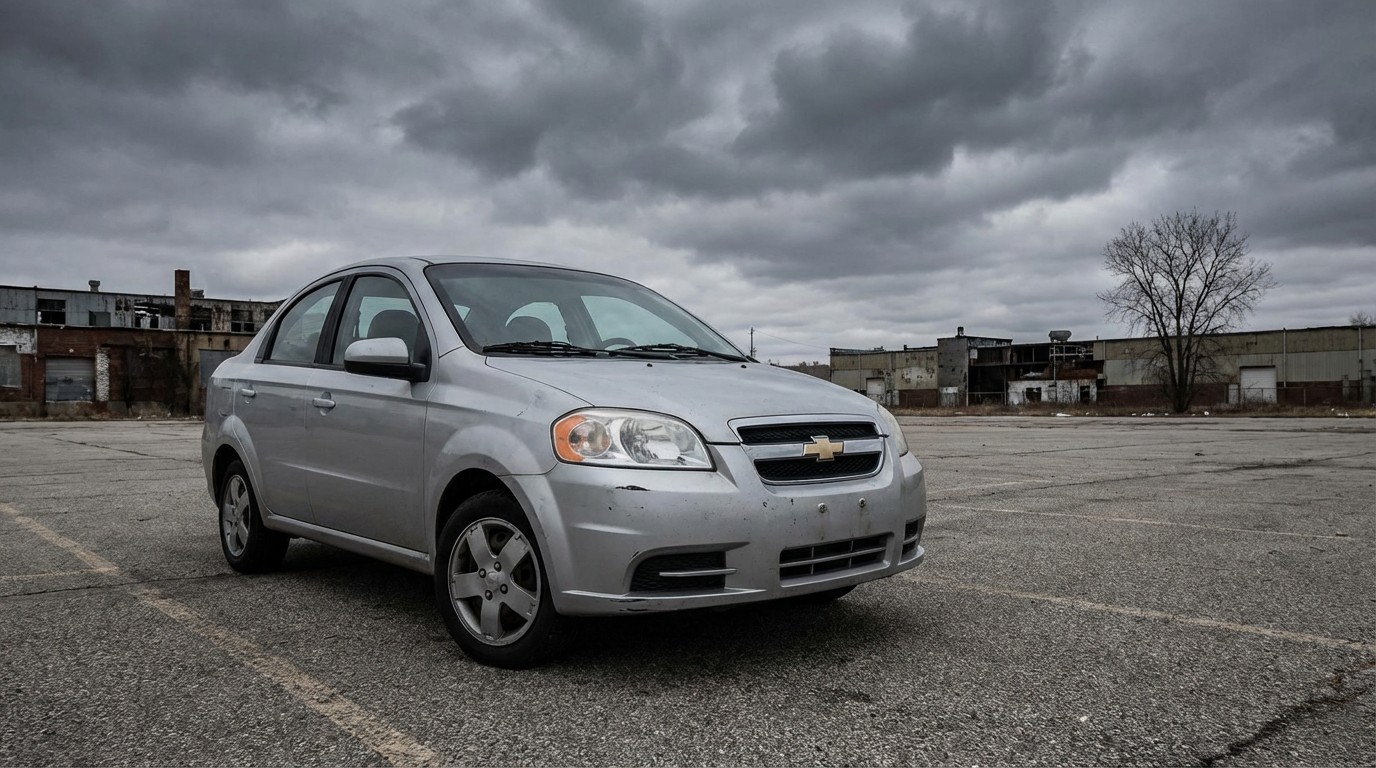
GM Bought a Bankrupt Korean Automaker and Sold You Its Deadliest Car for $9,995
89% crash lethality — second worst in FARS. The Chevrolet Aveo was a Daewoo Kalos with a bowtie, sold as America’s cheapest car.
Saturn’s Dent-Proof Panels Couldn’t Stop It From Being the Deadliest Car Per Crash in America
92.4% lethality rate — worst in the FARS database. The polymer body panels that survived shopping carts couldn’t save anyone at highway speed.
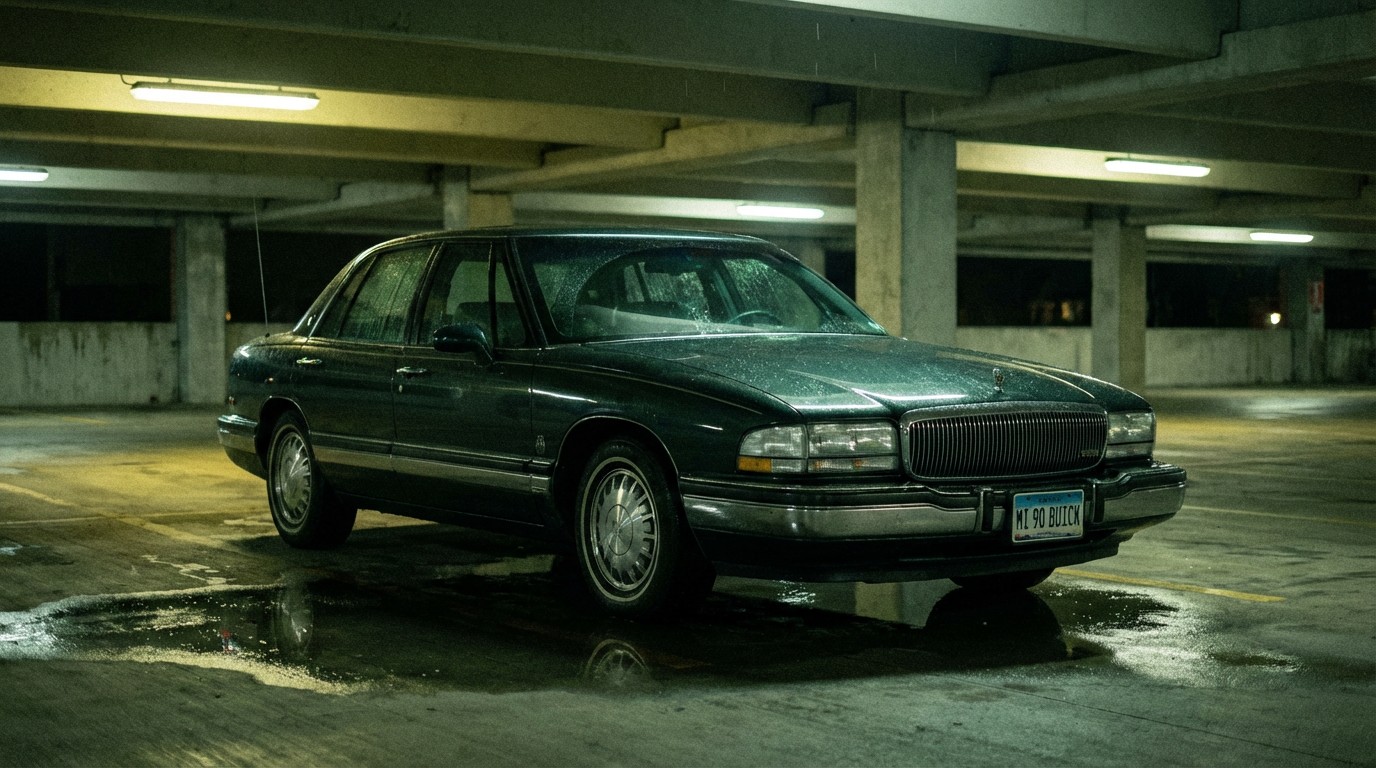
The Car With America’s Drunkest Drivers Is a Buick
The Buick Park Avenue leads every vehicle in the FARS database for impaired-driver fatal crashes at 31.7%. It beats the Corvette, the Mustang, and the Camaro.
Nissan Called the Maxima a “4-Door Sports Car.” The Fatality Data Agrees.
At 5.11 deaths per 100M VMT, the Maxima is deadlier than the Camaro, the Corvette, and the Challenger. Nissan’s marketing was more accurate than they intended.
The F-150 Was Involved in 20,066 Fatal Crashes. In 10,872 of Them, Someone Else Died.
When pickups crash, more than half the fatalities are outside the truck. The Ram’s 5,703 external kills would rank between drowning and fire as a cause of death. Nobody tracks this metric.
86% of Cavalier Crashes Are Fatal. For a Ram 2500, It’s 21%.
Death rates tell you how often a vehicle crashes. Lethality ratios tell you what happens next. In 337 models of FARS data, the survivability gap is 4 to 1 — and it tracks perfectly with weight.
Mississippi Kills Drivers at 5× the Rate of Massachusetts. They Drive the Same Cars.
24.9 deaths per 100K vs. 4.9. Same Camrys, same F-150s. The gap isn’t the vehicles — it’s the roads, the speeds, and the distance to a trauma center.
Congress Saved 9,000 Lives a Year in 2007. The Cars Didn’t Get the Memo Until 2024.
The ESC mandate passed in 2007. Full fleet penetration took 17 years. In the gap: roughly 40,000 people died in vehicles that would have had stability control if the fleet turned over faster.
A Porsche 911 Driver Drinks as Much as a Cobalt Driver. One Is 7× More Likely to Survive.
Impairment rates are nearly identical across price points — 22.8% vs 22.4%. Death rates differ by up to 26.5×. Safety in America is a luxury good, and the data proves it.

80% of Fatal Crash Drivers Were Sober. America Spent $800 Million on the Other 20%.
490,736 drivers in fatal crashes. 80% had zero impairment. NHTSA spends $800M/year chasing the minority. The Toyota Solara’s 4.1% impairment rate is the lowest in FARS. Its death rate is 3× the Camry’s.
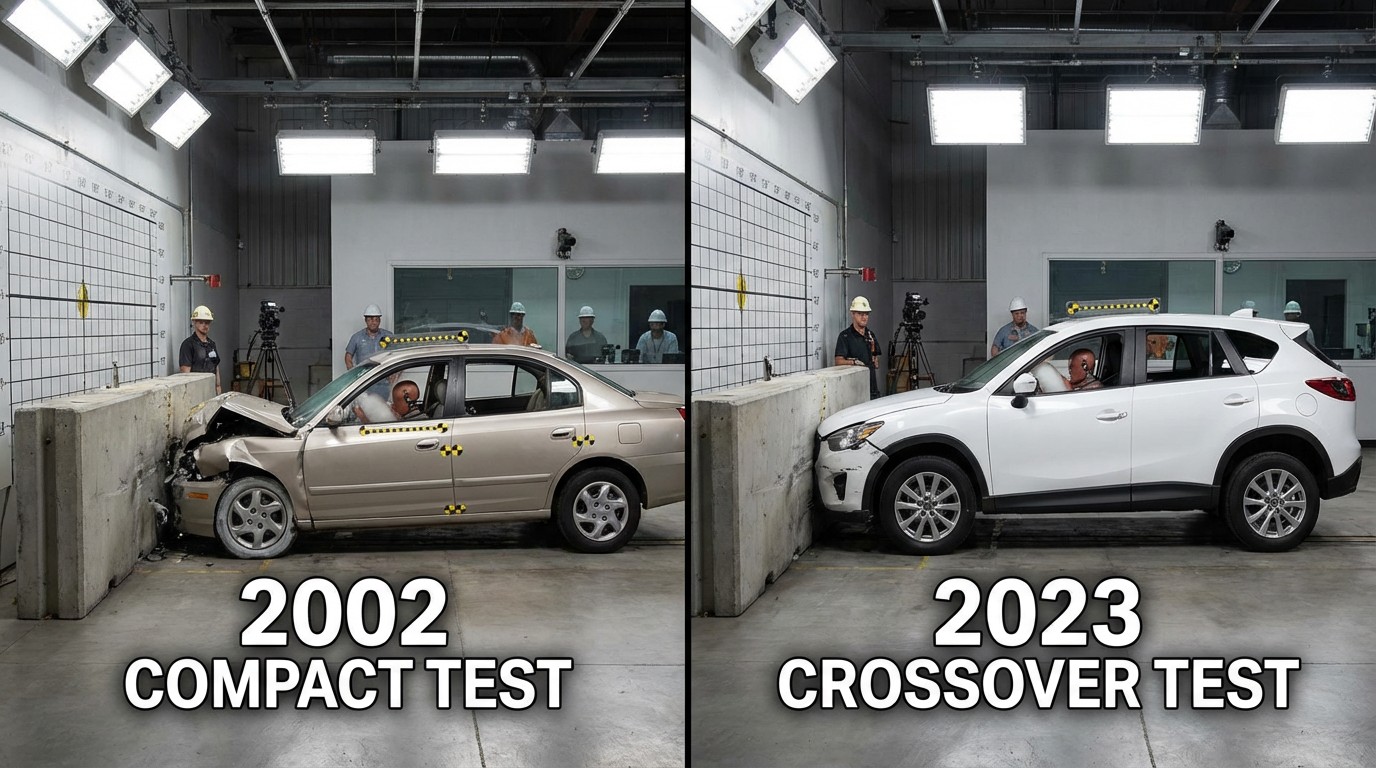
Seven Vehicles That Got 8–22× Safer in a Single Generation
The Tracker killed at 7.83. Its Equinox replacement does 0.36. That’s a 22-fold improvement. Seven vehicles, seven engineering events, and the three changes that explain all of them.
Sedans Kill at 2.5× the Rate of SUVs. Every Single Brand.
89,127 sedan deaths vs 46,442 SUV deaths. Across every major automaker, the sedan is deadlier per mile than the SUV. The gaps range from 2× to 25×. No exceptions.
GM Built One Minivan and Sold It Four Times. All Four Were Deadly.
715 deaths across the Venture, Montana, Uplander, and Silhouette — four badges on one bad platform. The Sienna was 3.6× safer per mile. GM’s exit from minivans was a retreat, not a pivot.
Half the People Dying on American Roads Are Dying in Cars That Don’t Exist Anymore
46.7% of all FARS fatalities came from vehicles built before 2006. Nine discontinued models have 100% of their deaths from the ghost fleet. 87,320 people killed in cars no manufacturer will defend.
The Chrysler Sebring Had the Lowest Impairment Rate in Its Class. It Killed 664 People Anyway.
17.6% impairment — lowest of any midsize sedan in FARS. Yet at 1.65 deaths per 100M VMT, sober people were dying in a car that folded on impact. Then Chrysler fixed it, got worse drivers, and the death rate dropped anyway.
Honda’s Sedans Are Deadly. Honda’s SUVs Are Among the Safest Cars in America.
The Accord kills at 3.07 per 100M VMT. The Pilot kills at 0.29. Same brand, same dealership, 10.6× safety gap. Honda’s two best-selling sedans have killed 13,655 people.
The Dodge Neon Was America’s Disposable First Car. It Killed 602 People.
23.2% impairment including 11.8% drug-positive — nearly double the national average. Model year 2005 alone: 159 deaths. The car nobody chose on purpose became a toxicology case study.
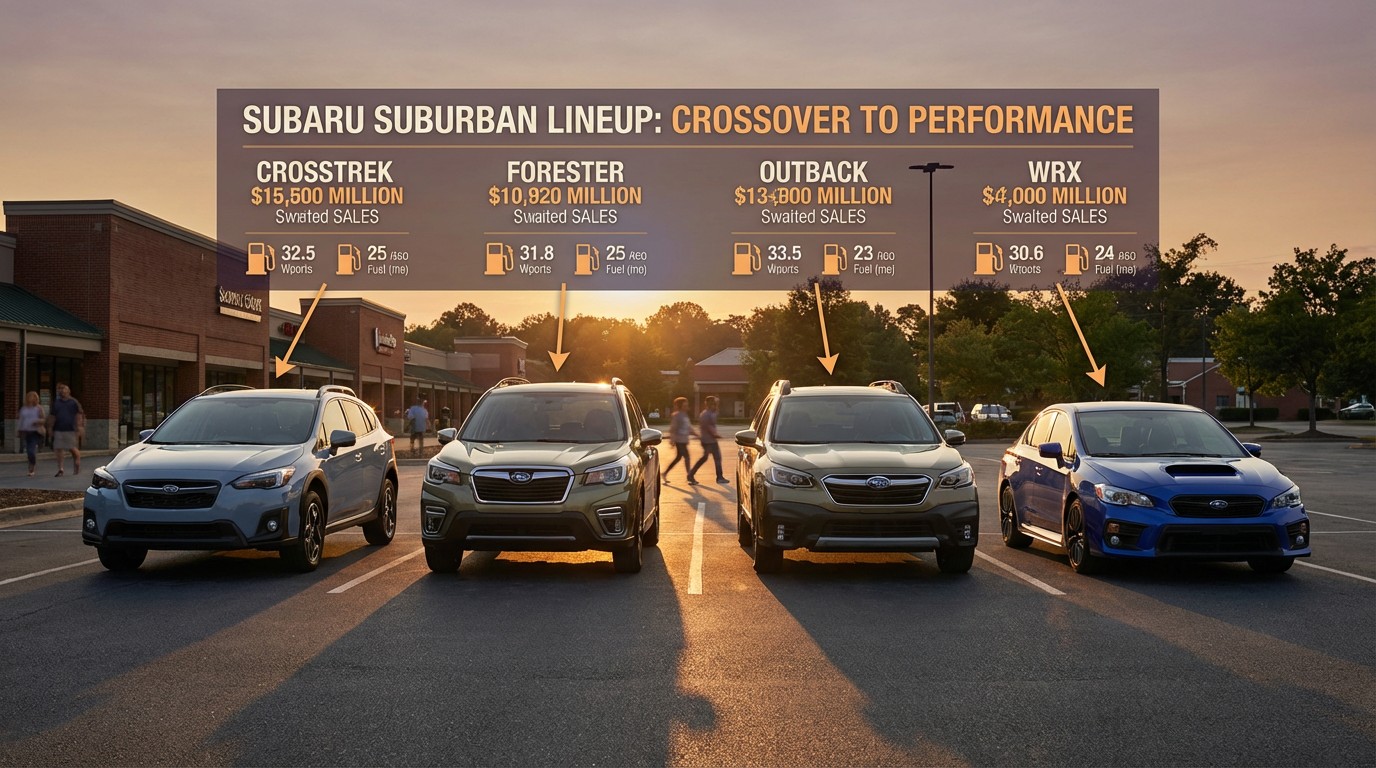
Every Subaru Is Safer Than Its Competitors. Every Single One.
Crosstrek at 0.08 is 12× safer than the Ford Escape. WRX at 0.29 is 21× safer than the Mustang — despite higher impairment. Seven models, seven class wins. The brand nobody recommends for safety is the safest brand in the database.
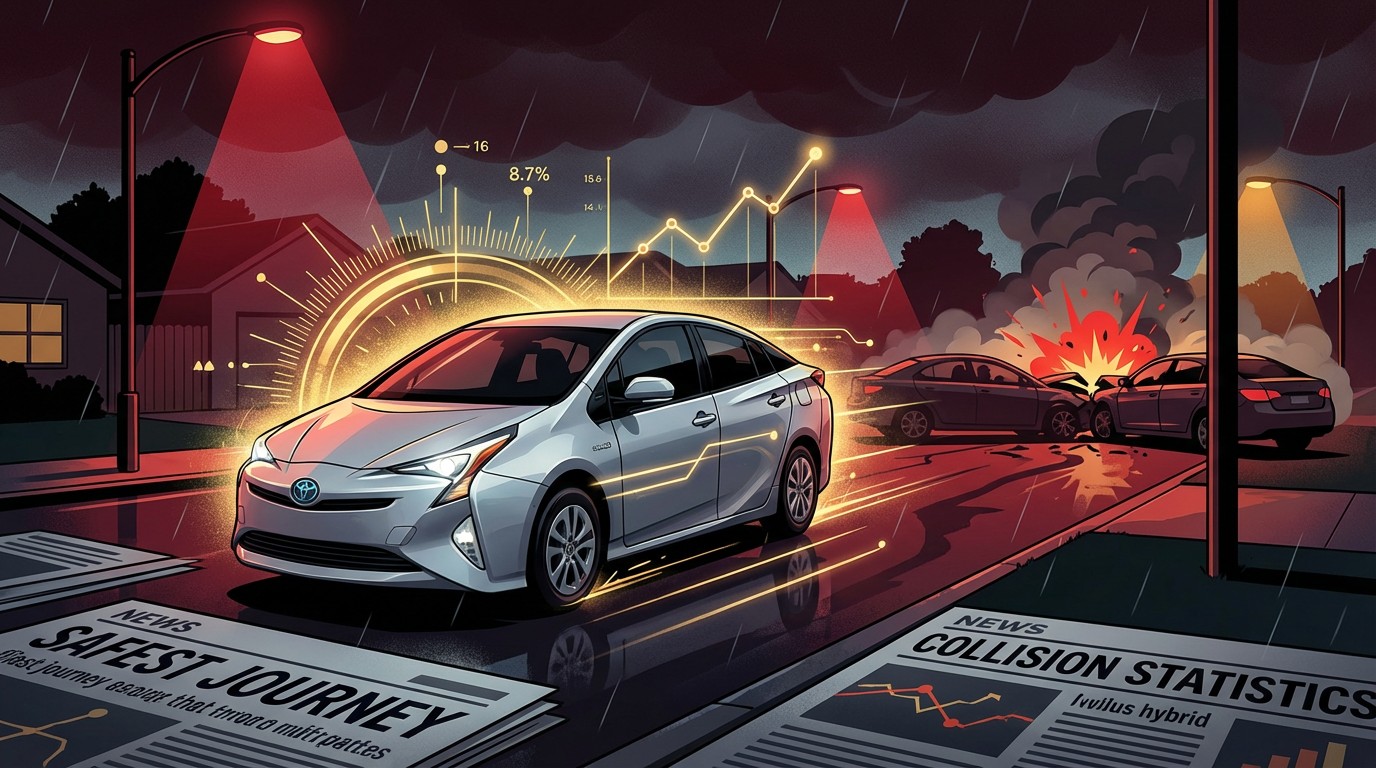
The Toyota Prius Is the Safest Sedan in America. Its Drivers Are the Soberest, Too.
The Prius kills at 0.55 per 100M VMT — 3.4× safer than the Corolla, 5.6× safer than the Accord. 16% impairment rate — lowest of any major sedan. The car everyone mocks is the one that’s least likely to kill you.
The Dodge Challenger Is the Safest Muscle Car in America. Nobody Believes It.
The Challenger kills at 1.00 per 100M VMT — 6× safer than the Mustang, 3.4× safer than the Camaro. Same impairment rates across the segment. It’s the heaviest, the oldest-skewing, and the one nobody thought to check.
The Cadillac Seville Had the Lowest Impairment Rate in the Database. It Killed 391 People Anyway.
Cadillac’s premium sedan has the highest death rate of any luxury car in FARS — 3.89 per 100M VMT. Its drivers were the soberest in the database at 10.5% impairment. The DeVille, one rung down the ladder, is 10× safer.
The Ford E-350 Killed 776 People. Most Were Passengers.
America’s default church bus, airport shuttle, and hotel van has the highest death rate of any commercial vehicle — 2.51 per 100M VMT. Its replacement, the Transit, kills at 0.14. An 18-fold safety gap Ford took 54 years to close.
America’s Cheapest Cars Are a Death Lottery. The Odds Depend on the Badge.
The Chevy Sonic kills at 1.40 per 100M VMT. The Mitsubishi Mirage manages 0.40. A 3.5× safety gap in the segment where buyers can least afford to get it wrong — and GM’s sober Spark drivers are dying at higher rates than Hyundai’s drunk Accent drivers.
The Toyota 4Runner Is 5× Deadlier Than the RAV4. Guess Which One Toyota Calls “Rugged.”
1,418 deaths and a 1.00 rate per 100M VMT make the 4Runner Toyota’s most dangerous SUV — 5× deadlier per mile than the RAV4, 2.4× the Highlander. Same company, similar buyers, radically different body counts.
The Chevy Silverado Is the Deadliest Vehicle in America. The F-150 Is Catching Up.
9,591 deaths — more than any other vehicle in FARS. Add the Sierra badge twin and GM’s full-size truck platform has killed 12,928 people. The F-150 is 20% safer per mile. The Ram is 37% safer.
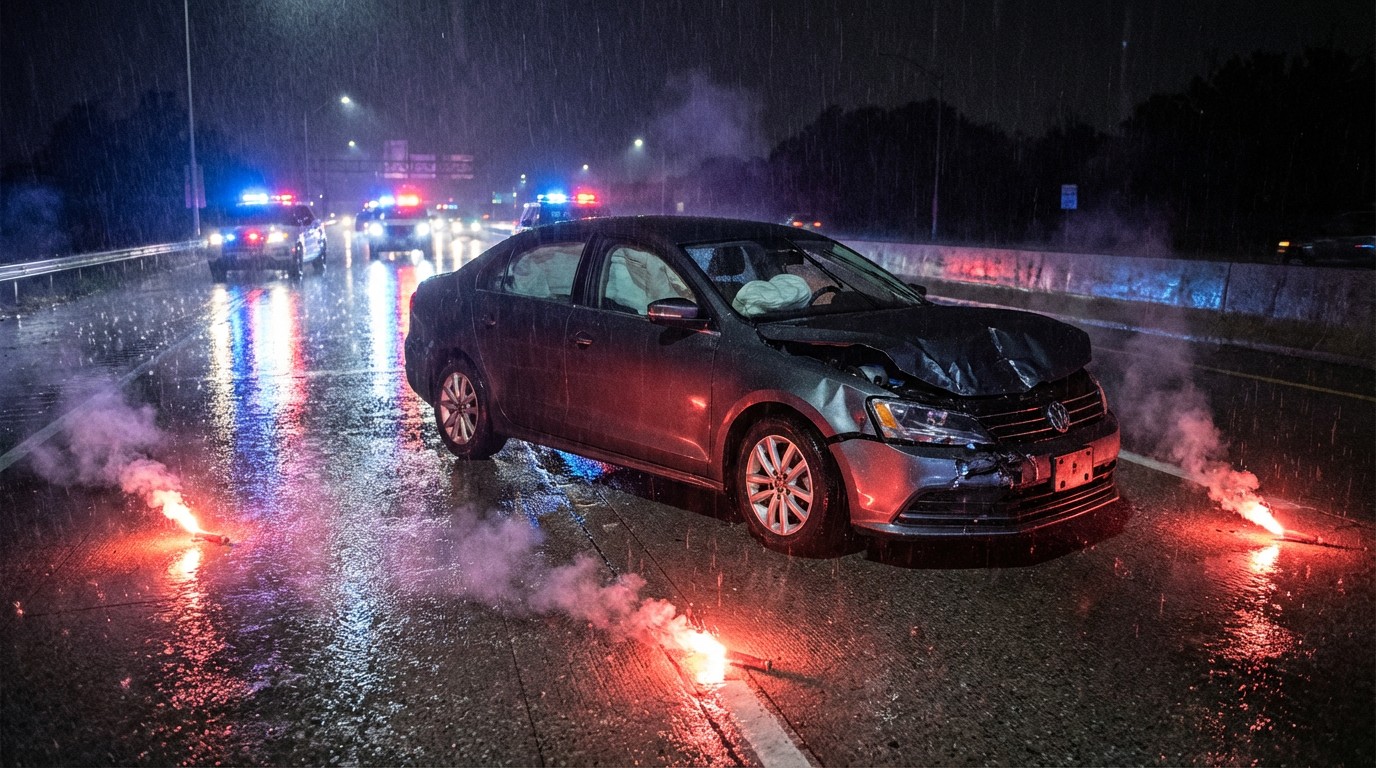
The Volkswagen Jetta Promised German Engineering. It Delivered 1,375 Deaths.
VW’s own Golf on the same platform scores 0.18 deaths per 100M VMT. The Jetta? 1.71. That’s 9.5× deadlier — same company, same architecture, radically different outcomes.
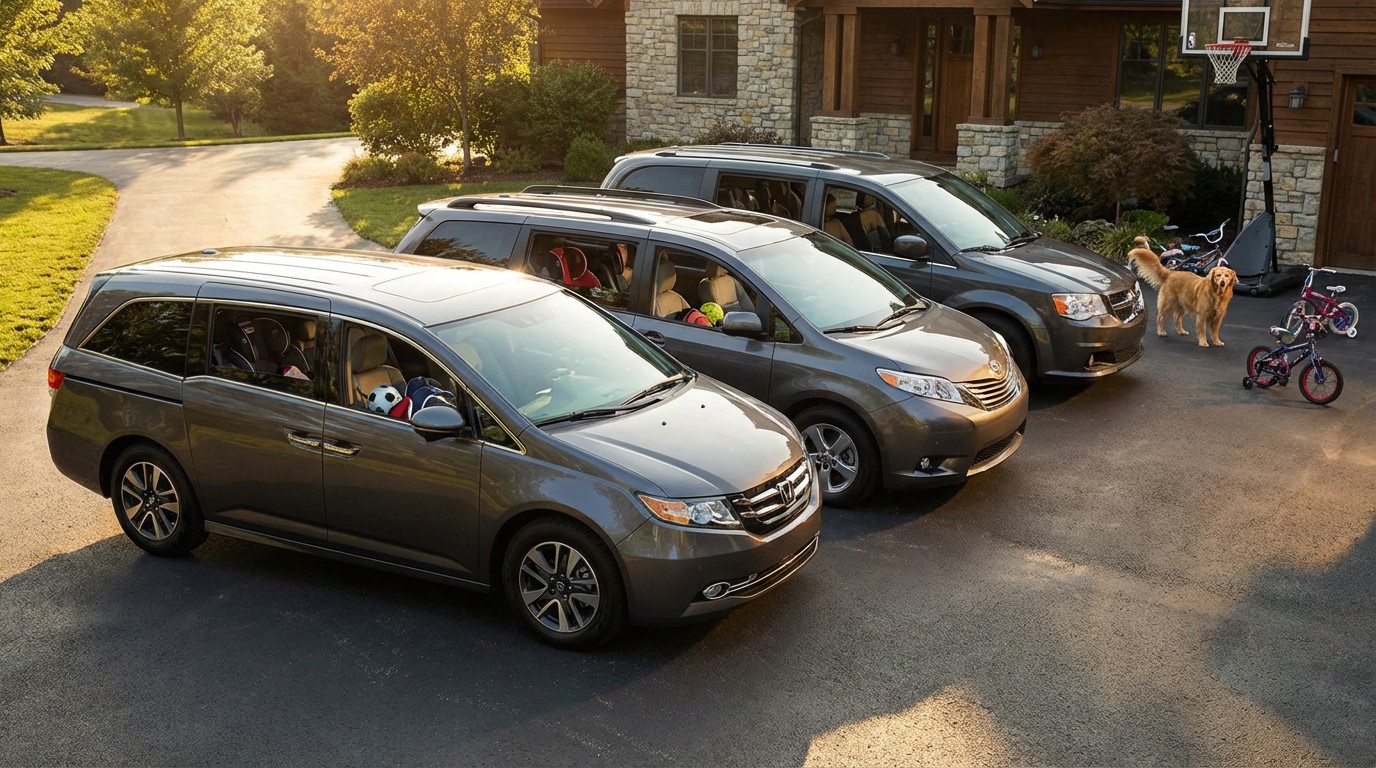
Minivan Drivers Are the Soberest People on the Road. And It’s Not Even Close.
Minivans average 15.4% impairment in fatal crashes vs. 20% nationally. Sports cars hit 22.5%. The Grand Caravan and Odyssey clock in at 15.3% and 15.4%. The car you drive is a behavioral confession.
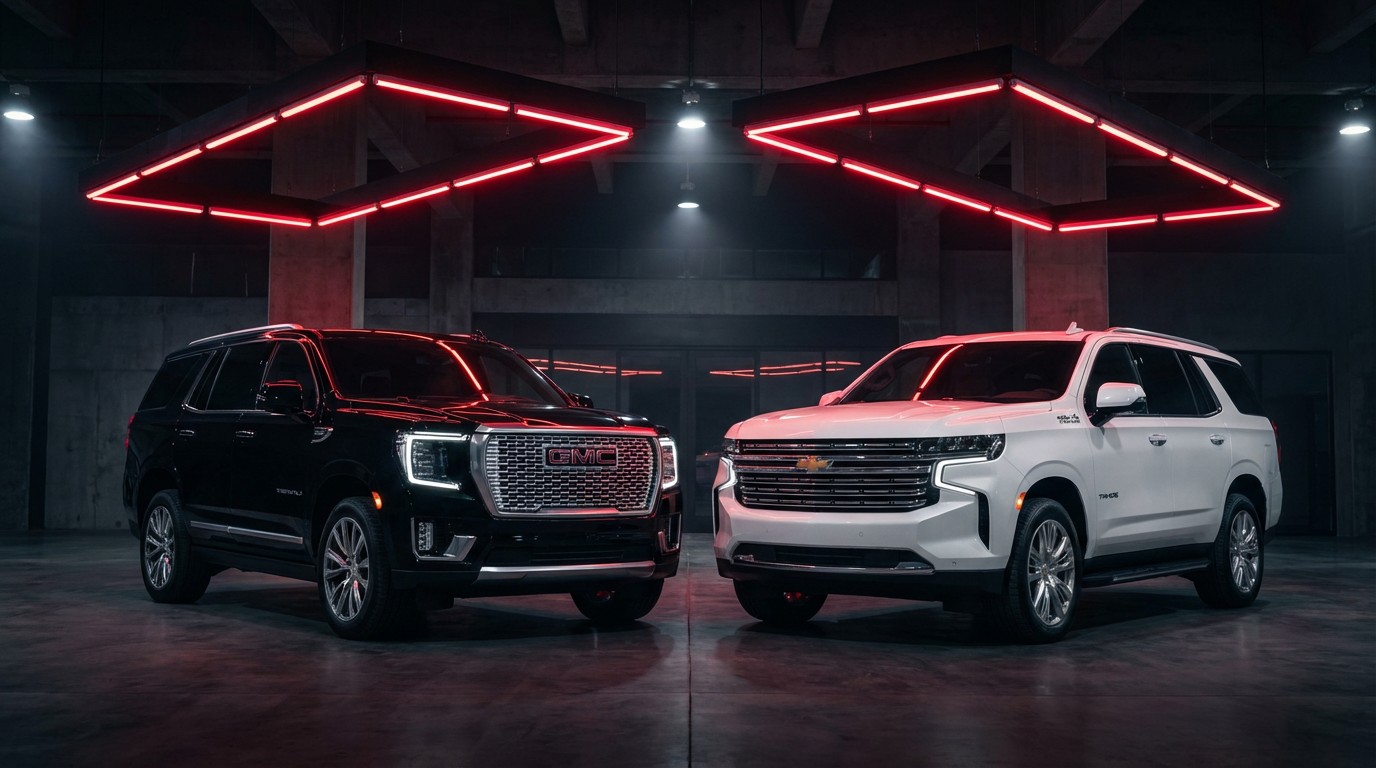
GM Sold the Same Deadly SUV Twice. The Yukon and Tahoe Have Killed 3,706 People.
Same platform, same factory, same death rate. The Yukon (2.55) and Tahoe (2.49) are mechanically identical — and 3× deadlier per mile than the Toyota Sequoia. Add the Suburban and it's 4,299 deaths from one architecture.
Hyundai and Kia Build the Same Car. The Hyundai Kills 3.8× More People.
Same platform, same engines, same parent company. The Elantra kills at 1.50 per 100M VMT — the Forte at 0.40. The Sonata-Optima gap is 2.7×. Korean twins, wildly different body counts.
The Ford Fusion Was the Safest Midsize Sedan in America. Ford Killed It Anyway.
At 1.23 deaths per 100M VMT, the Fusion was 40% safer than the Camry and 60% safer than the Accord. Same impairment rates across the segment. Ford discontinued it in 2020.
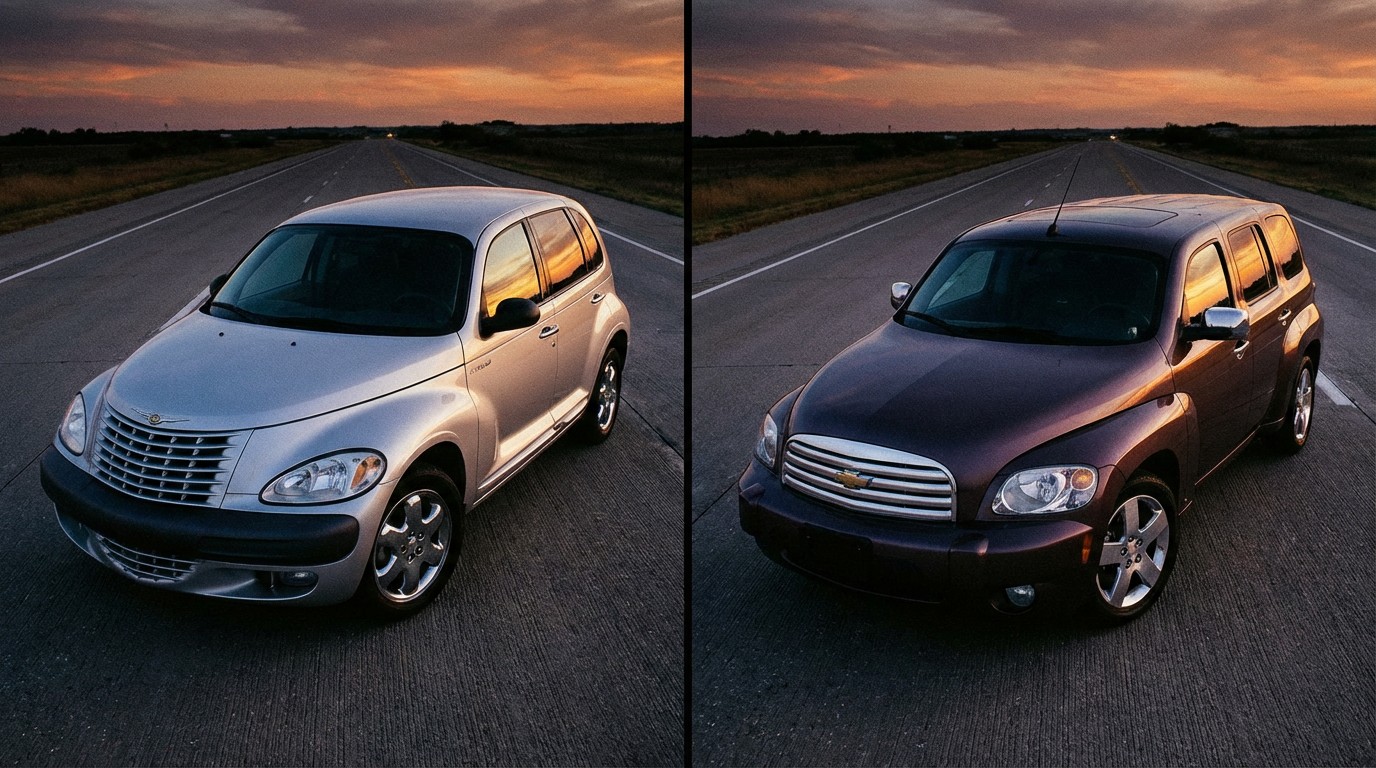
One Designer Made the Same Deadly Car Twice. For Two Different Companies.
Bryan Nesbitt designed the PT Cruiser at Chrysler, then the HHR at GM. Same retro concept, 1,187 combined deaths. The HHR kills at 2.12 per 100M VMT — 63% deadlier per mile.
Nissan Sold the Same Truck for 16 Years. It Killed 1,030 People.
The Frontier went virtually unchanged from 2004 to 2021 while competitors redesigned around it. Rate: 1.45 per 100M VMT — 1.8× the Tacoma, 5.2× the Colorado.
The Ford Escape Is 5× Deadlier Than a RAV4. They Cost the Same.
The compact SUV segment hides a 5× safety gap: the Escape kills at 0.95 per 100M VMT while the RAV4 manages 0.19. Same price, same cross-shopping — wildly different odds.
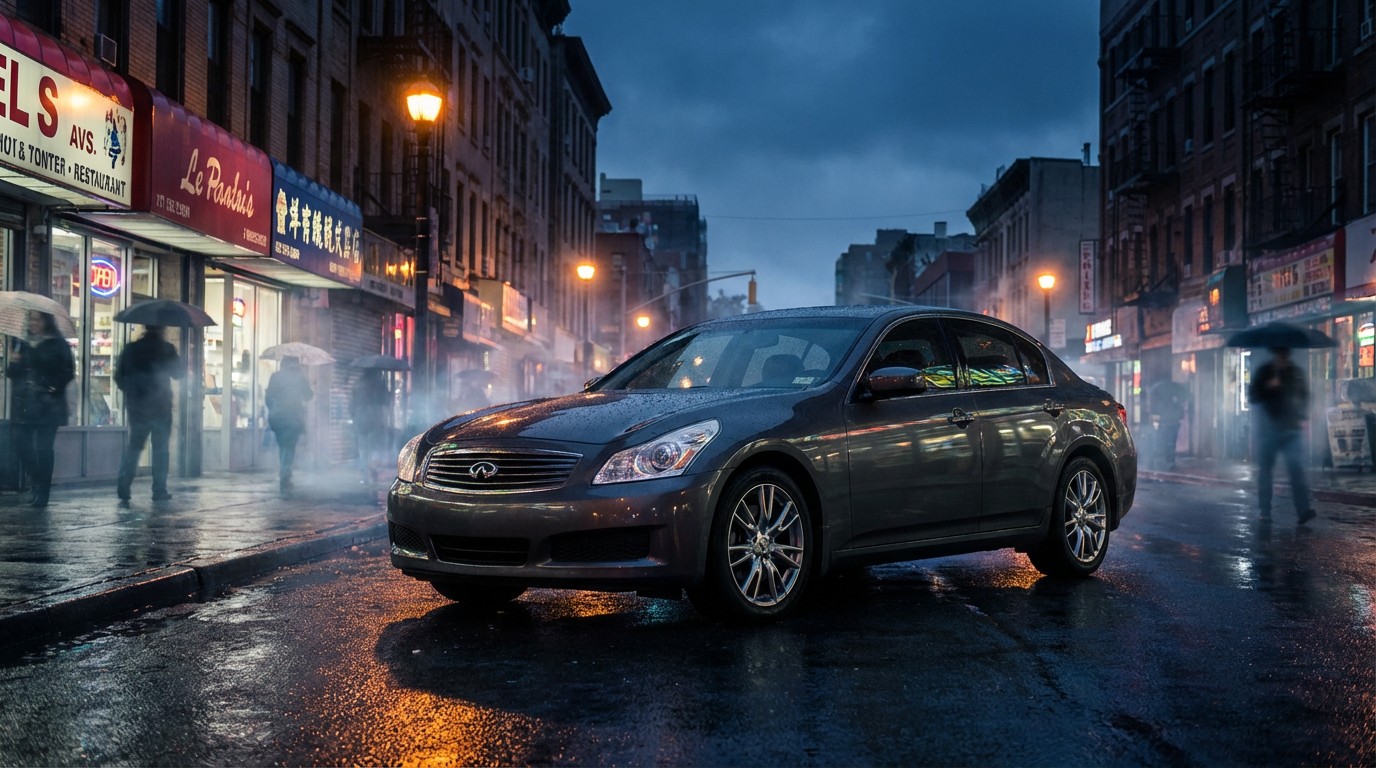
Infiniti Built Three Generations of the Same Car. The Impairment Rate Never Changed.
The G35, G37, and Q50 span 20 years and 698 deaths. Across all three, ~24% of fatal-crash drivers were impaired — 4 points above the national average, every single generation.
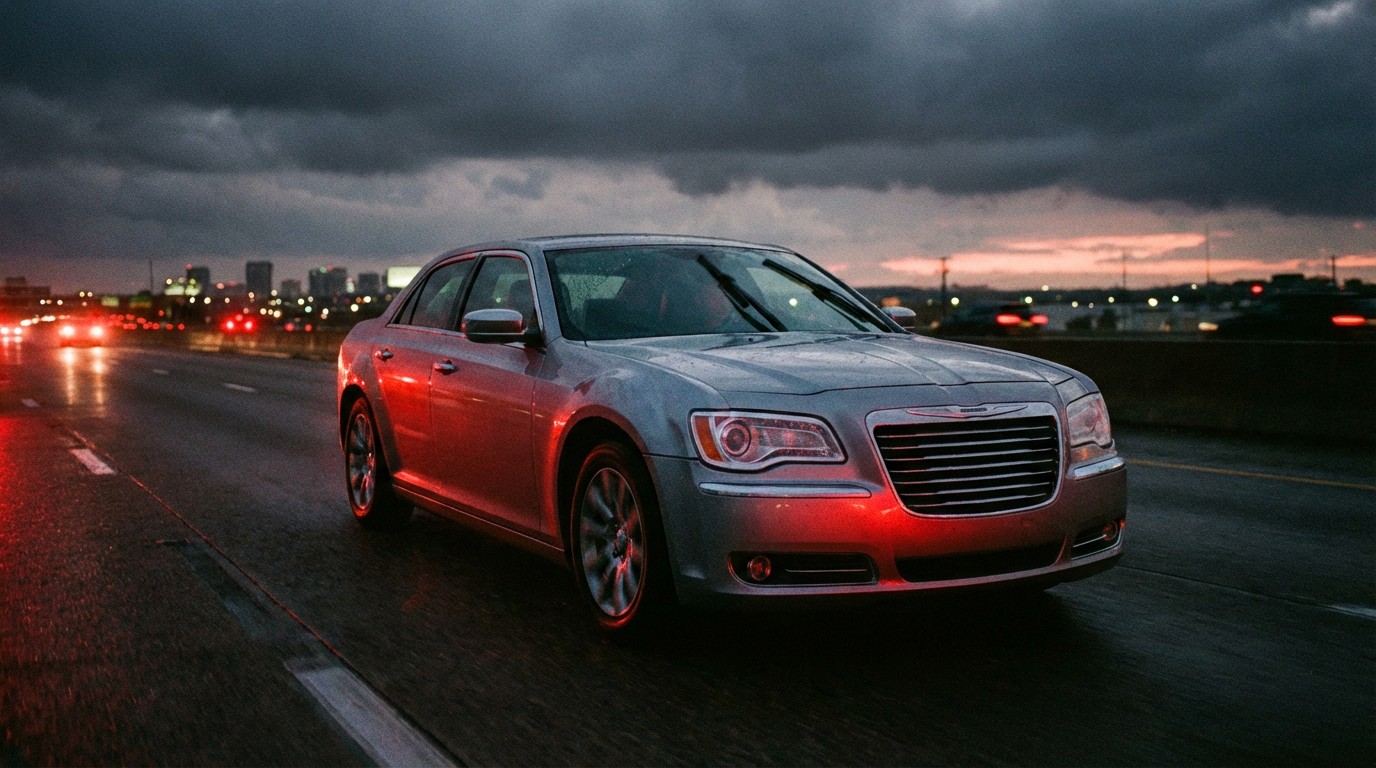
The Chrysler 300 Kills 2.5× More People Than the Dodge Charger. They’re the Same Car.
Same LX platform, same factory, same engines. The “respectable” sedan kills at 1.87 per 100M VMT — the muscle car at 0.75.
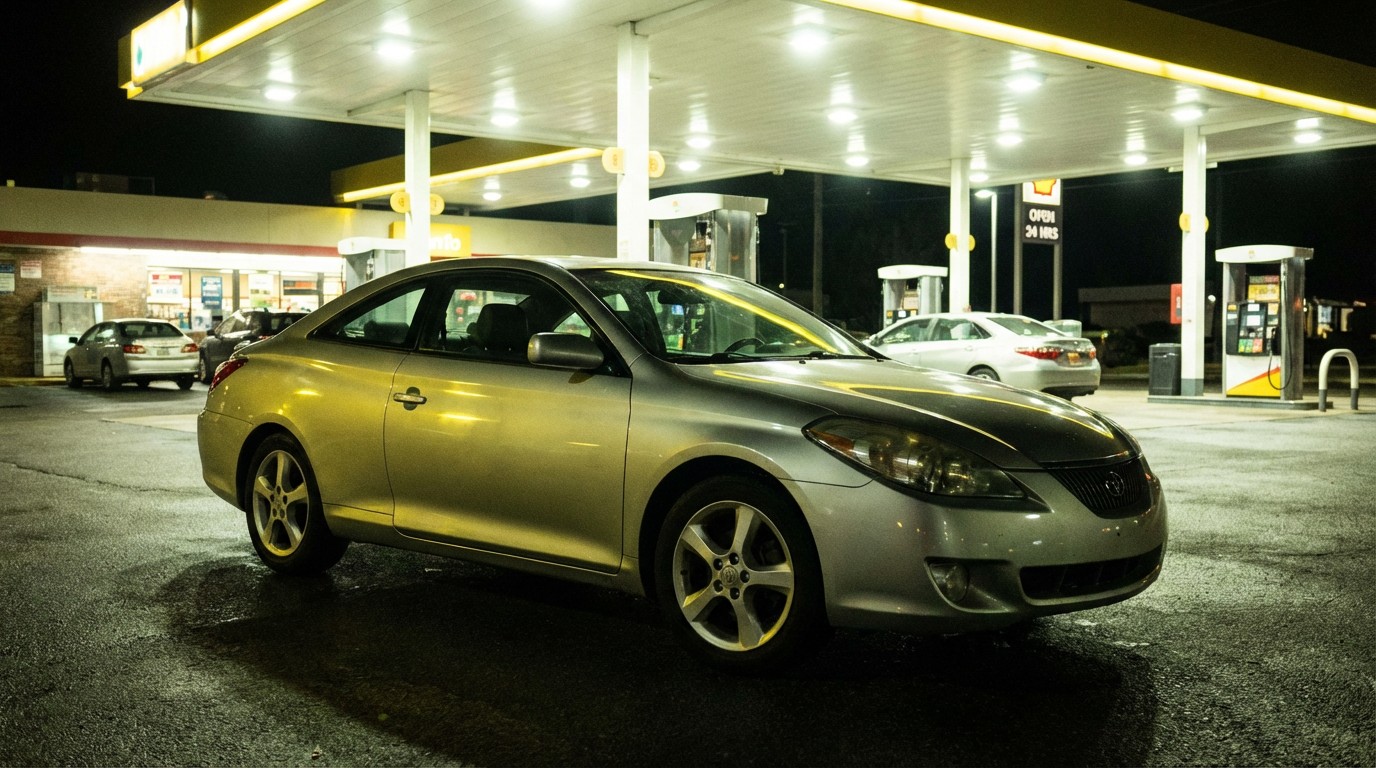
Toyota Built a Camry Coupe. It’s 2× Deadlier Than the Camry.
The Solara shares its platform, engine, and factory with the Camry. It kills at 4.25 per 100M VMT — more than double the Camry’s 2.03. Only 4.1% impairment. Sober people dying in a Toyota.
Pontiac Died in 2010. It Has Killed 3,038 People Since.
GM killed the brand, but 2.45 million Pontiacs still haunt American roads — Grand Prix (970 deaths), G6 (908), Grand Am (713). Every single FARS death came from a ghost.
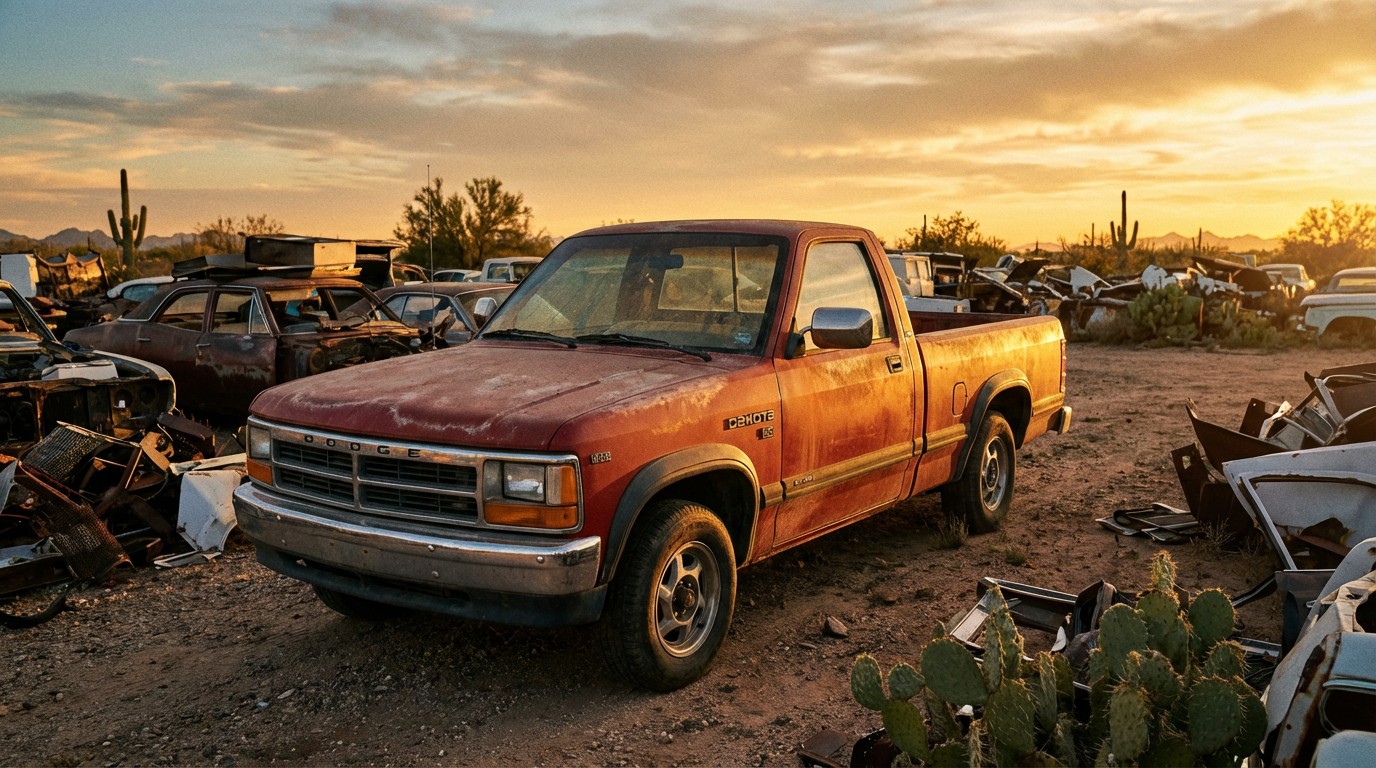
The Dodge Dakota Was 3× Deadlier Than a Tacoma. Dodge Just Killed It.
At 2.62 deaths per 100M VMT from a 350K fleet, the Dakota was the second-deadliest mid-size pickup — and Dodge’s answer was to discontinue it entirely.
The Toyota Corolla Has Killed 4,945 People. It’s Still the Safest Car on This List.
The world’s best-selling car is the 4th deadliest sedan in FARS — not because it’s dangerous, but because 2.3 million of them drive 26.7 billion miles a year.
The Chevy Tracker Was a Suzuki in Disguise. It Killed 856 People.
At 7.83 deaths per 100M VMT, the rebadged Suzuki Vitara was 41× deadlier per mile than the RAV4 it competed against — and GM put a bowtie on it.
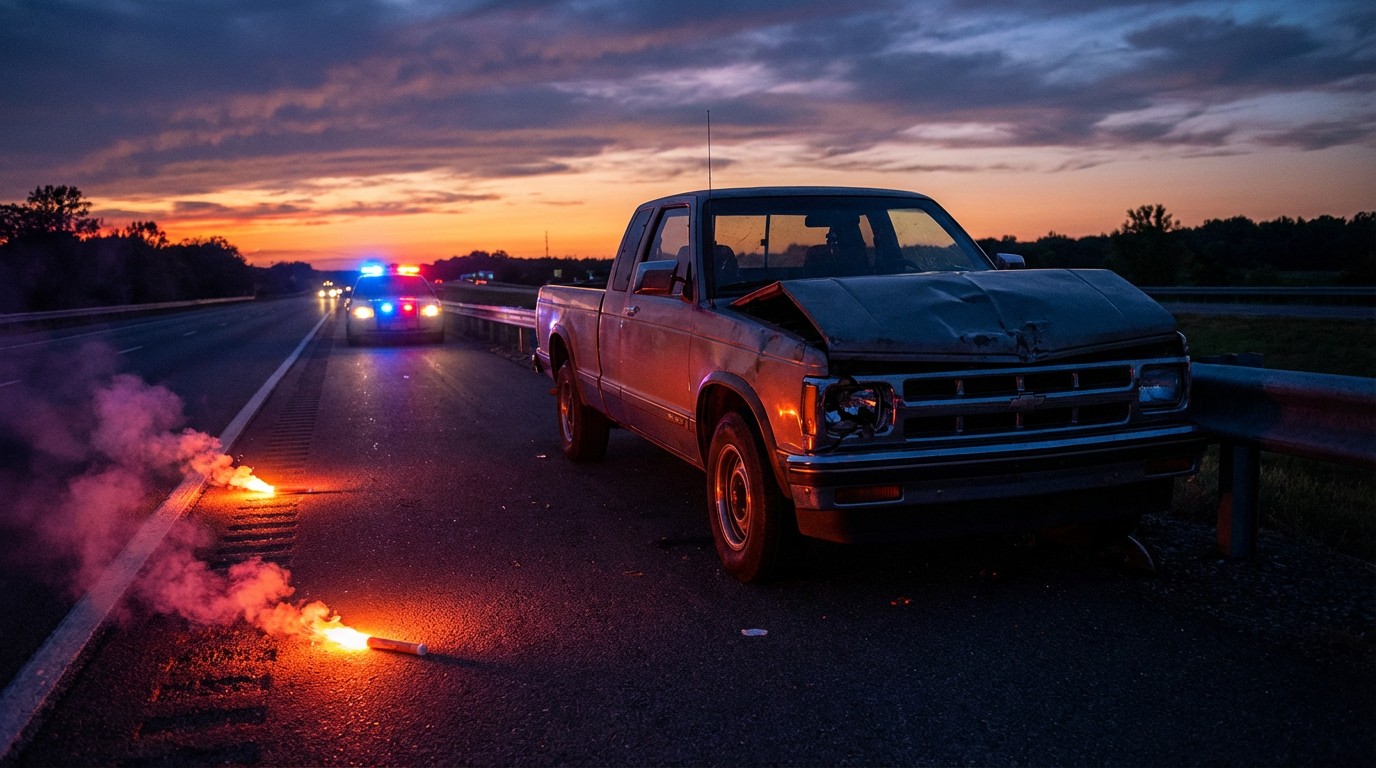
The Chevy S-10 Was 6× Deadlier Than a Tacoma. Then GM Fixed It.
At 4.83 deaths per 100M VMT, the S-10 was the deadliest compact pickup by a grotesque margin — then the Colorado replacement dropped it to 0.28.
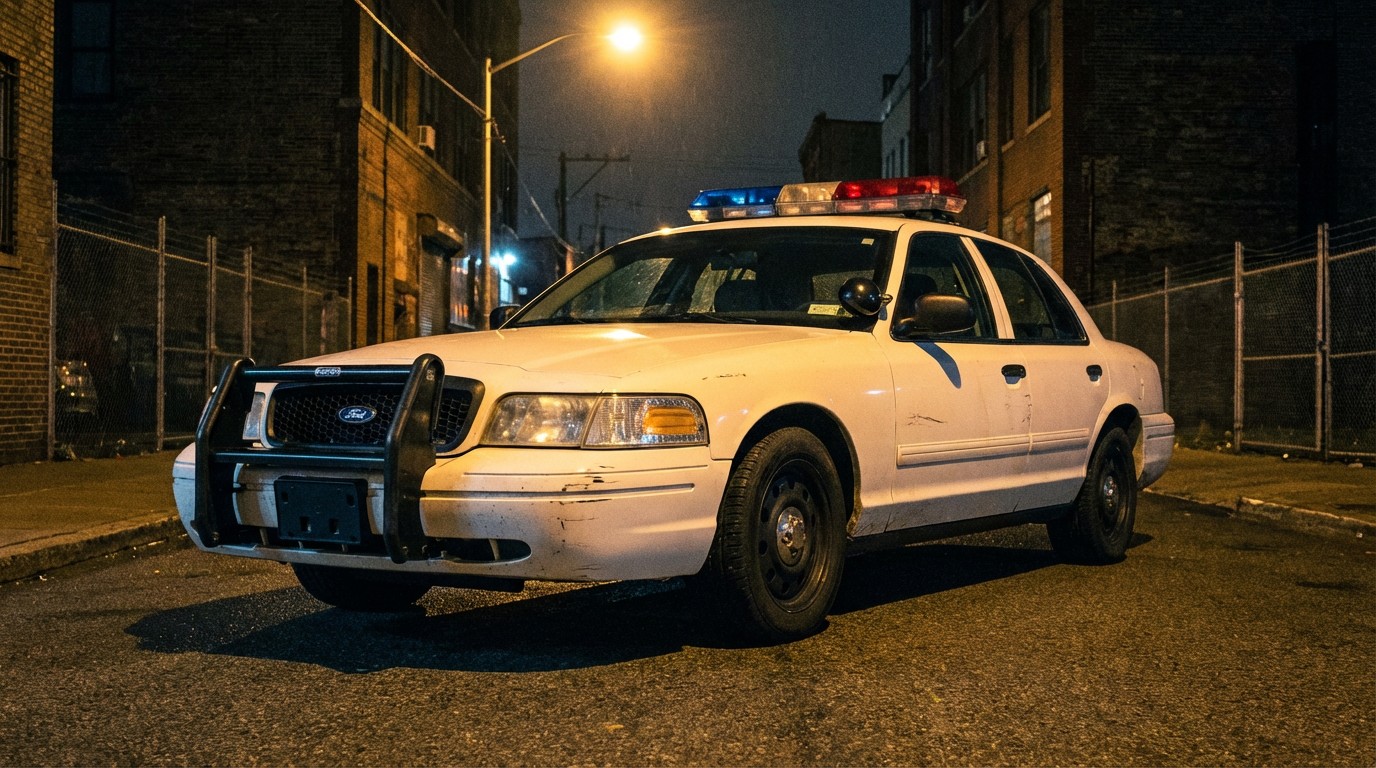
The Ford Crown Victoria Killed 881 People. Most of Them Were on the Clock.
America’s most trusted fleet vehicle — chosen by police, taxis, and government agencies — had a fuel tank that turned rear-end crashes into cremations.
The Ford Expedition: America’s Most Trusted Family Coffin
The Chevy Cavalier Killed 1,225 People. Then GM Made Its Replacement Worse.
Grandma’s Buick LeSabre Has a Higher Death Rate Than the Toyota Camry
1,344 dead at 2.67 per 100M VMT — 32% deadlier than the Camry, with 23.5% impairment. The retirement sedan was secretly lethal.

The Jeep Wrangler Is America’s Favorite Way to Die Outdoors
At 0.84 deaths per 100M VMT, the Wrangler is the safest Jeep per mile. It still killed 1,842 people. Only 19.3% were impaired. The lifestyle vehicle paradox.
GM Built the Same Deadly SUV Twice. The Trailblazer Killed 2,473 People.
The Trailblazer's 2.83 fatality rate is nearly 2× the Explorer. Its twin, the GMC Envoy, adds 988 more deaths. One platform, two badges, 3,461 dead.
The Chevy Malibu Has Killed 3,465 People. Nobody Noticed.
The Malibu matches the Camry’s fatality rate at 2.03 deaths per 100M VMT, but generates zero headlines. The Ford Fusion is 40% safer per mile. GM’s most forgettable sedan is also its most quietly lethal.
The Chevy Tahoe Weighs 5,600 Pounds. It Didn't Help.
At 2.49 deaths per 100M VMT, the Tahoe is deadlier per mile than a Honda Civic — despite weighing nearly twice as much. The Silverado shares its platform and kills at half the rate. Size isn't safety.
Mercury Died in 2011. The Grand Marquis Is Still Killing People.
Three Ford Panther platform cars, same bones, wildly different fates. The Grand Marquis kills at 2.29 per 100M VMT — 2.7× deadlier than the Town Car (0.86). Same frame, same engine. The difference is who bought them.
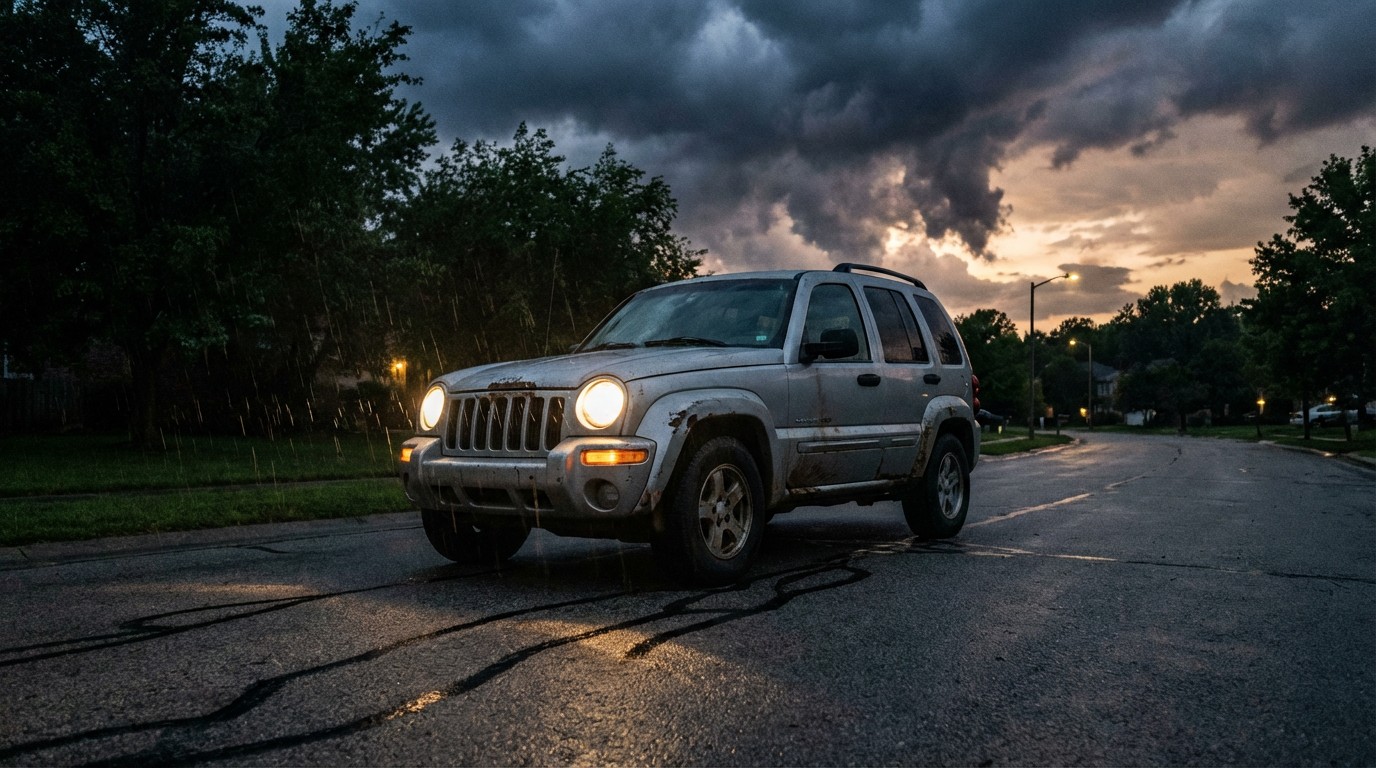
The Jeep Cherokee Is 3.4× Deadlier Than the Grand Cherokee. The Name Is a Trap.
2,276 deaths at 1.73 per 100M VMT from a 1.05M fleet — while the Grand Cherokee’s 1.84M fleet manages just 0.51. Same brand, same name, 3.4× the death rate. Cherokee drivers are more sober too.
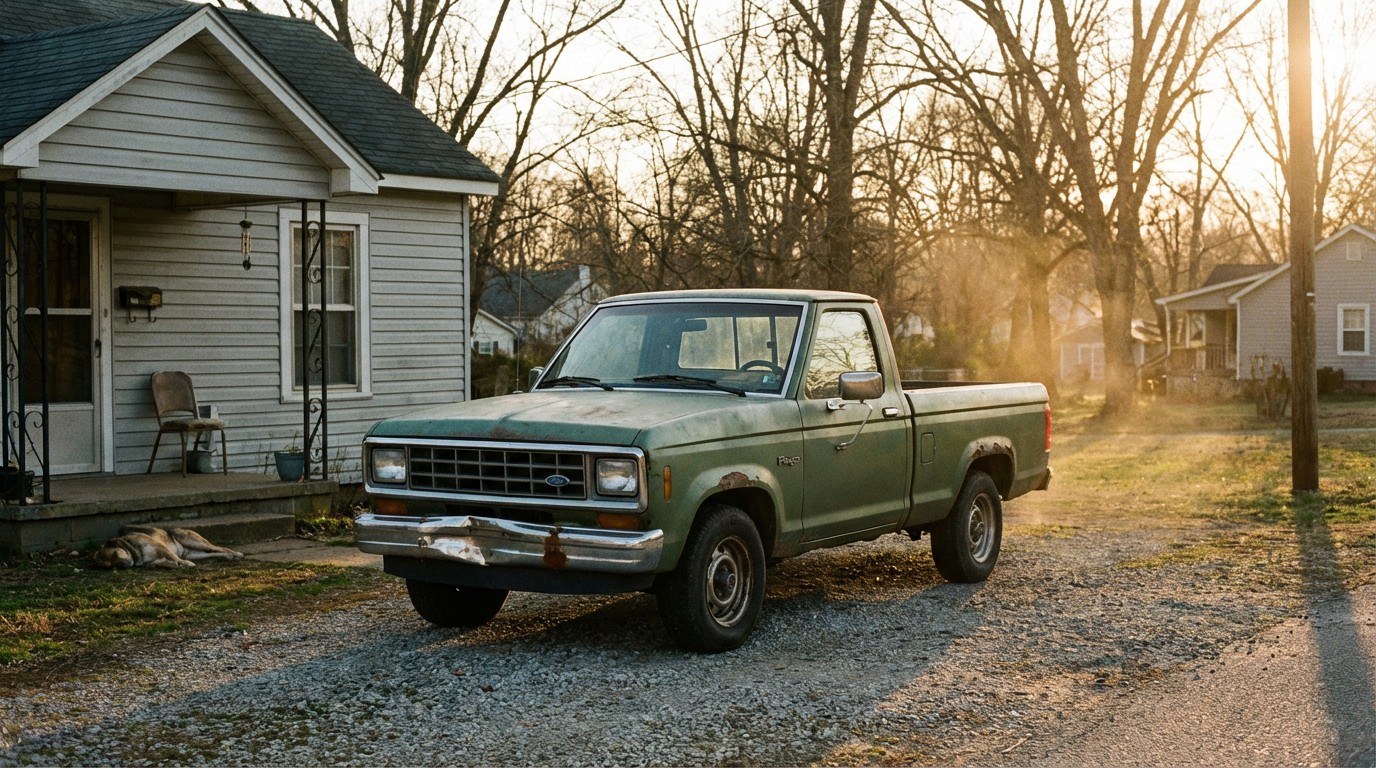
The Ford Ranger Is Nearly 3× Deadlier Than the F-150. Small Trucks Are a Lie.
3,089 deaths at 2.91 per 100M VMT. Every compact truck in FARS is deadlier per mile than its full-size counterpart — S-10 at 4.83 vs Silverado at 1.25, Dakota at 2.62 vs Ram at 0.78. Smaller doesn’t mean safer.
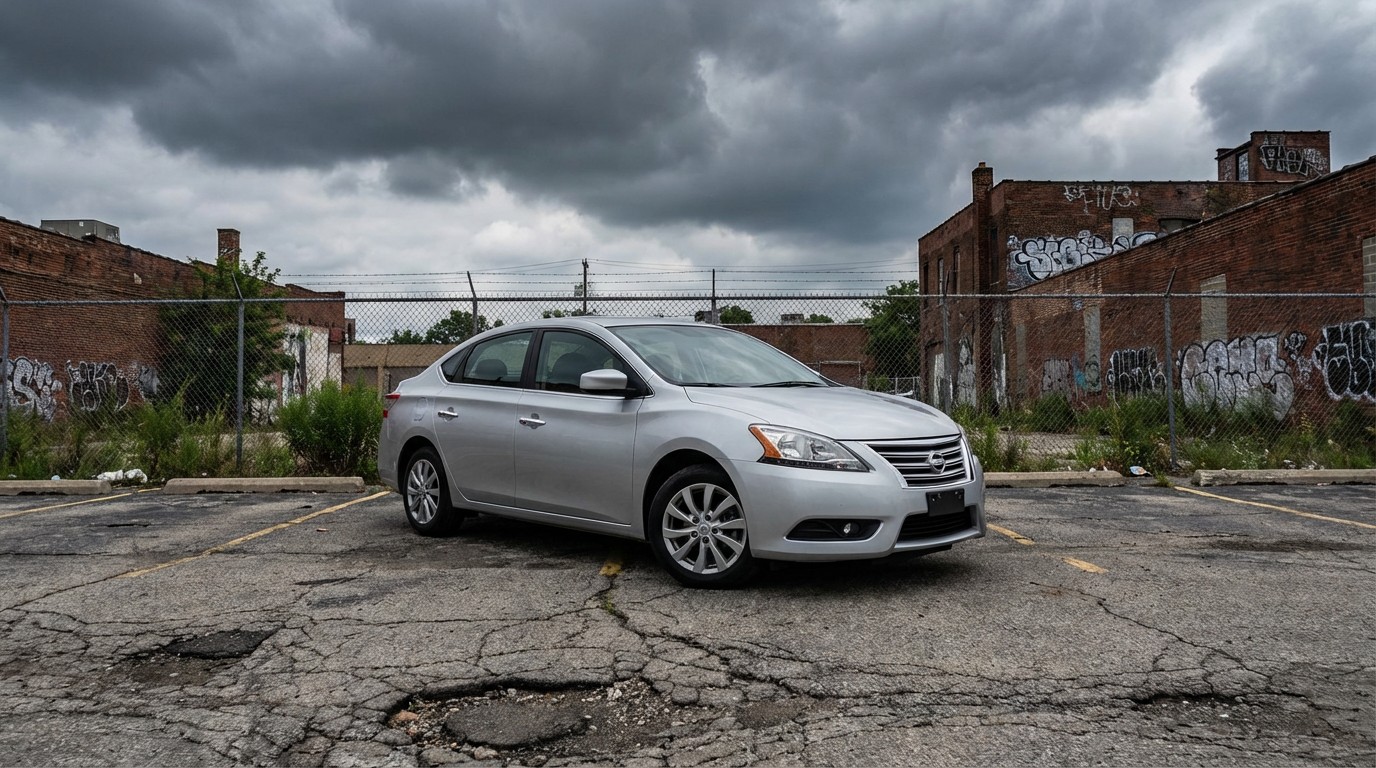
The Nissan Sentra Is the Cheapest Way to Die in a Sedan
2,571 deaths at 2.13 per 100M VMT — deadlier than the Corolla, Elantra, and Cruze. The Sentra is 3.4× more lethal per mile than the Cruze, and its own sibling Versa is somehow half as deadly.
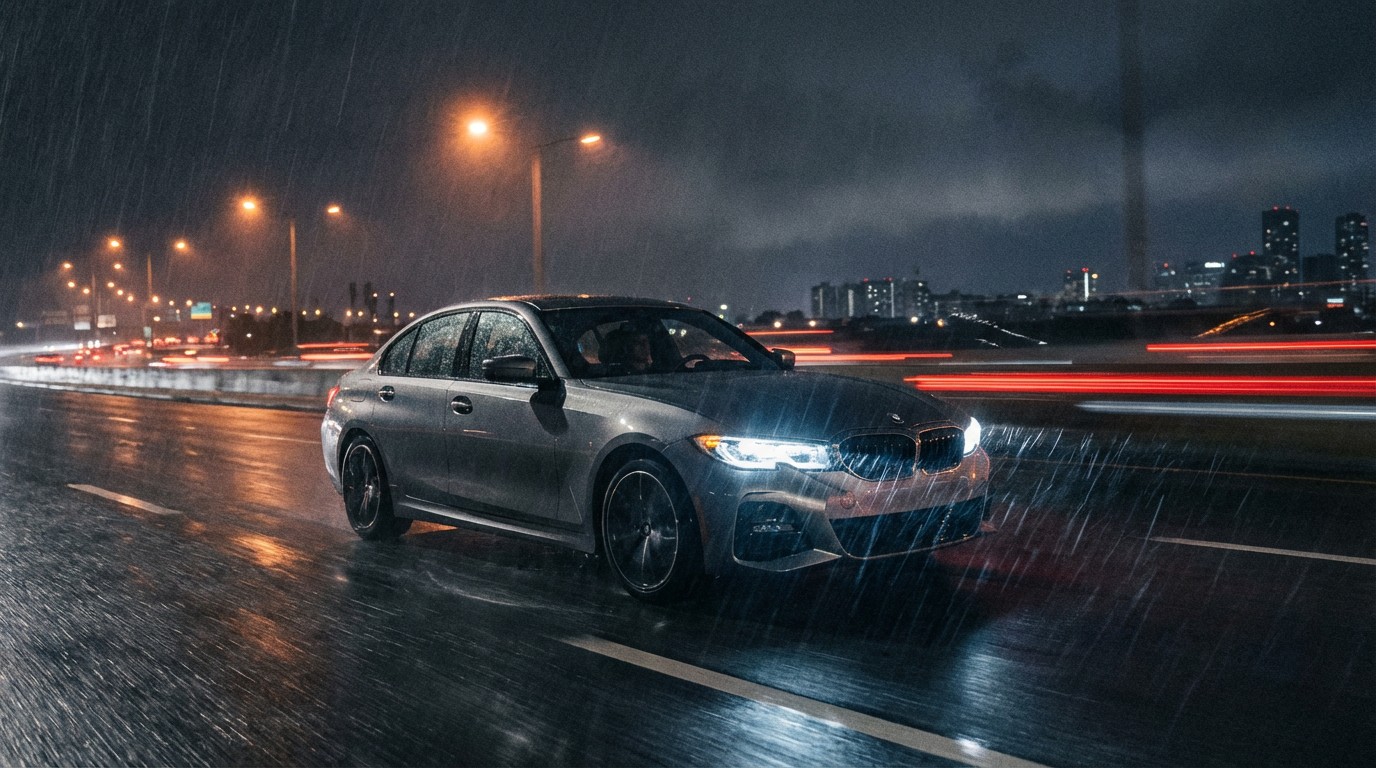
The BMW 3 Series Is the Deadliest Luxury Car in America. By a Lot.
At 2.73 deaths per 100M VMT, the “Ultimate Driving Machine” is 8.5× deadlier than the Audi A4. Its 1,237 fatalities dwarf every luxury competitor, and 22.1% of its drivers in fatal crashes were impaired.
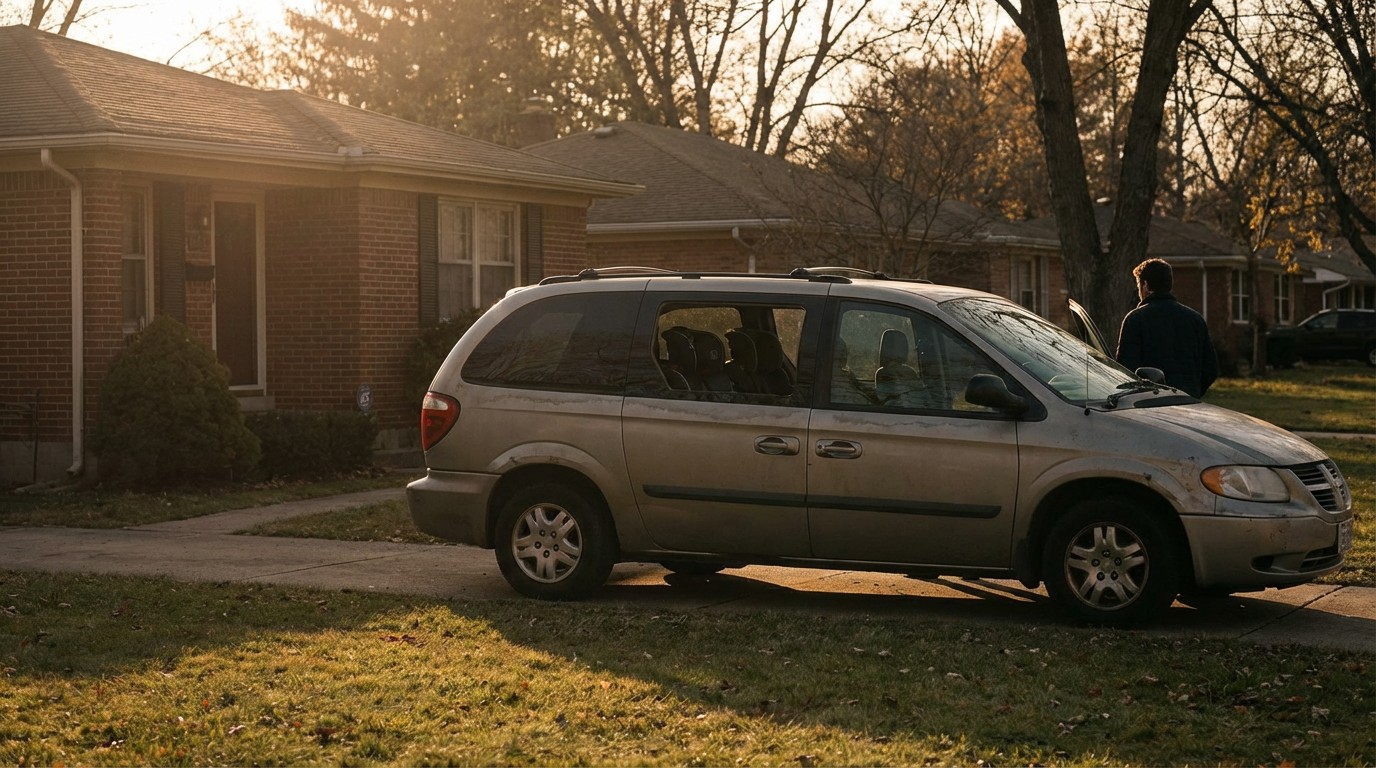
The Dodge Grand Caravan Killed 1,782 People. Almost None of Them Were Drunk.
America’s default family hauler has the lowest impairment rate in FARS at 15.3%. Its 1,782 deaths are overwhelmingly sober parents on routine trips.
The Ford Taurus Was America’s Best-Selling Car. Then It Became a Ghost.
Once the best-selling car in the country, the Taurus ended its life as a fleet-only rental sedan. Its 2.74 per-mile death rate is more than double the Fusion that replaced it.
The Honda Civic Has Killed 6,553 People. It’s Still Everyone’s First Recommendation.
The safest car in the world can still be one of the deadliest — if enough people drive it. The Civic’s 2.25 per-mile rate beats every compact rival.
The Toyota Camry Is the ‘Safest’ Car in America. It Has Killed 6,328 People.
Below-average fatality rate, 5th highest body count. The paradox of safe cars that kill thousands through sheer ubiquity.
‘Altima Energy’ Is Real. 4,787 People Are Dead.
The internet meme about reckless Altima drivers is backed by hard FARS data — 7th deadliest vehicle in America with a 2.88 fatality rate. But the impairment rate is surprisingly average.
The Dodge Charger Is America’s Favorite Bar Car. The Toxicology Reports Prove It.
Of 4,339 Charger drivers in fatal crashes, 985 were impaired — a 22.7% rate. It’s a “sedan” with a Hemi V8 and a customer base that skews thirsty.
The Ford Focus Was America’s Most Popular First Car. It Killed 3,046 People.
At 2.52 per 100M VMT, the Focus was deadlier per mile than every compact competitor — Civic, Corolla, Elantra. And 80% of fatal crashes were sober.
The Chevy Cobalt Was a Death Trap Before GM Even Admitted It
At 5.10 deaths per 100M VMT, the Cobalt is the deadliest compact sedan in the database. Its replacement, the Cruze, is 8× safer. The ignition switch scandal was just the beginning.
The Camaro Is the Second-Deadliest Sports Car in America. It’s Not Even Close to First.
At 3.44 deaths per 100M VMT, the Camaro kills at half the Mustang’s rate — but with a higher impairment percentage. 1,204 dead in a decade.
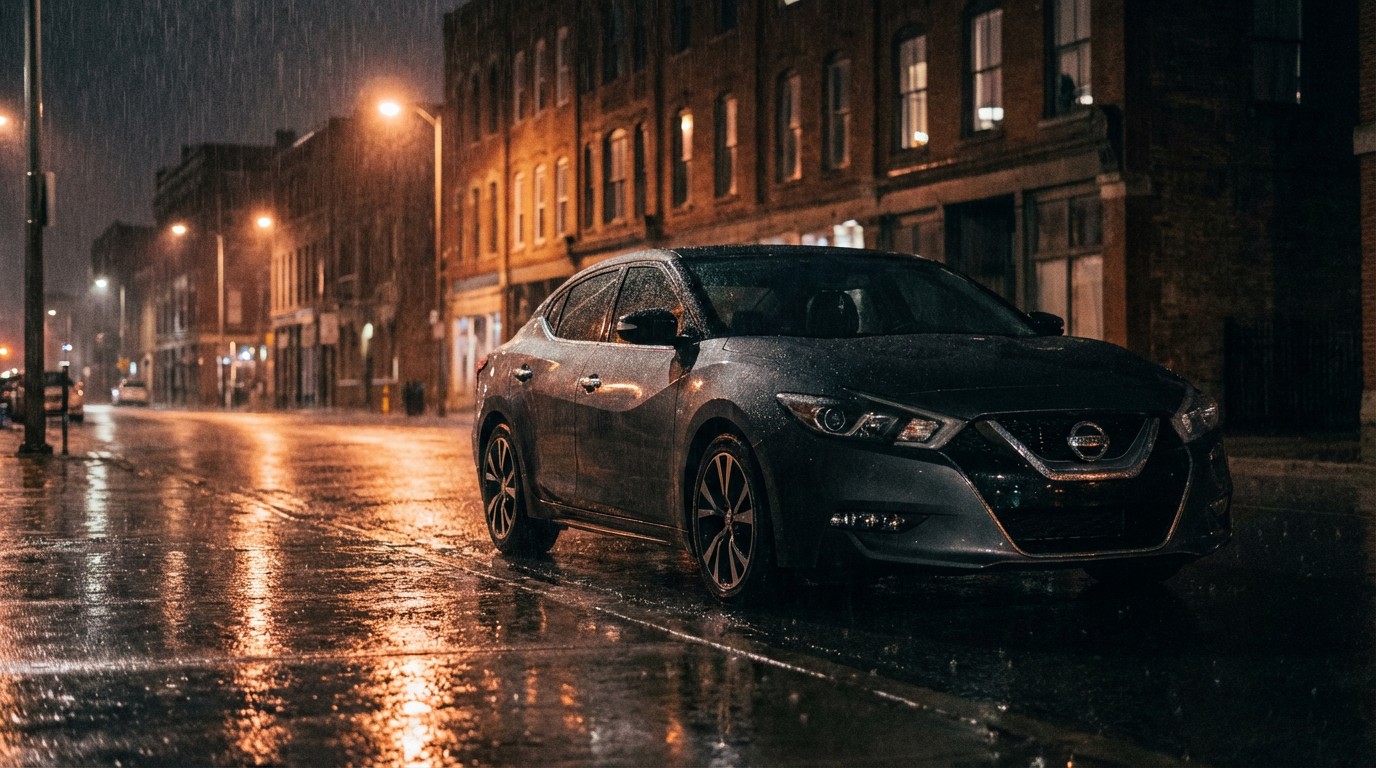
Nissan’s “Luxury” Sedan Is Twice as Deadly as the Altima
At 5.11 deaths per 100M VMT, the Maxima is nearly 2× deadlier than the Altima — and it’s not even a sports car.
Pickup Trucks Account for 1 in 5 Traffic Deaths in America
41,593 pickup fatalities over a decade. The Silverado alone tops the entire database at 9,591. But per mile, they’re safer than sedans.
The Chevrolet Impala: America’s Deadliest Rental Car
At 5.0 deaths per 100M VMT and 3,774 fatalities, the fleet-favorite Impala is 2.5× deadlier than its own sibling, the Malibu.
The Ford Mustang Has the Highest Death Rate of Any Mass-Market Car in America
At 6.02 deaths per 100M VMT and 2,739 fatalities, the Mustang is the deadliest mainstream vehicle on American roads.
The Hyundai Veloster Is the Deadliest Car in America Per Mile Driven
At 8.54 deaths per 100M VMT, this economy coupe out-kills the Mustang, Camaro, and Corvette — and its drivers are comparatively sober.
The Tesla Paradox: Silicon Valley’s Safety Darling Meets the Muscle Car’s Worst Habit
Model Y posts 0.03 deaths per 100M VMT. Model S posts a 24% impairment rate. Same brand, different species.
How the Ford Explorer Escaped Its Own Legacy
503 fatal crash involvements for the 2002 model year. 8 for the 2022. A 98.4% reduction.
One In Four Corvette Drivers In Fatal Crashes Is Impaired
26.2% tested positive for alcohol or drugs — the highest of any major sports car. The Buick Park Avenue hits 31.7%.
The 261x Death Gap: How Your SUV Choice Is a Life-or-Death Decision
The fatality rate gap between the Chevrolet Tracker and the Porsche Macan is 261-fold.
The Honda Accord Has Killed More People Than the Mustang, Camaro, Corvette, and Challenger Combined
7,102 Accord deaths vs. 4,648 for all four muscle cars. Ubiquity is its own kind of danger.
The Chevy Astro Van: Where 27% of Drivers in Fatal Crashes Were Loaded
A minivan out-drinks the Mustang. Impairment correlates with vehicle price, not vehicle type.

The Toyota Land Cruiser Paradox: Sober Drivers, Maximum Death
3rd-lowest impairment rate. 3rd-highest death rate. The most unsettling data point in the database.
AI-generated editorial analysis of NHTSA FARS public data. See Methodology for caveats.
NHTSA FARS national data
The Fatality Analysis Reporting System (FARS) is a census of all fatal motor vehicle crashes in the United States, maintained by NHTSA. FARS covers all crashes nationally and can be normalized by vehicle miles traveled (VMT) — but only at the broad vehicle-class level (passenger cars, light trucks, motorcycles), not per make/model.
VMT data comes from the FHWA Highway Statistics Table VM-1, which estimates total miles driven annually by vehicle type. Dividing FARS fatalities by VMT yields the "fatality rate per 100 million VMT" — the standard metric used in NHTSA Traffic Safety Facts publications.
- 2024 data is an early estimate based on NHTSA's preliminary projections and is subject to revision.
- Fatalities by road user type (2014–2023) are final FARS counts.
- Per-class VMT rates use FHWA VM-1 data matched to FARS occupant fatality counts for the corresponding vehicle type.
FARS per-model estimated rates
The FARS per-model section aggregates all occupant fatalities across 2014–2023 from NHTSA FARS bulk CSV downloads, grouped by make/model. This data includes:
- All occupant fatalities (drivers + passengers), not just driver deaths
- All model years on the road, not a single MY cohort
- All vehicles involved in fatal crashes, regardless of registration volume
Since per-model VMT data does not exist publicly, estimated fatality rates use a proxy method:
- Fleet estimate: publicly reported average annual US sales × fleet multiplier (12.5 yr average vehicle age × 0.70 survival discount ≈ 8.75 effective fleet years)
- Annual VMT estimate: estimated fleet × NHTS class-average annual miles (sedans: 11,500 mi; SUVs: 12,500 mi; pickups: 13,500 mi; vans: 11,800 mi; sports cars: 8,000 mi)
- Rate: 10-year total deaths ÷ (estimated annual VMT × 10 years ÷ 100,000,000)
Key caveats:
- Sales figures ≠ registrations — fleet size estimates are approximate
- All vehicles within a class are assumed to drive the same annual miles
- Does not account for driver demographics, geographic variation, or vehicle age distribution
- Includes models with 50+ deaths or significant annual sales (>1k) for rate comparison
Impaired driving analysis
Impairment data comes from the FARS PERSON.csv file, filtered to drivers only (PER_TYP = 1). Each driver record is joined to its vehicle record via ST_CASE and VEH_NO.
- Alcohol positive: DRINKING = 1 (police-reported) OR ALC_RES (BAC test result) between 1–94 (BAC > 0.00 g/dL)
- Drug positive: DRUGRES1/2/3 values 100–295 (specific drug detected in toxicology) OR DRUGS = 1 in older files
- Any impairment: alcohol positive OR drug positive
Key caveats:
- Toxicology testing rates vary significantly by state and jurisdiction — some states test nearly all fatally-involved drivers, others test far fewer
- Untested drivers are coded as unknown, not negative — actual impairment rates are likely higher than reported
- Only models with 100+ drivers in fatal crashes are shown to ensure statistical significance
Model year analysis
The MOD_YEAR field from FARS VEHICLE.csv identifies the model year of each vehicle involved in a fatal crash. Deaths are aggregated by (make, model, model year) across the 2014–2023 observation period.
- Older model years have more cumulative years of exposure on the road during the observation period, creating a natural age-related skew
- This chart reflects fleet-age composition and crash involvement, not inherent safety differences between model years
- Model years with fewer than 5 deaths are excluded
- Invalid model year values (0, 9998, 9999, pre-1980, or future years) are excluded
Scope: fatalities only
This dashboard covers fatal crashes only from the FARS census. NHTSA also maintains the Crash Report Sampling System (CRSS), which covers all police-reported crashes (including injuries and property damage) — but CRSS is a probability-based sample, not a census, and is not incorporated here.
Limitations
- NHTSA/FARS data: VMT normalization is only available at the vehicle-class level, not per make/model. Class-level rates mask variation within each category.
- FHWA VMT estimates are modeled from traffic counts and may not perfectly reflect actual travel.
- FARS per-model: Estimated rates depend on sales-as-fleet-proxy assumption. Vehicles with much higher or lower than average usage will have distorted rates.
Sources
NHTSA FARS database → |
NHTSA Traffic Safety Facts →
FHWA Table VM-1 →
FARS bulk CSV downloads → |
NHTS (National Household Travel Survey) →
FARS/CRSS Coding and Validation Manual →