The 39% Illusion: Your Safety Features Fight the Crashes That Don't Kill You
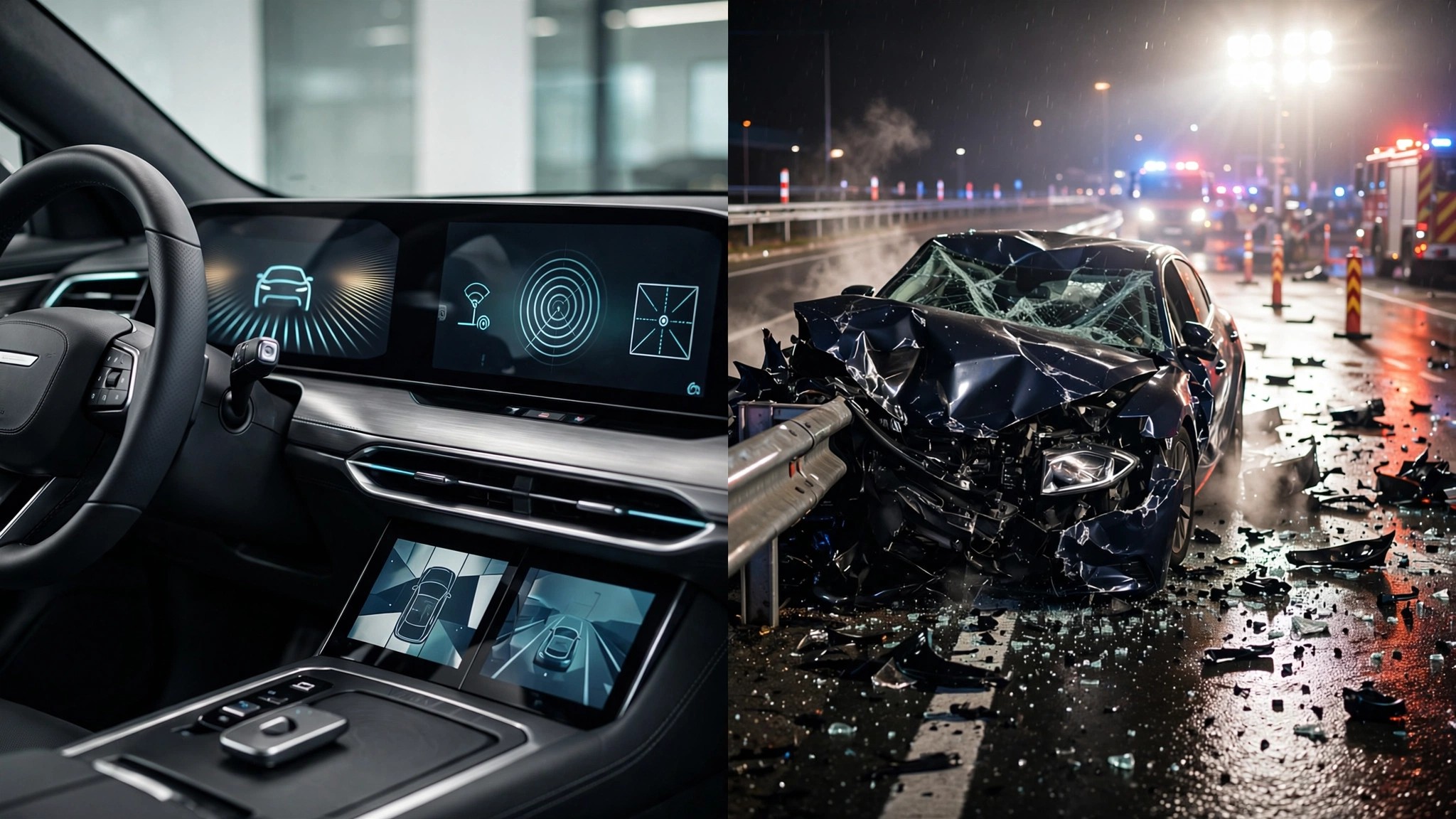
In March, the Highway Loss Data Institute published a study on Mazda vehicles equipped with up to eight bundled safety features, from automatic emergency braking to lane departure prevention to a driver attention monitor that watches for drowsiness.[1] The most comprehensive package cut property damage claims by 39% and bodily injury claims by 21%. Matt Moore, HLDI's chief insurance operations officer, called the technologies "awesome" and said the industry is seeing "compounding crash reductions." He is correct. He is also measuring the wrong crashes.
I cross-referenced the HLDI data with NHTSA's Fatality Analysis Reporting System and the math is not subtle. FARS recorded approximately 33,000 fatal crashes in the most recent complete year; NHTSA estimates 6.7 million total crashes annually across all severities, which means fatal crashes account for 0.5% of the total. That 39% property damage reduction insurance executives celebrate applies overwhelmingly to the other 99.5%, the dented bumpers and scraped quarter panels and parking lot love taps that generate claims adjusters but not coroners. Rear-end collisions, the crash type most directly addressed by front AEB, account for roughly 7% of fatal crashes according to IIHS research, yielding about 2,310 fatal rear-end events per year.[2] Apply the 39% reduction generously across that subset and you get approximately 900 prevented fatal rear-end crashes. Except 70% of fatal rear-ends happen at 55 mph or above, and AAA tested four 2024 AEB systems at highway speed in October 2024. Every single one failed, hitting the target at full velocity.[3]
Confine the math to speeds where AEB actually functions and you land somewhere around 270 fatal rear-end crashes prevented. Out of 36,640 annual traffic deaths, that is 0.7%. So the insurance industry's revolution and the FARS body count exist in different universes, connected by a shared acronym and separated by about 60 miles per hour of closing speed.
HLDI's study contained one finding that should have been the headline but was buried in the sixth paragraph of the press release. Driver Attention Alert, the feature Mazda sells as a drowsiness and distraction monitor, one that activates after twenty minutes of driving between 41 and 86 mph and requires clear lane markings to function, delivered exactly zero additional crash reduction when added to the bundle, not a marginal improvement, not a statistically insignificant benefit, but nothing. A system that sounds like it might actually save a life on a highway at 2 AM is demonstrably inert in the insurance record, a $400 option that generates a dashboard warning and nothing else, while rear AEB, which prevents the low-speed parking lot collisions that dominate HLDI's dataset and kill almost nobody, produced one of the largest standalone reductions in claim frequency.
The strongest counterargument against this framing deserves its full weight. Lane departure prevention and adaptive cruise control address crash modes beyond rear-end collisions, including the single-vehicle run-off-road events that constitute roughly 30% of fatal crashes. Even the 21% bodily injury reduction, though it fell short of statistical significance in the Mazda sample, includes high-severity injuries that correlate with fatality risk. And the technology keeps improving: NHTSA's FMVSS 127 rule, if it survives its current regulatory freeze and industry lawsuit, would require AEB effectiveness up to 62 mph and braking engagement up to 90 mph, projected to save 360 lives and prevent 24,000 injuries annually.[4] The compounding benefit is real and will grow. But 360 lives against a 36,640-death backdrop is still less than 1%, and the rule is frozen, and nobody is building to it.
What FARS actually tracks in the vehicles that kill people is structural crashworthiness, the geometry of a crumple zone under 40-mph offset loading, the timing of an airbag deploying seven milliseconds late, the angular momentum of a 5,800-pound truck rolling onto its roof. IIHS estimated in June that its crash testing saved 48,532 lives from 1999 to 2024, a number built on steel and geometry and restraint engineering. HLDI's number comes from sensors and cameras and software tuned to parking lot speeds. Both matter, but they are not measuring the same problem, and conflating them lets the industry claim a safety revolution while 36,640 people per year remain just as dead.
If you are shopping for a car and you want to not die in it, here is what actually matters: check the IIHS crashworthiness ratings across all test modes, especially the updated moderate overlap and side impact evaluations. Verify your candidate vehicle earned good or acceptable in the small overlap front test, which catches structural failures that AEB cannot prevent and that kill about 10,000 people per year, then check your VIN at nhtsa.gov/recalls. An unfixed recall on a ten-year-old car is a far more immediate threat than the absence of a rear cross-traffic alert. Steel saves you; sensors save your insurance company.
Sources & References
- HLDI/IIHS, “Safety benefits stack up from driver assistance features,” March 26, 2026. iihs.org
- NHTSA, Fatality Analysis Reporting System (FARS), 2014–2023; IIHS fatality statistics on crash types. nhtsa.gov
- AAA, “Automatic Emergency Braking With Pedestrian Detection,” October 2024. newsroom.aaa.com
- NHTSA, FMVSS No. 127 — Automatic Emergency Braking, final rule May 2024. nhtsa.gov