Ford Recalled Your Car, Fixed It, Filed the Paperwork. The Fix Was Fake.
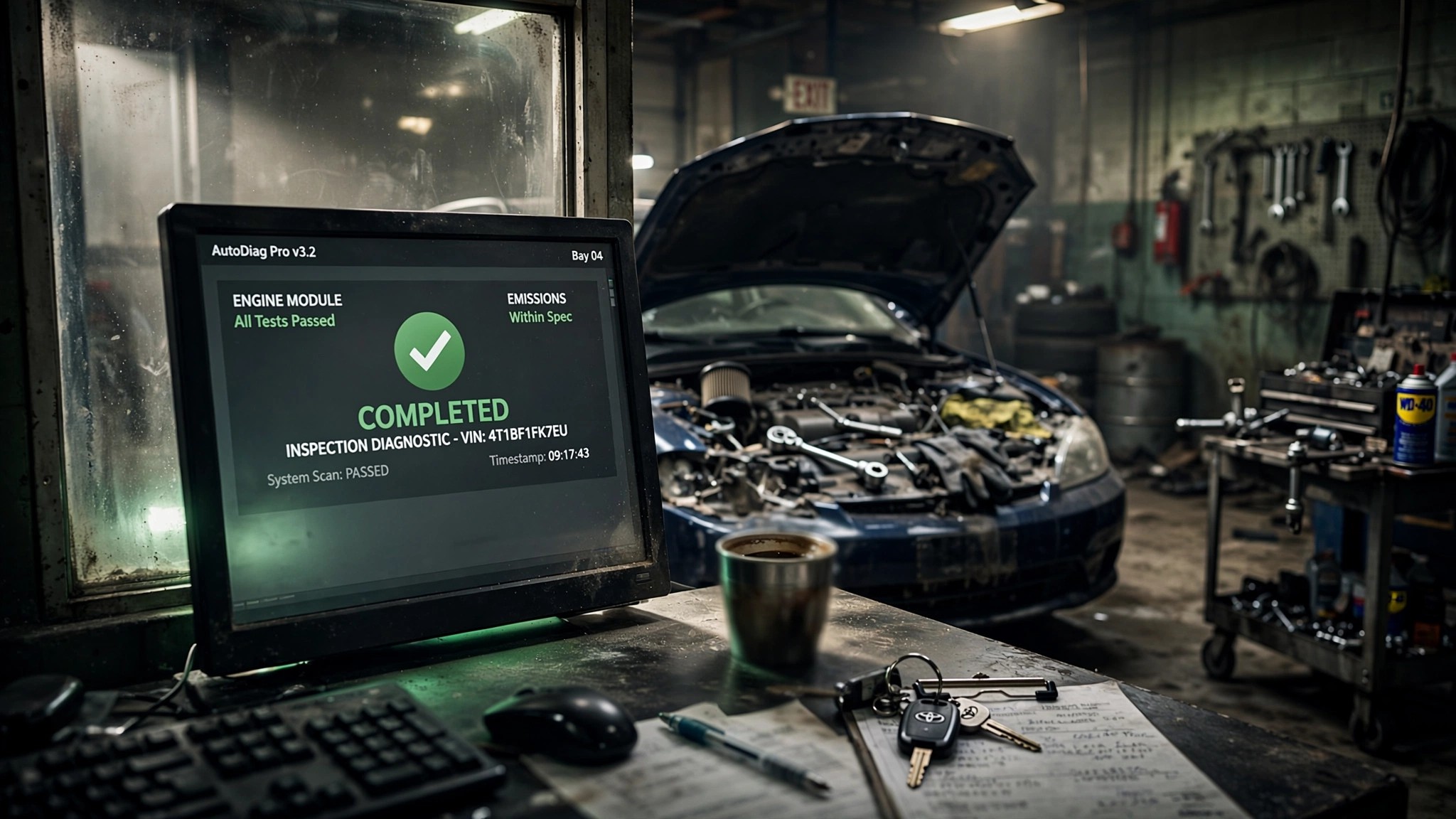
Before you sign that lease, you might want to see this. This week Ford dropped four recalls covering nearly 870,000 vehicles, and at least three of them share an extraordinary detail: the cars had already been recalled, brought to dealers, and marked as repaired. None of those repairs actually took, because Ford's own dealer software tool had been reporting successful updates when the updates had actually failed, leaving hundreds of thousands of owners driving around in cars they genuinely believed were fixed.[1]
Start with the biggest batch: 255,404 Ford Focus sedans from 2012 to 2018, originally recalled in 2018 for a canister purge valve that can stick open, starve the fuel system of pressure, deform the plastic fuel tank, and stall the engine without warning while you're doing 65 on a freeway.[2] NHTSA recall number 18V-735 was supposed to handle it. Dealers ran a powertrain software update, the tool confirmed completion, and Ford closed the file. Eight years later, an internal audit discovered that a significant number of those updates never actually installed because the diagnostic tool had silently failed the upload while reporting success. Ford filed a new recall, 26V369, to fix the fix that was never a fix at all.
Then there are 44,963 model-year 2014 F-150 pickups, originally recalled in 2024 under 24V444 for a transmission output shaft speed sensor fault that causes the truck to slam into first gear at highway speed without warning. "A downshift to first gear without warning could result in a loss of vehicle control, increasing the risk of a crash," Ford's filing states, which is the kind of understatement that reads differently when you picture it happening at 70 mph on I-95 in traffic.[3] Those vehicles, too, were "previously repaired incorrectly," making recall 26V378 the do-over, while another 18,000 Escapes round out the re-recall wave with power window pinch protections that a previous software update was supposed to enable but evidently did not.[4]
Ford's own audit uncovered the mechanism, per CarBuzz's reporting: the dealer diagnostic tool could fail to upload a software update but still report the upload as complete, "fooling the tech." Ford discovered the problem in late 2024 and spent the following year building databases to cross-reference actual software versions on vehicles against what those versions should be after a recall repair, revealing a systemic gap between what the tool claimed and what actually happened on the vehicle bus. "A large portion of Ford's 2024 and 2025 recalls were for software fixes that needed to be checked," CarBuzz reported, and Ford warned in early 2025 that the re-recall volume would get worse before it got better.[5]
Now layer the FARS data onto that timeline. Between 2014 and 2023, those 2012 to 2018 Focus models collectively account for 1,042 deaths in the fatal crash database, a rate of 2.52 fatalities per 100 million vehicle miles traveled that makes the Focus deadlier per mile than the Honda Civic (2.25), Toyota Camry (2.03), or Toyota Corolla (1.85).[6] Nobody can attribute those specific fatalities to the recall defect, and this analysis does not attempt to. Add the 2014 F-150's 258 FARS deaths for that single model year, and the two re-recalled populations account for over 1,300 fatalities across the study period. But the population of vehicles driving around with a phantom repair overlaps exactly with the population generating those body counts, and the window between the original broken fix and this week's correction stretches eight years for the Focus and two years for the F-150.
A fair and important counterargument: Ford's re-recall wave is actually evidence that the company's audit process is working. Ford found the problem, built a tracking system, and is systematically correcting it, while other manufacturers may have the same dealer-tool failure mode and simply haven't looked. Ford is taking a short-term hit on recall volume to close a systemic gap that could exist industry-wide, and that argument has genuine merit. But it also means that every other automaker running software-based recall repairs through dealer diagnostic tools should be auditing their completion records right now, because if Ford's tool lied about successful installs, theirs might be lying too.
Limitations: FARS records fatal crashes, not their causes, so the 1,042 Focus deaths and 258 F-150 deaths across affected model years cannot be directly attributed to the recall defects (engine stall, transmission downshift), and fleet-wide death rates include all crash types without distinguishing cause. Of the 318,367 re-recalled units, an unknown subset may have received correct repairs despite the tool error, and Ford's audit is ongoing with the true scope of phantom repairs across all recall campaigns still undefined.
What you should do: If you own a 2012 to 2018 Ford Focus, a 2014 F-150, or a recent Escape, do not wait for the owner notification letter arriving July 6 and instead run your VIN now at nhtsa.gov/recalls. When you take the car in, ask the dealer to verify the actual software version after the update, not just that the tool reported success, because "complete" and "correctly installed" turned out to be different things. Adopt a new habit: check your VIN against the NHTSA database quarterly, since the recall you completed last year may not have worked.
Sources & References
- Providence Journal, “Ford issues major vehicle recalls,” June 17, 2026. providencejournal.com
- NHTSA, Recall 26V369 / Ford 26S40: 2012–2018 Ford Focus canister purge valve. Original recall 18V-735 (2018). nhtsa.gov
- NHTSA, Recall 26V378: 2014 Ford F-150 transmission output shaft speed sensor. Original recall 24V444 (2024). nhtsa.gov
- CarBuzz, “18,000 Ford Escape SUVs Recalled for Power Window Pinch Risk,” June 2026. carbuzz.com
- CarBuzz, “Ford’s Repeat Recall Saga Will Get Worse, Here’s Why That’s A Good Thing,” 2025. carbuzz.com
- NHTSA, Fatality Analysis Reporting System (FARS), 2014–2023. nhtsa.gov
Source: NHTSA FARS 2014–2023 for fatality data; NHTSA recall filings and news reports for recall details. FARS death counts cover all crash types, not only those related to recall defects. See methodology for caveats.