Honda Built the Safest SUVs in America. Then Forgot to Rustproof Them.
Four vehicles, one shared platform, a combined 0.27 deaths per 100 million miles traveled across a decade of FARS data. Honda's Pilot, Passport, Ridgeline, and Acura's MDX are collectively safer than almost anything else with four wheels and a gas pedal, and families bought these things on purpose, read the IIHS ratings, compared the crash data, then paid the $40,000-to-$52,000 sticker precisely because structural integrity was supposed to be Honda's entire personality.
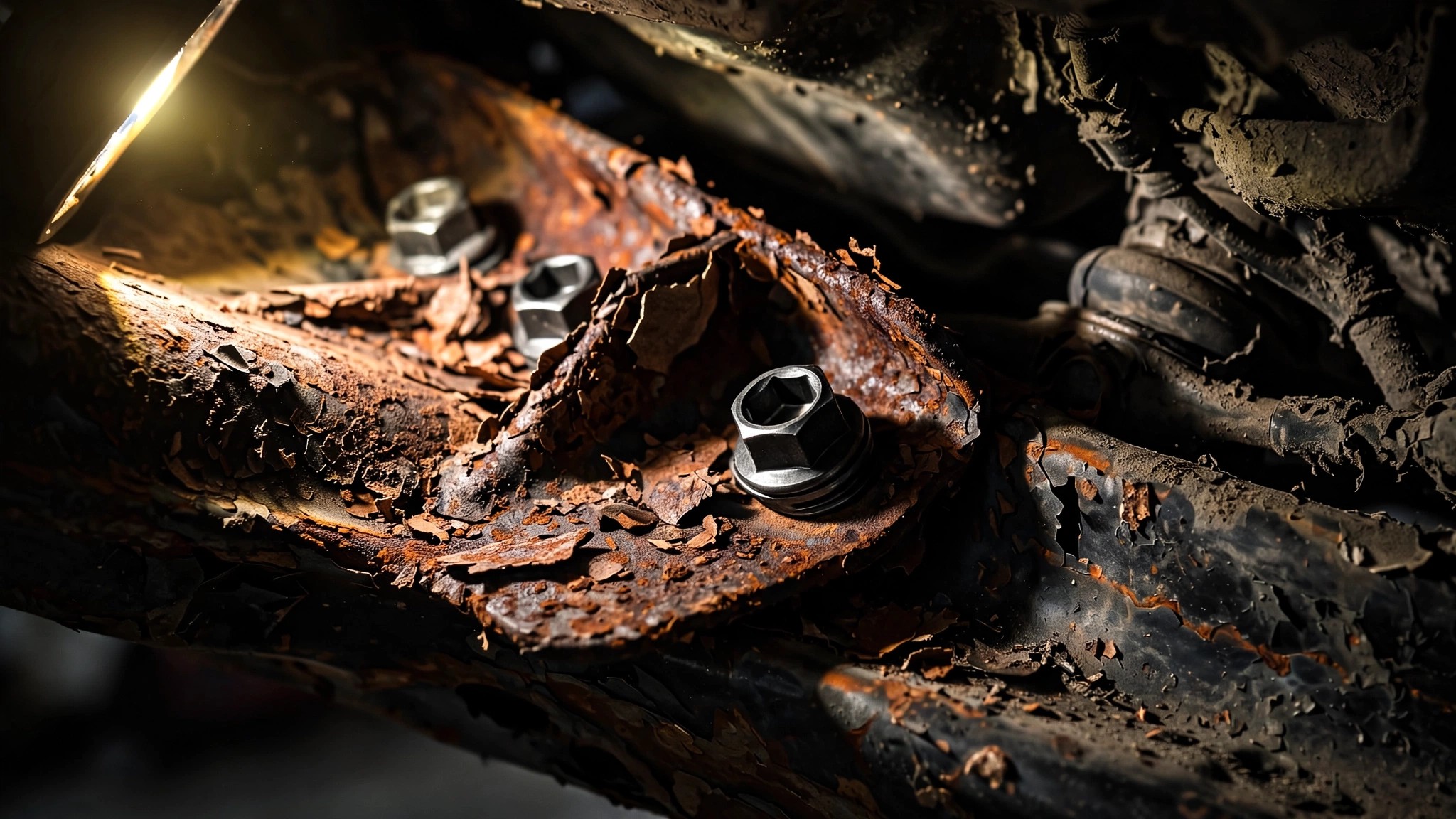
On May 28, NHTSA published a recall covering 2014 through 2023 model year Pilots, Passports, Ridgelines, and MDXs whose rear subframes are corroding at the suspension mounting points, courtesy of a paint quality defect from supplier F&P Georgia across eleven separate part numbers. Lose a suspension mount and the rear axle geometry goes catastrophic mid-turn, mid-highway-merge, mid-school-pickup-line, converting a vehicle with one of the lowest fatality rates in its class into a statistics problem that arrives without a warning light.[2]
Start with the safety data, because it frames the irony. Honda Pilot: 0.29 per 100 million VMT, 514 deaths across a 1.4-million-unit fleet. Passport: 0.10, just 33 fatalities in 262,500 vehicles. Ridgeline runs 0.24, frequently cited as the safest pickup truck in production, and Acura MDX sits at 0.30. Average SUV rate across our dataset sits at 0.63; average pickup rate is 1.09. Put simply, these models don't merely beat the average; they halve it, and across the 880,514 recalled vehicles alone, that rate differential translates to roughly 38 fewer fatalities per year compared to what segment-average replacements would produce, a back-of-envelope calculation that nonetheless conveys the scale of the safety dividend Honda built and is now putting at risk.[1]
Now examine Honda's timeline at full magnification, because the engineering chronology is where the story turns from bad luck into a pattern of institutional inertia. December 2021: the company identified a paint quality inconsistency on the rear subframe, prompting the supplier to improve pre-paint treatment by August 2022 and increase coating thickness by January 2023. Honda fixed the assembly line, then spent the next three years and five months watching 880,514 existing vehicles accumulate Salt Belt winters on subframes it already knew were under-protected, not issuing a technical service bulletin, not initiating a field campaign, just monitoring while corrosion did what corrosion does. First field report of premature degradation at the suspension mounts arrived September 5, 2025. Honda declared the defect May 28, 2026.[3]
That gap needs a name. Call it the fix-forward window: the interval between when a manufacturer corrects a production defect and when it admits the vehicles already sold carry the same defect uncorrected, which in this case stretched across four and a half years and at least four Salt Belt winters in the states where calcium chloride brine and freeze-thaw cycling combine to accelerate material loss not linearly but on a compounding curve that punishes every additional season of exposure. Subframes rolling through upstate New York and Minnesota in winter 2024–25 had endured three to four corrosion seasons beyond when Honda first knew the paint wasn't thick enough, each one steeper than the last.
Honda's remedy is a reinforcement kit installed at the dealer, with repair or full subframe replacement available if damage has progressed beyond the kit's scope, and owners should receive first-class mail by July 7. Do not wait for that letter: if you own a 2014 through 2023 Pilot, Passport, Ridgeline, or MDX, run your VIN at nhtsa.gov/recalls today. Salt Belt owners should request an inspection appointment now, before the July notification backlog swamps dealership service bays. Visible rust scaling or flaking near the rear suspension means you should not drive the vehicle until a dealer has inspected the subframe.
Honda will argue it couldn't recall based on a theoretical paint inconsistency alone, that regulatory protocol required the September 2025 field evidence of actual corrosion at the mounts to justify the filing, and from a compliance standpoint that argument has some merit, which is exactly why a service campaign or a TSB alerting dealers to inspect subframes during routine service visits would have been the responsible middle ground at any point after December 2021. Honda chose silence instead, quietly upgrading new production and let the installed base corrode for three and a half years, a decision about liability management rather than engineering follow-through. Vehicles carrying the best safety records in their segments deserved better than silent corrosion on the component holding their rear suspensions to the chassis.
Sources & References
- NHTSA, Fatality Analysis Reporting System (FARS), 2014–2023. Per-model death rates for Honda Pilot (0.29/100M VMT), Passport (0.10), Ridgeline (0.24), Acura MDX (0.30). nhtsa.gov
- NHTSA Recall, Honda Rear Subframe Corrosion, 880,514 vehicles, model years 2014–2023. Recall determined May 28, 2026. nhtsa.gov/recalls
- autoevolution, “Honda Recalls 880,514 Pilot, Passport, Ridgeline, and Acura MDX Vehicles for Corrosion Issue,” June 2026. Timeline: paint quality identified Dec 2021, supplier improvement Aug 2022, coating increase Jan 2023, first field report Sep 2025. autoevolution.com