Level 2 Is a Heated Seat With a Press Release
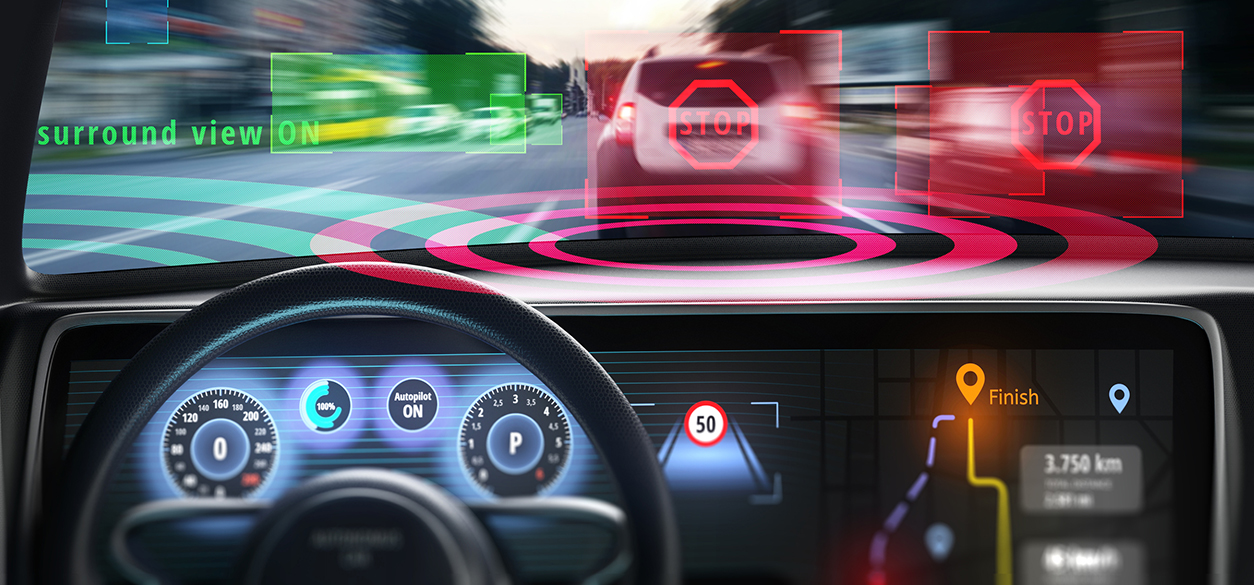
According to the toxicology reports, and there are plenty, your car's partial automation system is doing nothing. IIHS-HLDI research found zero crash-prevention benefit from Level 2 automation beyond what basic automatic emergency braking already provides.[1] IIHS President David Harkey: partial automation is "a convenience feature like power windows or heated seats rather than a safety technology."
IIHS Senior VP Jessica Cicchino examined police-reported crashes for Nissan Rogues and BMWs across 17 states, 2013 to 2022. AEB cut front-to-rear Rogue crashes by 49%, adaptive cruise control bumped it to 54%, and ProPILOT Assist's full Level 2 reached 62%. Except those reductions were identical on highways where ProPILOT functions and low-speed roads where it barely works, and below 37 mph ProPILOT's lane centering only operates behind another vehicle.[1] Same benefit where the system can't help means the system isn't helping.
Cicchino found the real variable: ProPILOT Rogues came with acceptable-rated headlights while unequipped ones got poor-rated lights, and better headlights alone cut nighttime crashes roughly 15%.[2] Strip that confound out and L2 evaporates.
BMW confirmed this. HLDI insurance data showed AEB and forward collision warning gave 7% collision and 13% property-damage-liability reductions for 2013–17 BMWs, but Driving Assistant Plus added nothing significant beyond that baseline.[1]
I ran my own cross-tabulation on NHTSA’s FARS fatal-crash database, comparing deaths-per-crash ratios for L2-equipped vehicles against comparable crossovers. L2 vehicles averaged 0.496 deaths per crash (Model 3 at 0.434, Model Y at 0.509, Rogue at 0.545) while non-L2 comparisons averaged 0.479 (CX-5 at 0.432, RAV4 at 0.498, Tucson at 0.454, CR-V at 0.533).[3] A gap of 0.017 is noise, not signal.
Three datasets confirming the same conclusion: Level 2 does not reduce crashes or crash severity, because AEB does the work and lane centering adds nothing.
IIHS also rated 14 partial automation systems on driver-monitoring safeguards and eleven scored Poor, including both Tesla Autopilot and FSD.[4] These systems don't prevent crashes and don't keep you focused enough to prevent them yourself.
Strongest counterargument: these studies cover 2013–2022 vehicles, and newer monitoring might perform better. But that means a decade of consumers paid premiums for a safety feature that delivered nothing. Burden of proof sits with manufacturers, not the dead.
What to do: Stop paying extra for Level 2 expecting it to save you. AEB, forward collision warning, and blind spot detection have proven crash reductions. If your car has ProPILOT, Autopilot, or BlueCruise, treat it as cruise control with extra steps. Check IIHS safeguard ratings at iihs.org/ratings before trusting any system to watch the road.
Sources & References
- IIHS, “IIHS-HLDI research finds little evidence that partial automation prevents crashes,” July 11, 2024. iihs.org
- IIHS, headlights and nighttime crash research. iihs.org
- NHTSA, Fatality Analysis Reporting System (FARS), 2014–2023. Cross-tabulation of deaths-per-crash ratios by vehicle model. nhtsa.gov
- IIHS, Partial Automation Safeguard Ratings. iihs.org